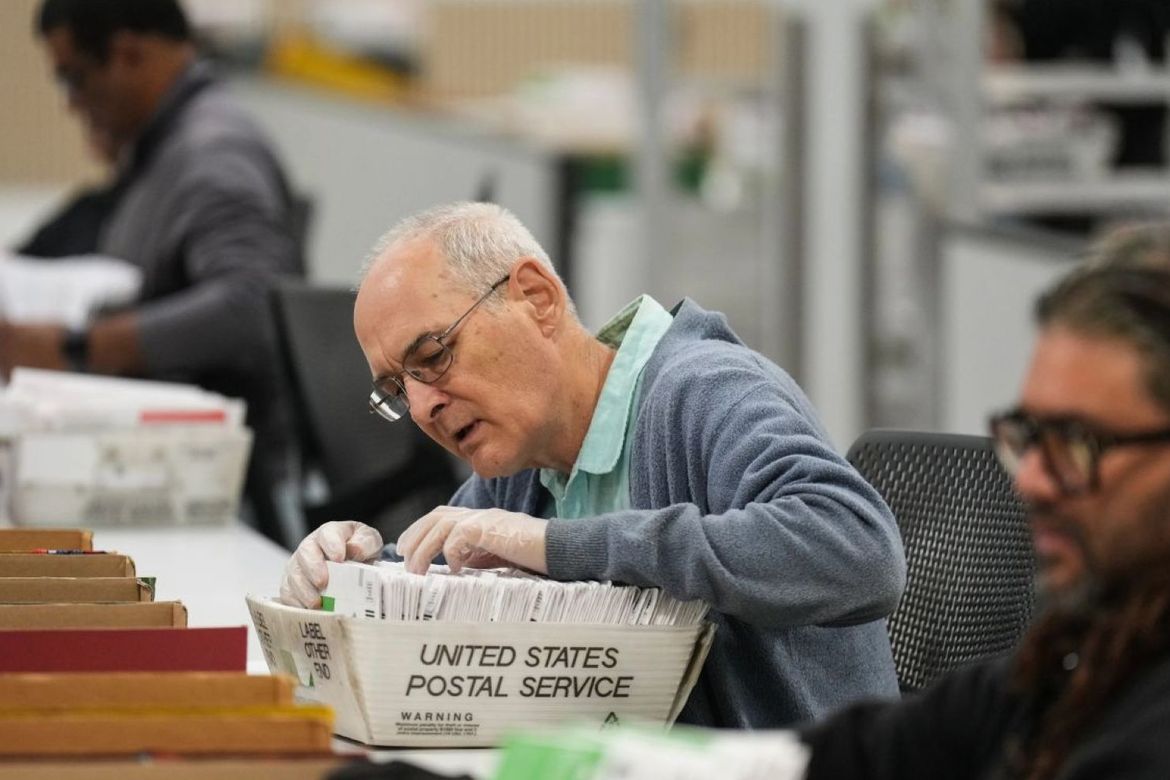
The Associated Press reported that some experts warned the count from Tuesday’s California primary might take even longer than after previous elections. “What compounds things this time around is that Democrats have been holding on to their ballots,” said Rick Hasen, a UCLA law professor. Read and hear more about UCLA in today’s Wired, New York Times and others.
More highlights from UCLA in the News: June 5, 2026
UCLA-led study discovers breakthrough in pancreatic cancer treatment | CBS LA
A breakthrough in pancreatic cancer treatment is bringing hope to cancer patients as a UCLA-led study found an investigational drug nearly doubled survival time for patients with advanced pancreatic cancer. Dr. Zev Wainberg, oncologist with UCLA Health, says the treatment stems from a new international study co-led by UCLA. "This is one of the most important, if not the most important clinical ever done in pancreatic cancer," the doctor said.
California’s conundrum: high growth, but high unemployment | LA Times
The epicenter of the artificial intelligence boom, California’s unemployment rate reached 5.3% in April, roughly 1 percentage point higher than the nation’s. California’s unemployment rate is expected to peak at 5.6% later this year, according to the UCLA Anderson Forecast released this week. (UCLA’s Jerry Nickelsburg was quoted.)
In mayor’s race, second counts. Can Raman surpass Pratt to face Bass? | LAist
“I think she has a shot at catching Pratt but I think it's a long shot,” said Zev Yaroslavsky, director of the Los Angeles Initiative at the UCLA Luskin School of Public Affairs. “It requires her to get a large percentage of the votes that remain to be counted.”
Apartment tower's limited parking tests push for more housing | East Bay Times
Because the statewide law was passed during the COVID-19 pandemic and housing construction has been slow and more expensive ever since, data is scarce about whether the reforms are making headway on their lofty housing, transit and pollution goals. UCLA’s Center for Parking Policy, which has pioneered research on the subject and published a report in February about the parking laws, called the impacts on the housing supply so far “modest rather than dramatic.”
Carcinogen from LA fire cleanup may have spread up to 9 miles downwind | LAist
A potent carcinogen may have spread to communities as far as 9 miles downwind of the Eaton and Palisades fire burn zones during debris cleanup, according to a new peer-reviewed study in the journal Nature. Scientists with UCLA and UC Davis drove through Altadena and Pacific Palisades in an electric vehicle with mobile air monitors periodically over about seven months after the fires. They measured nanoparticles of hexavalent chromium, or chromium-6, within the cleanup areas.
A job market leaving young grads behind could scar them for years | NY Times
“During recessions, good employers stop hiring,” said Till von Wachter, an economist at the University of California, Los Angeles, and an author of the 2012 study. “There’s a lot of friction in the labor market, so you never quite make it back to the top of the queue.”
Quantum computing is having its public market moment | Wired
Government support for the technology may have somewhat reassured some investors. In May, the US Department of Commerce said that it would invest $2 billion across nine quantum companies, including $100 million into Quantinuum. That vote of confidence in the companies’ road maps will have acted as a “tailwind,” as Quantinuum secured investor support in the run-up to its debut, says Prineha Narang, a professor of physical science and electrical and computer engineering at the University of California, Los Angeles.
UC pushes for $12B scientific research bond to counter federal cuts | EdSource
David Boyer is stuck in a waiting game. For more than 18 months, silence from the National Institutes of Health on a crucial grant decision has thrown his research developing treatments for Alzheimer’s disease into uncertain territory. His application received a favorable impact score, the main metric used for NIH funding decisions, so the postdoctoral scholar at UCLA figured he would hear good news by spring of 2025. Instead, he has heard nothing. (Boyer was quoted.)