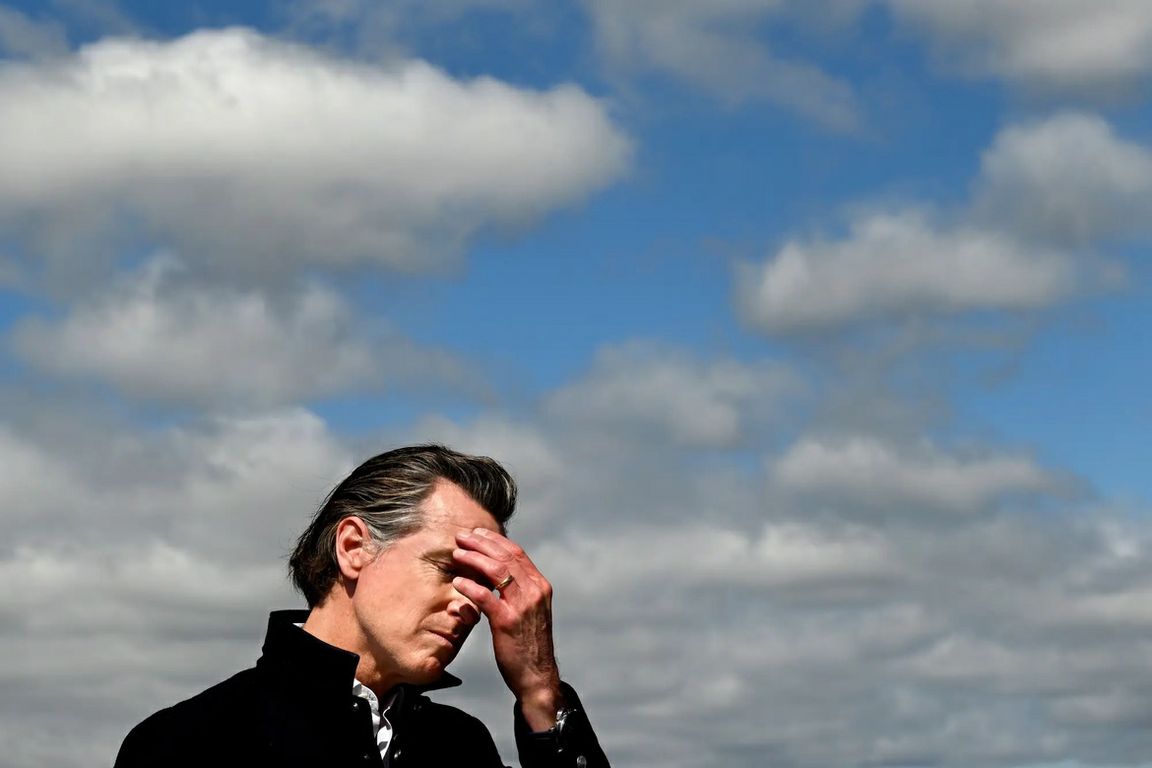
The Los Angeles Times spoke with Ann Carlson, founding director of the Emmett Institute on Climate Change and the Environment at UCLA, who credits Newsom with dramatically expanding battery storage and suggests that his potential presidential ambitions have influenced his recent shifts in environmental policy. Read more about UCLA in today’s New York Times, Associated Press and other outlets.
See our UCLA in the News daily archive.
More highlights from UCLA in the News: October 26, 2026
9th Circuit panel questions basis for feds’ request to block ballots | Los Angeles Times
Rick Hasen, director of the Safeguarding Democracy Project at UCLA School of Law, wrote online Sunday that the court seemed “very likely to reject” the Trump administration’s appeal, with Bennett and Sanchez having “expressed great skepticism on both jurisdiction and the merits.” (Hasen was also featured by CNN, Bay Area News Group and the New York Times.)
The midterms are next week. Here’s who we think will win | New York Times
“Two forces are shaping these midterms: discontent and calcification. People are frustrated with the status quo, and they blame the president and his party. But at the same time, voters know the parties want to build very different worlds — and they know which world they prefer,” said UCLA’s Lynn Vavreck.
Midterm races that could be decided by Latino voters | Los Angeles Times’ “De Los”
“They drew those districts based on what they thought were the 2024 numbers,” said Matt Barreto, a professor of political science and Chicana/o and Central American studies at UCLA. “And now those 2024 numbers are evaporating.”
News site boosting political attack ad tied to GOP nonprofit | Los Angeles Times
But presenting a slanted political view under the guise of local news tends to offer more bang for your buck than traditional advertisements, said Georgia Kernell, an associate professor in the departments of communications and political science at UCLA.
Trans issues helped elect republicans in 2024. Will it work again? | New York Times
About 2.8 million people age 13 and older in the United States identify as transgender, according to an analysis of government data by the Williams Institute at UCLA. That amounts to about 1 percent of the population in that age group.
Slavery descendants organize for the future | Associated Press
Marcus Anthony Hunter, a sociologist in African American studies at the University of California, Los Angeles, said reparations are about atoning for the past crime of chattel slavery, even if some programs come in the form of housing grants or college scholarships instead of direct cash payments. “It’s not even a lot of money that they are given. But it comes back to the recognition, the acknowledgment, responsibility and remedy,” he said.
Thwaites is a runaway climate disaster. New studies show how | Grist
“There are many other unknowns, but this solves a specific and very important piece of the puzzle,” said Mattia Poinelli, a glaciologist at the University of California, Los Angeles, and the lead author of the paper.
California has a plan for El Niño’s torrential rain: Save it for later | Grist
“The gray infrastructure that we built in the 20th century was really built for a climate that is no longer here,” said Edith de Guzman, a water equity and adaptation policy cooperative extension specialist at the University of California, Los Angeles. “We can’t just engineer our way out of the problems — we need to actually kind of reverse-engineer a little bit and think about the way that nature does things.”
Weight-loss drugs fuel protein boom, but with more consumer scrutiny | Reuters
Dana Hunnes, a professor and clinical dietitian at UCLA, says the average person doesn’t need as much protein as industry marketing has promoted. And some protein-marketed products have too many processed ingredients to qualify as healthy, Hunnes said. “I’ve seen the equivalent of a candy bar” advertising protein, she said. “Just because it has protein doesn’t mean it’s something you should eat.”