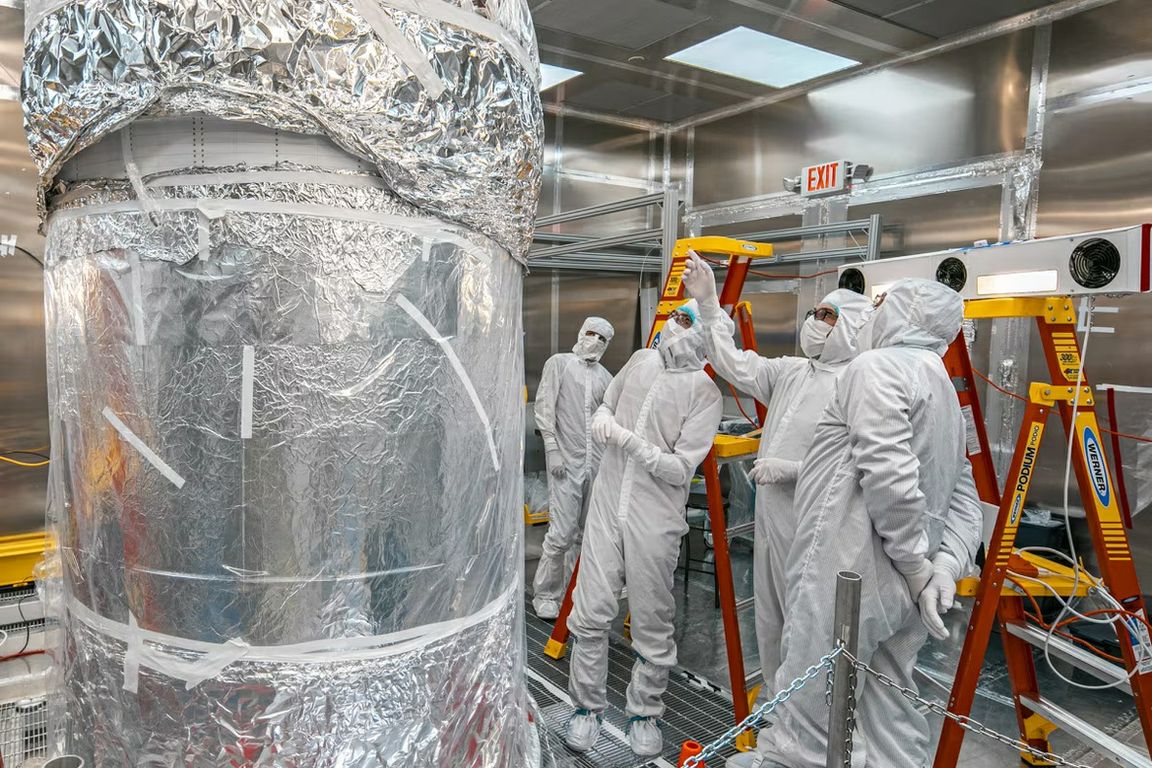
CNN reported on an intriguing signal detected by the LUX-ZEPLIN experiment that could offer a clue in the decades-long search for dark matter. UCLA physicist Alvine Kamaha, who helped build the detector, cautioned that one event is not enough to claim a discovery but said a confirmed detection would open “an entirely new area of particle physics.” Read more about UCLA in today’s Washington Post, The Conversation and others.
See our UCLA in the News daily archive.
More highlights from UCLA in the News: September 15, 2026
How heat on the Tibetan Plateau fuels powerful storms in California | The Conversation
(Commentary by UCLA’s Yongkang Xue) The Tibetan Plateau may be on the other side of the world from California, but what happens on this high-altitude landscape in Asia can set off a chain of events that fuels powerful atmospheric rivers with flooding rainfall and heavy snow hitting the U.S. West Coast. My team of atmospheric scientists discovered this connection, and we explain how it works in a new study in the journal Science Advances.
U.S. ‘super-emitters’ of methane identified by new analysis | The Guardian
The Energy Transfer site, located near the city of Shreveport, is named as the biggest single “super emitter” in new rankings of U.S. oil and gas operations for the largest releases of methane, a powerful greenhouse gas that is rapidly overheating our planet, according to a new UCLA study, which is based on satellite data. (UCLA’s Cara Horowitz was quoted.)
Unusual flurry of court cases creates confusion ahead of midterms | Washington Post
Rick Hasen, a professor of law at UCLA and an expert on election law, said the legal fights over election procedures and last-minute challenges have “got to be unsettling for voters” and “potentially damaging for officials carrying out elections.” “I’ve never seen anything like the mail-in ballot litigation, where there is a threat to make such a drastic change to an election in the middle of an election,” Hasen said. “That’s an order of magnitude different than anything else that is out there now or that we have seen.”
The latest developments in the war in Iran | CBS LA
“This comes on the heels of a very interesting New York Times story that was posted yesterday. It indicated that the July breakdown of the MOU – the memorandum of understanding – that was in place was in part due to disagreement within Iran’s internal political system about what to do next,” said UCLA’s Benjamin Radd.
New York roller derby league fights to topple transgender ban | Bloomberg Law
Nassau won the first round, scoring trial-level dismissals of both lawsuits, setting up an anticipated rematch this fall before New York’s Second Appellate Department. Despite those decisions, the law is “clearly not in Nassau County’s favor,” said Elana Redfield, federal policy director at the Williams Institute, a think tank at the UCLA School of Law.
What is Zionism? The different meanings of a contested term | The Conversation
(Commentary by UCLA’s Dov Waxman) As a scholar of Israel studies who teaches about Zionism, what strikes me when I read such statements is how narrowly they define it, reducing Zionism to a single belief in “the right of the Jewish people to self-determination and statehood in the land of Israel.”
Hispanic Heritage Month begins with celebrations across the U.S. | Associated Press
“It was clustered around big celebrations for the community,” said Alberto Lammers, director of communications at the UCLA Latino Policy and Politics Institute. “It became a chance for people to know Hispanic cultures, for Latinos to get to know a community better.”
How AI could transform cancer treatment and medicine | Fox News
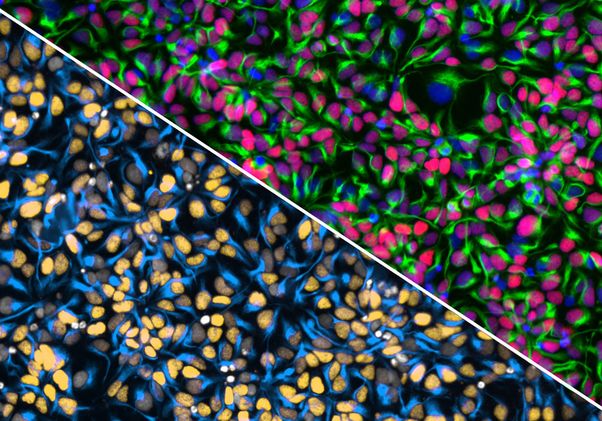
At UCLA, scientists are taking another approach to personalized cancer treatment. They create tiny laboratory-grown replicas of patient tumors called organoids. Researchers can expose those organoids to different drugs and monitor what happens. Their platform combines 3D bioprinting with advanced imaging and artificial intelligence. AI helps researchers process the large amount of imaging data generated as the organoids respond to treatment. The system can track thousands of individual organoids.
La Mesa appoints 20-year-old UCLA student as treasurer | La Mesa Courier
La Mesa’s newly appointed city treasurer, Emmett Stewart, is the youngest officeholder in San Diego County, and likely far beyond county limits. During a Sept. 8 meeting, the majority of city council members voted to appoint the UCLA college student, 20, as the city’s next treasurer, over the only other applicant, longtime financial analyst Bill Exeter.