Scientists from UCLA and City of Hope have become the first to inhibit the mechanism of a protein that regulates a key process that causes cancer to grow.
California NanoSystems Institute researchers have imaged the atomic structures of three specific biological nanomachines, findings they hope advance work on antibiotics targeted toward specific pathogens.
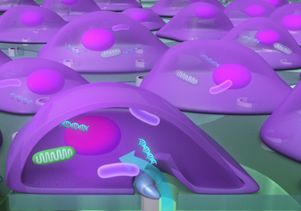
UCLA engineers and doctors developed a tool that can deliver nanoparticles, enzymes, antibodies and bacteria into cells thousands of times faster than current technology.
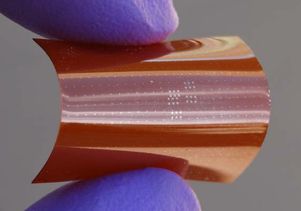
New compact, reliable energy storage devices outperform batteries by holding larger amounts of energy, recharging more quickly and lasting for longer recharge cycles.
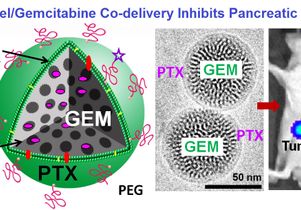
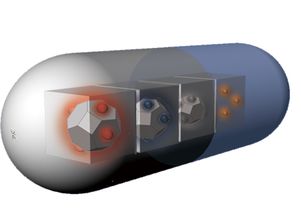
UCLA bioengineers have developed a revolutionary approach that brings together traditional drugs and nanotechnology-enhanced medications to create safer and more effective treatments.
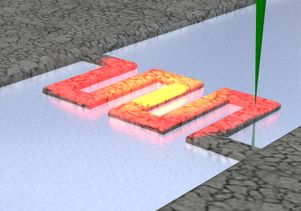
Researchers developed a thermal imaging technique that can “see” how the temperature changes from point to point inside the smallest electronic circuits.
A team led by engineers from UCLA and Columbia University controlled light at tiny lengths around 500 nanometers — smaller than the light’s own wavelength — by using random crystal lattice structures.
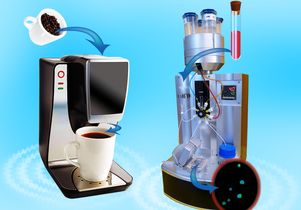
A team led by researchers at the California NanoSystems Institute developed a new method for extracting and analyzing cancer cells circulating in patients’ blood.
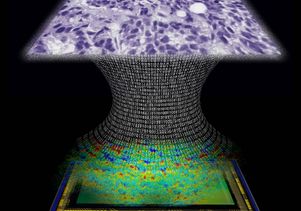
UCLA researchers led by Aydogan Ozcan have developed a lens-free microscope that can be used to detect cancer with the same accuracy as larger and more expensive optical microscopes.
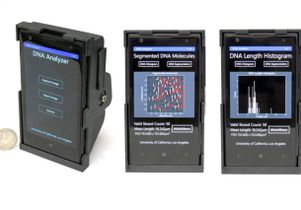
Researchers from UCLA have developed the first lightweight, compact device that converts an ordinary smartphone into an advanced fluorescence microscope.
Company emerges from King Abdulaziz City for Science and Technology and the UCLA Center for Excellence in Green Technology. It aims to revolutionize electronics by using carbon-based nanomaterials to lower power consumption and improve performance of smartphones and wearable devices.
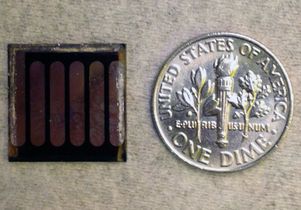
UCLA researchers find that using a perovskite solution could improve the quality and manufacturing efficiency of medical and commercial imaging devices.
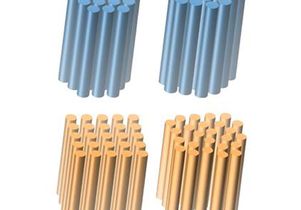
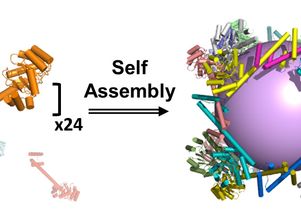
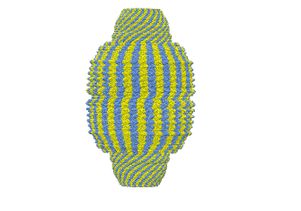
The scientists created the largest protein ever that self-assembles into a molecular “cage.” The protein is hundreds of times smaller than a human cell.
Jeffery F. Miller, a professor in the Department of Microbiology, Immunology and Molecular Genetics, is the new director of the California NanoSystems Institute (CNSI) at UCLA, Executive Vice Chancellor and Provost Scott Waugh announced today.
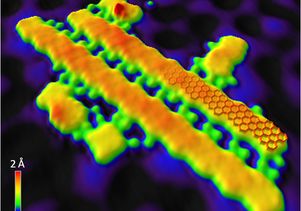
With their special electronic and optical properties, nanomaterials such as graphene and molybdenum sulfide have created excitement among scientists for their potential to revolutionize transistors and circuits.
Developed by UCLA’s Dr. Leonard Rome and Dr. Steven Dubinett, the treatment combines an immunotherapy agent with a drug delivery nanotechnology using nanoparticles called vaults.