UCLA researchers note that the next decade shows great promise for things like improving food safety, fighting infections, storing energy and supplying clean energy.
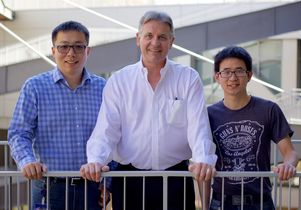
The UCLA professor emeritus, who directed the California NanoSystems Institute at UCLA, was honored with two others for designing and developing molecular machines.
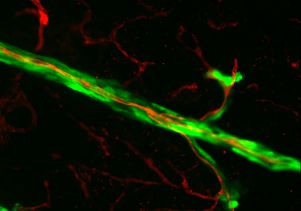
The findings are a major step toward confirming an unusual theory of how some cancer cells metastasize, and the study could lead to new strategies for keeping melanoma from spreading.
The device combines two components invented at UCLA: a photonic time stretch microscope and a deep learning computer program that identifies cancer cells with over 95 percent accuracy.
The annual award recognizes researchers, innovators and inventors from around the world for their achievements and contributions to science and technology.
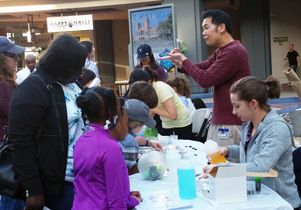
Volunteer scientists, graduate students and staff from the California NanoSystems Institute at UCLA set up a booth to demystify nanoscience in fun ways.
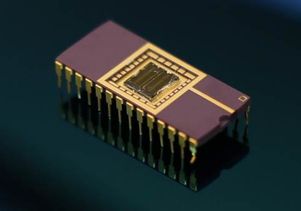
The advance could make it much more efficient to build nanoelectronic and nanobioelectronic devices that could measure brain cell and circuit function in real time.
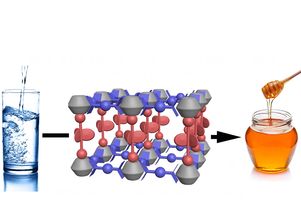
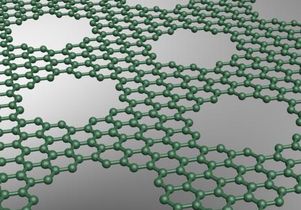
The study, by researchers at the California NanoSystems Institute, could be an important step in the effort to satisfy the world’s need for clean water.
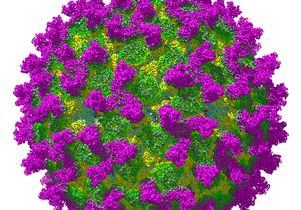
UCLA research reveals the three-dimensional atomic structure of a double-stranded RNA virus and the biological nano-switch that turns on transcription.
The new cell construction extends the cell’s effective life in air by more than 10 times, with only a marginal loss of efficiency converting sunlight to electricity.
UCLA researchers found that the tiny particles can strengthen gutta percha, the material used to fill the root canal, and even deliver drugs to fight infection.
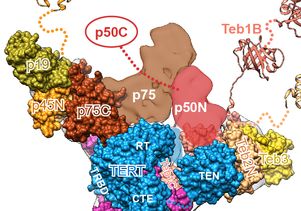
“There is so much potential for treating disease if we understand deeply how telomerase works,” said UCLA professor Juli Feigon, a senior author of the study.
The particles are used in a wide range of consumer products for their ability to kill bacteria. But that benefit might be coming at a cost to the environment.