UCLA Anderson professor Shlomo Benartzi writes in the Wall Street Journal that seeing frequent updates in the palm of your hand can lead to overreacting to short-term losses.
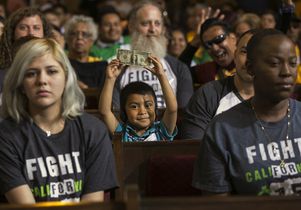
A $570,000 grant will allow a team led by Edward Leamer of the UCLA Anderson School of Management to study the effects of a higher minimum wage by evaluating the ordinance in Los Angeles.
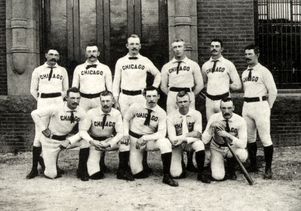
Waugh, an authority on American history and lifelong baseball fan, explains how baseball has (and hasn’t) changed, why it became the national pastime and how she teaches the sport’s history.
UCLA Anderson Forecast’s third quarterly report of 2015 predicts a strong outlook for the next two years, with a slim chance of a recession and a slight change for a surge in growth.
Two UCLA Anderson professors write in an op-ed that despite rhetoric on Capital Hill, the Trans-Pacific Partnership will not curb China’s influence in the global marketplace.
A trio of UCLA experts on the economy write in an op-ed that with business-friendly policies the U.S. economy can exceed the dismal projections of the most recent forecast by the Congressional Budget Office.
UCLA Anderson lecturer Paul Habibi says creating an enhanced infrastructure financing district can promote development that spurs economic growth, protects the environment and ensures affordable housing.
Even if union workers are exempted from the city’s forthcoming minimum wage increase, study predicts, there would be minimal short-term impact on their salaries.
UCLA Anderson professor Jerry Nickelsburg writes that market forces have elevated food safety to an overriding concern in agricultural trade between China and the United States.
Nearly 1 in 5 older adults in California live in an economic no-man’s land, unable to afford basic needs, according to a study by the UCLA Center of Health Policy Research.
UCLA Anderson Forecast economist William Yu writes in the Los Angeles Times that examining real estate data patterns shows that L.A. is not on the verge of a crash in home prices.
Sociologist Edward T. Walker writes in the New York Times that rich corporations are leveraging social media to get customers and ordinary citizens to act as de facto lobbyists.
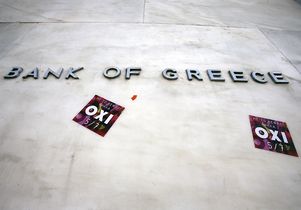
UCLA Anderson finance professor Bhagwan Chowdhry writes that allowing developing nations to raise money similarly to how startups raise equity funding could help stave off future crises like happened in Greece.
UCLA Anderson professor Daniel Oppenheimer co-wrote an op-ed that says while the upcoming vote won’t save the economy, a vote at least may prevent social and political upheaval.
Daniel J.B. Mitchell says that to help avoid a repetition of contentious funding battles around the UC budget, the 55-year-old state Master Plan for Higher Education needs updating.
Behavioral economist Shlomo Benartzi’s research shows that smarter and simpler website and app design can guide people to save for retirement properly.
UCLA law professor Stephen Bainbridge writes in the New York Times that when members of companies' boards of directors maximize shareholder value they are more accountable.