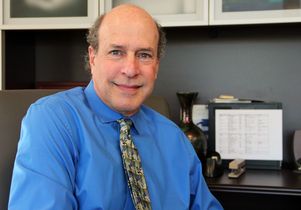
Michael Green, UCLA professor of psychiatry and biobehavioral sciences, will deliver the 123rd Faculty Research Lecture about a topic that has fascinated him for decades.
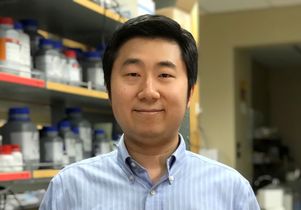
Elaine Hsiao, assistant professor of integrative biology and physiology, and Hosea Nelson, UCLA assistant professor of chemistry and biochemistry, are among 18 winners.
UCLA history professor Kelly Lytle Hernández’s Million Dollar Hoods project that maps the costs of incarceration in Los Angeles is now housed at the center.
MarySue Heilemann, associate professor in the UCLA School of Nursing, has focused her scholarship on improving the accuracy of portrayals of nurses in film and television.
Ivanov a world-renowned linguist, Indo-Europeanist, anthropologist and literary scholar was a member of the UCLA community for the past quarter-century.
Lecturer Tananarive Due uses the acclaimed horror blockbuster and other films and books to examine how depictions of blackness have shaped real-life attitudes and prejudice.
The grant “will allow UCLA to continue our decade-long preeminence in groundbreaking autism research,” said Dr. Daniel Geschwind, director of the UCLA Center for Autism Research and Treatment.
The researchers found that mouse models that lacked the protein IDOL performed poorly in behavioral tests of spatial memory and fear-based conditioning.
The UCLA Health program provides surgical and medical treatment, and psychological health support for post-9/11-era service members, veterans and their families.
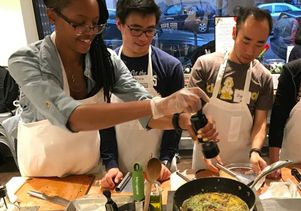
Pilot program teaches healthy eating and cooking skills to students in the David Geffen School of Medicine at UCLA, Fielding School of Public Health, the School of Dentistry and the School of Nursing.
Chong Liu, UCLA assistant professor of chemistry, was selected as one of the exceptional scientists age 40 and younger who are “ready to transform their fields.”
The honor for UCLA professor Carrie Bearden comes from the Brain and Behavior Research Foundation, the nation’s top non-governmental funder of mental health research grants.
Thomas Graeber has received the American Cancer Society’s Giants of Science Passion Award for his contributions to the study of how cancer cells respond to therapies.