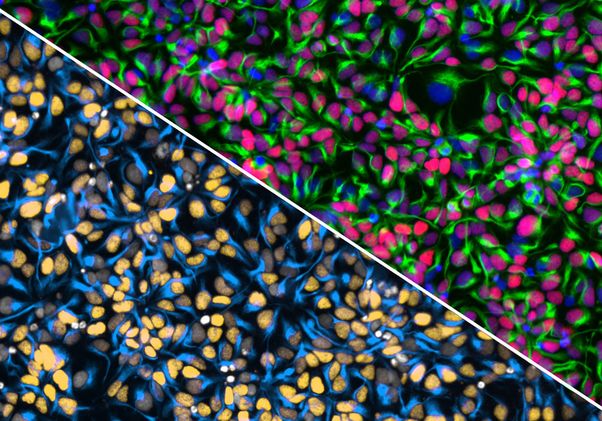
The Los Angeles Times reported on emerging research suggesting that severe viral infections such as COVID-19 may play a role in reactivating dormant cancer cells, potentially increasing the risk of recurrence in some patients. Dr. Aditya Bardia, director of Translational Research Integration at the UCLA Health Jonsson Comprehensive Cancer Center, said the findings warrant further investigation and noted that his own research team has observed similar associations between COVID-19 infection and breast cancer recurrence. Read more about UCLA in today’s Washington Post, NPR and others.
More highlights from UCLA in the News: June 15, 2026
Urban birds let men get about a meter closer than women | Space Daily
“I fully believe our results, that urban birds react differently based on the sex of the person approaching them, but I can’t explain them right now,” said Daniel Blumstein, a co-author and professor at the University of California, Los Angeles, in a statement released through the institutions involved.
Physicists just built the first-ever nuclear clock | Gizmodo
According to a column by physicists Eric Hudson and Andrei Derevianko, ultraprecise clocks are “more than scientific curiosities,” as they are vital for smooth navigation, communications, and international timekeeping. Hudson and Derevianko, from the University of California, Los Angeles, and the University of Nevada, Reno, respectively, contributed to research from last December that demonstrated the potential of thorium-229 in atomic nucleus clocks.
Air pollution linked to pregnancy complications | Santa Monica Daily Press
Exposure to a common air pollutant found in vehicle exhaust and wildfire smoke triggers inflammation in pregnant women, potentially raising the risk of preterm birth, low birth weight and developmental problems in children, according to a new study led by UCLA researchers … “These findings provide biological evidence that PAHs influence the immune system and inflammatory processes during pregnancy, and we know that increased inflammation can contribute to negative pregnancy outcomes,” said Dr. Beate Ritz, a professor in UCLA Fielding School of Public Health’s epidemiology and environmental health sciences departments and the study’s lead researcher.
Fentanyl users take daily doses 60 times the lethal level | HealthDay News
“We find that people are regularly exposed to doses of opioids that would have seemed impossible to me before I started this work,” senior researcher Chelsea Shover said in a news release. She’s an associate professor-in-residence of medicine at the University of California, Los Angeles. Such doses could make it difficult to counter fentanyl addiction using standard medications for opioid use disorder, researchers noted.
Millions of women are left out of menopause’s moment | New York Times
There is a “humongous provider knowledge gap” when it comes to menopause care, said Dr. Rajita Patil, director of the Comprehensive Menopause Program at UCLA. While demand has exploded, many clinicians are still not up to speed on the full range of treatments, including nonhormonal options, she said.
Glutathione is vital for health. Is it worth buying as a supplement? | New York Times
Glutathione is a compound made up of three amino acids: glutamate, cysteine and glycine. Produced by the liver and found in almost every human cell, it protects the body from oxidative stress caused by free radicals, said Dr. Zhaoping Li, chief of the Division of Clinical Nutrition and a professor of medicine at UCLA Health.
In the age of AI, will math continue to be a human endeavor? | Washington Post
Terry Tao, a Fields medalist at the University of California at Los Angeles, was on a team that created an “AI harness” — software built around the AI to allow it to use a tool and take the next steps in reasoning. Tao said the models keep improving, but he drew a contrast between climbing and jumping.
5 ways to read more books this summer | NPR
Opt for the paper version to minimize distractions. This is a tip from Maryanne Wolf, a cognitive neuroscientist at the University of California, Los Angeles, and the author of “Reader, Come Home: The Reading Brain In A Digital World.”
The latest on the conflict in Iran | KTTV-TV
“We have some indication of what’s in the deal. We know that it’s going to release assets that have been frozen that belongs to Iran. We also know that it is technically supposed to open the Strait of Hormuz without any restrictions,” said UCLA’s Benjamin Radd (Radd was also interviewed by KCAL-TV.)
Political turmoil surrounds Iranian soccer team | KABC-TV
“They should really just be focusing on the game and representing their country. But they’re at this really strange kind of intersection between representing a government and representing the people,” said UCLA’s Salma Mousa (approx. 1:40 mark).
Slow vote counting creates the window for MAGA conspiracy | Los Angeles Times
“There’s nothing wrong with a slow count,” says Rick Hasen, a UCLA law professor who specializes in election law. “But it’s a major problem because, unfortunately, it’s a manufactured crisis that can undermine public confidence. And it has gotten worse.”
What two court orders reveal about legal battle over tuition equity | Inside Higher Ed
Hiroshi Motomura, faculty co-director of the Miñana Family Center for Immigration Law and Policy at [UCLA School of Law], said he’s not convinced Nebraska’s case is so cut-and-dried.
SpaceX shares rise 19% in stock market debut after historic IPO | Los Angeles Times
Paul Habibi, a real estate lecturer at UCLA and principal of Grayslake Advisors in El Segundo, said he believes the IPO should boost the South Bay real estate market, as insiders granted stocks spend some of their newfound wealth. “A lot of those folks are probably going to line up around the block to buy into neighborhoods like Manhattan Beach,” he said.
San Francisco to change home renovation process | San Francisco Chronicle
A 2026 policy brief from the UCLA California Center for Sustainable Communities found that it is difficult for many existing properties to electrify, especially for lower- and moderate-income households. The UCLA research also points to panel capacity and electrical service upgrades as a major unresolved issue for older buildings.