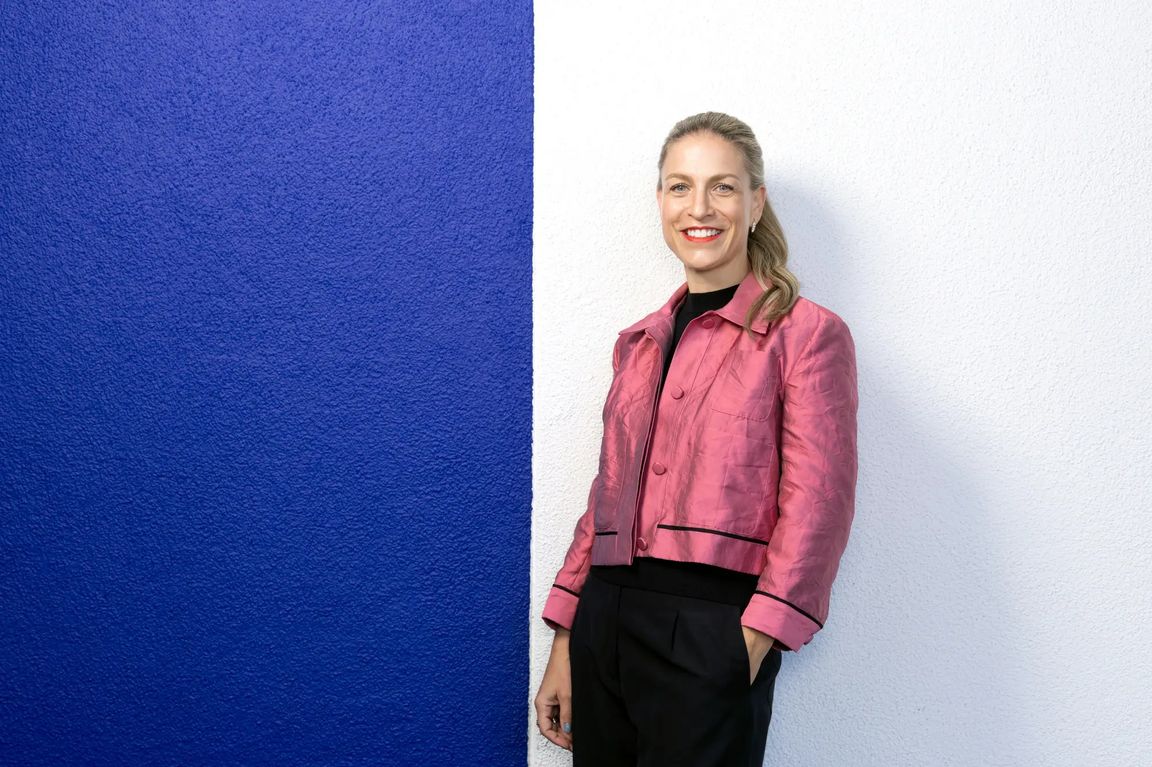
The Los Angeles Times featured an article about Zoë Ryan nearly two years into her tenure as director of the Hammer Museum at UCLA. Ryan, who wants to create a “radical welcoming” for the community through new uses of the site’s spaces, is seeking to place educational initiatives on equal footing with exhibitions, pursue collaborations across the city and position the Hammer as the anchor of a Westside arts district. (Ryan was quoted; Michael Wellen, Regan Pro and Naoko Takahatake from the Hammer were cited.) Read more about UCLA in today’s New Yorker, Daily Mail and other outlets.
See our UCLA in the News daily archive.
More highlights from UCLA in the News: October 12, 2026
Latino households to be hit hard by safety-net changes | San Francisco Examiner
Researchers at UCLA’s Latino Policy and Politics Institute released a report last month that identified three main factors that could cause disenrollment or a loss of coverage for low-income Latino households in the state that rely on these programs. Those factors are lack of eligibility under new criteria, voluntary disenrollment due to fears of current immigration policies, and challenges caused by new reporting and renewal requirements. (UCLA’s Arturo Vargas Bustamante was quoted.)
Artificial intelligence systems crack hundreds of unsolved problems | Daily Mail
Terence Tao, a professor of mathematics at the University of California, Los Angeles, and widely regarded as one of the greatest living mathematicians, wrote on Mastodon: ‘Problems are being solved autonomously by AI prompters who have no interest in the broader field itself once their initial target is “solved”, and do not understand the AI output well enough to answer questions on the result, give talks, or otherwise interact with the rest of the field.’
Should LAUSD restrict generative AI? | EdSource
“I think [AI bans are] probably the correct approach. As we learn more, some of these policies may be revised. It is easier to ban it in the elementary grades because kids are learning basic skills. They’re learning how to read, write, do basic math and understand concepts about science,” said UCLA’s Lucrecia Santibañez.
Big controversy upends a contest about microscopic videos | New York Times
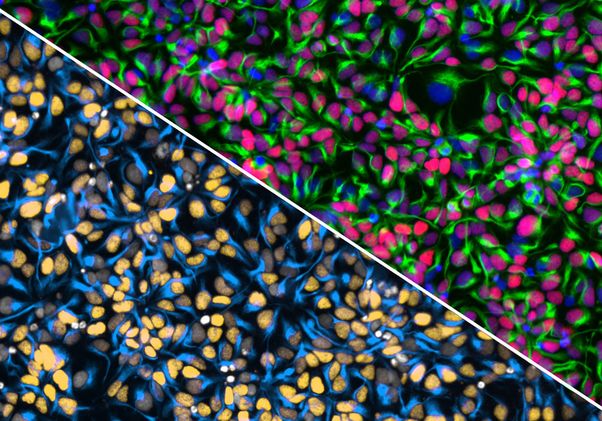
AI use in scientific imaging is not new, said Aydogan Ozcan, an expert in computational imaging and microscopy at the University of California, Los Angeles. “It helps scientists, including in my own lab, to improve the resolution and contrast of microscopic images,” he said. “But the rule is very simple: You need to disclose it.”
Who won the redistricting war? | The New Yorker
“People think, ‘Well, they won’t, because Black voters and Latino voters are part of their coalition,’ ” Richard Hasen, an election-law expert at the University of California, Los Angeles, told me. But, he continued, mapmakers are “probably going to look at short-term gains,” and may well be willing to sacrifice a Black representative if doing so increases their seat yield.
If Netanyahu goes, does anything really change for Palestinians? | Al Jazeera
Changes enacted by a new government would likely include suspending the E1 settlement project and cracking down “on extremist settler violence/terrorism in the West Bank,” said Dov Waxman, a professor of political science at the University of California, Los Angeles, who specializes in Israeli politics and the Israel-Palestine conflict.
For Trump, a firing squad on livestream becomes the latest spectacle | New York Times
“This would be the first public execution in the U.S. in nearly a century, and it would probably be seen by more people than any execution in American history,” said Mr. [Stuart] Banner, the author of “The Death Penalty: An American History” and a law professor at the University of California, Los Angeles. “There are photographs of public hangings from the old days, but no one filmed them.”
Why the Cornell case ignited a cultural firestorm | Christian Science Monitor
But people might get information from outlets that reinforce their opinions about an event, meaning that in this case, they will have different definitions about who the “good guy” and “bad guy” are. The United States’ political divisions are at play, as well, says Abigail Saguy, a professor of sociology at the University of California, Los Angeles.
How LA became a turtle smuggling hot spot | Los Angeles Times
UCLA ecology professor Brad Shaffer is working to solve at least part of that problem. “A turtle that evolved for the cold winters and native plants of Connecticut would have a much lower chance of surviving if it’s released in Georgia,” the herpetologist says. He is using genomics to try to map the landscape and homes of turtles, working with the Turtle Conservancy and the Turtle Survival Alliance.