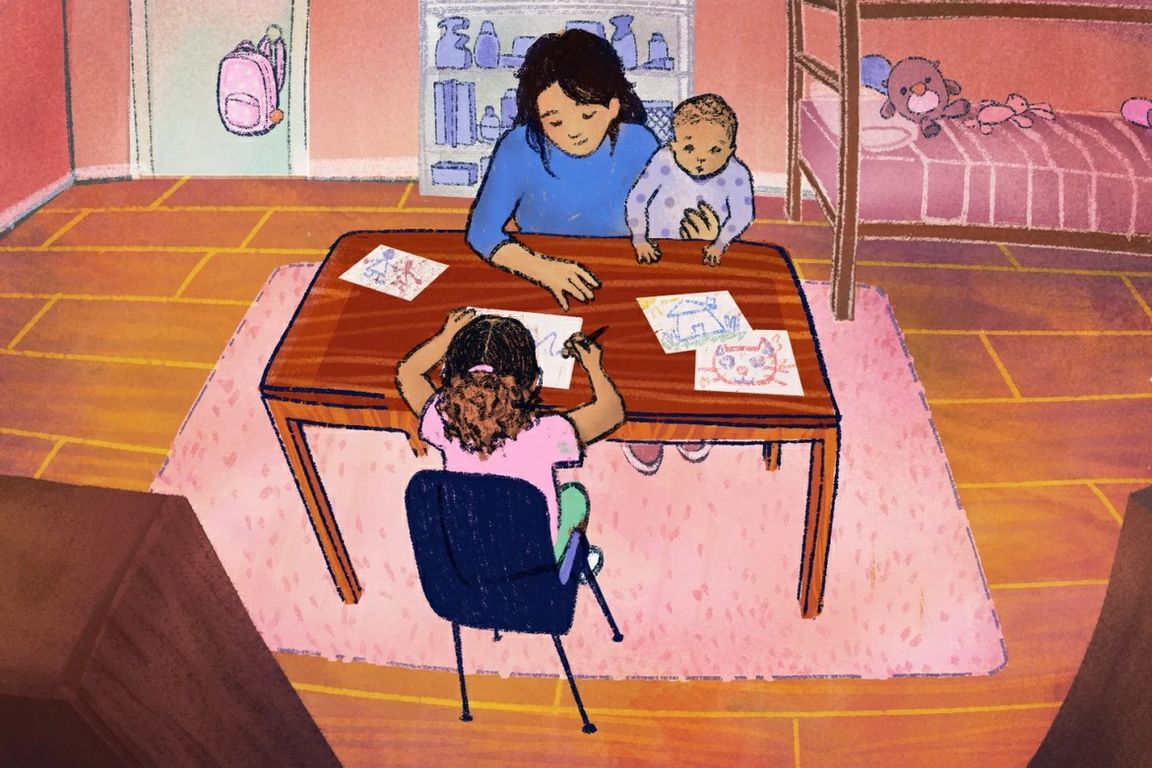
LAist reported that a new study found nearly 300,000 California K–12 students experienced homelessness in the 2024–25 school year, the highest rate recorded by UCLA researchers and a 10% increase from the 2018–19 peak. “The sheer magnitude of how many students are experiencing homelessness and how much it’s increased, that was the biggest finding for us,” said Grace Kim, study co-author and research analyst at the UCLA Center for the Transformation of Schools. Students experiencing homelessness are more likely to frequently miss school and fall behind academically. Read more about UCLA in today’s Los Angeles Times, NPR and others.
See our UCLA in the News daily archive.
More highlights from UCLA in the News: August 26, 2026
Who is the roundest? Introducing Fat Marmot Week | WBUR-FM’s “Here & Now”
The great American election is upon us. We’re talking about Fat Marmot Week, a competition that allows you to vote for the fattest, most rotund marmot. It’s hosted by The Marmot Project at Rocky Mountain Biological Laboratory in Colorado. (UCLA student Emily Renkey was interviewed. Also: KCAL-TV.)
A simple laboratory protocol to yield better scientists | Times Higher Education
(Commentary by UCLA’s Idriss Njike and Neil Garg) This lack of clear expectations among the researchers who share a lab has costs that compound the many obstacles to scientific progress. Experiments fail, hypotheses prove incorrect, and unexpected results impede the discovery process. Delays that arise from ad hoc codes of behavior are far more preventable than these.
1 in 4 NFL players will get the brain disease CTE | LAist’s “AirTalk”
“I am a cell biologist working in the basic science lab of mechanisms of disease, but I’m also a clinician taking care of patients. I think this study adds new information because they were able to track down the causes of death publicly available for a large number of former NFL players that died over a many-year period,” said UCLA’s Dr. William Flavin (approx. 1:50 mark. Also: UCLA’s Dr. Meeryo Choe was interviewed by KCRW 89.9-FM’s Press Play.)
The Supreme Court and mail-in voting | Spectrum News 1
“As of now, nothing’s changing,” said UCLA’s Rick Hasen. “It may just be too late for anything to be even fully determined in time for the midterm elections. Maybe they’ll be determined in time for the 2028 elections.” (approx. :45 mark. Hasen was also interviewed by MS Now – approx. 1:15 mark).
Local council member wants to run for an illegal fourth term | Los Angeles Times
“I don’t think that the council member’s argument is frivolous,” said Richard Hasen, an election law expert at UCLA School of Law. “But I think that a better reading is that he’s barred from running.”
Chinese immigrants led the first mass resistance to deportation system | KQED-FM
Several Supreme Court justices, along with others who wished to continue excluding Chinese immigrants, pushed for the federal government to take up immigration control, according to Kelly Lytle Hernández, an author and professor of history at UCLA. “I understand our federal immigration system as being the creation of an effort to skirt the 14th Amendment, to skirt the growth of a multiracial democracy,” she said. “Reconstruction and Chinese Exclusion are all part of the same story.”
ICE records nearly 50,000 arrests in July | NPR
The surge in arrests averages out to nearly 1,600 apprehensions a day. It tops June’s record-breaking number of arrests by 15 percent. That’s based on government data provided by ICE to the Deportation Data Project at UC Berkeley and UCLA. The project’s co-director [UCLA’s] Graeme Blair says the uptick is due to a change in tactic. “Clearly, they are expanding the ways that they are arresting people — at airports, in ICE check-ins, at immigration courthouses,” [said Blair.]
Canada retaliates in rapidly escalating U.S. trade war | Los Angeles Times
“Ohio and Michigan — which both feature close Senate races — will suffer from reduced trade in autos and auto parts,” said Kimberly Clausing, a professor of tax law and policy at the UCLA School of Law. “Two other states, Alaska and Maine, feature both close Senate races and long-standing close relations across the border.”
Is this the worst time to buy a house in California? | Los Angeles Times
Over time, home costs have risen more than earnings, said Michael Lens, a professor of urban planning and public policy at UCLA. However, the “mid to late bubble” atmosphere of 2005 saw comparably high costs. “Part of [what happened in] 2005 was financial instruments fueling a building frenzy in places that didn’t have as much demand,” he said.