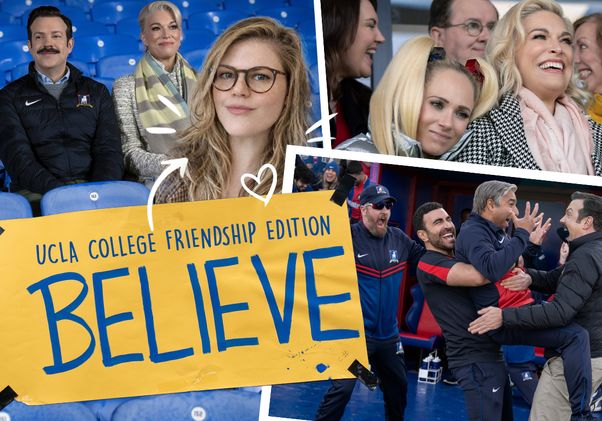
Variety reported on a new study by the Center for Scholars & Storytellers at UCLA examining how young audiences consume stories and what they want from entertainment. UCLA psychology professor Yalda T. Uhls, the center’s founder and CEO, said the findings show that young viewers are more discerning than Hollywood executives might realize, with many favoring unknown actors, more diverse representation and storytelling beyond traditional movies and television. (Also: TheWrap.) Read more about UCLA in LAist, Education Week and other outlets.
See our UCLA in the News daily archive.
More highlights from UCLA in the News: October 22, 2026
ER visits dropped where NYC provided free eviction lawyers | The City Reporter
The research, published Wednesday in the Journal of General Internal Medicine, found that emergency room visits dropped in the first 10 ZIP codes where New York began providing free attorneys to New Yorkers facing eviction in Housing Court, begun about a decade ago through its right-to-counsel program. “Particularly for vulnerable neighborhoods, this program might help tenants avoid ED visits, and so we will be doing future research to try to dig into that a little bit more deeply,” Dr. Katherine Chen, lead author of the study and an assistant professor at UCLA’s David Geffen School of Medicine. (Also: News-Medical.)
Long form vs. short reading: What’s going on inside the brain? | Education Week
Maryanne Wolf, a renowned cognitive neuroscientist, literacy scholar and director of the [UCLA Center for Dyslexia, Diverse Learners and Social Justice], thinks a lot about the process of reading. “Everything [in reading] is about how the circuit for the reading brain is used or not used,” Wolf said. Long-form reading requires our brain’s time, attention, and effort, she explains. Reading long-form fiction, she says, takes us down an even deeper path.
Preschool, TK deliver big: 11 months ahead in reading, 8 in math | Los Angeles Times
Anna Markowitz, an associate professor of education at UCLA who was not involved in the research, said the findings are striking in a field where some studies have found academic benefits of preschool fade over time. Even a single month of additional learning would leave researchers “out of your mind excited,” Markowitz said.
Researchers project SoCal’s climate extremes will worsen in coming decades | LAist
The study, which comes as part of California’s fifth statewide climate change assessment, includes more detailed models than previous reports. “What we want to highlight with this report is not how doom and gloom everything is, but just to look at climate change in the Los Angeles area as something that is inevitable, but which we can adapt to, and in particular, protect the most vulnerable,” said UCLA climate researcher Jesse Norris, the lead author of the report focused on Los Angeles.
Here’s why your LADWP bills have been going up and up | KNBC-TV
While customers with the Los Angeles Department of Water and Power have complained about their recent bills, their rates are lower than those of other utility customers in Southern California, according to the Emmett Clean Energy Law and Leadership Project at the UCLA School of Law. “Edison customers are still paying about 20% more than DWP customers for the same amount of electricity,” Denise Grab, who published a report last year comparing municipally owned or nonprofit utility models like LADWP and investor-owned companies like Southern California Edison, with the project, told NBC Los Angeles.
Becerra’s plan for free midday electricity would be a leap forward | Los Angeles Times
And nobody can lose: If a family’s bill ends up higher than it would have otherwise, the difference will be paid back. Researchers at UCLA are tracking whether free midday power gets people to shift when they use electricity.
Santa Ana wind days | Los Angeles Times
A recent study from UCLA found that climate change is cutting back the number of Santa Ana wind days — although it won’t save us from devastating wildfires anytime soon. That’s because human greenhouse gas emissions are primarily diminishing the weak and moderate winds, not the most extreme ones. Currently, it’s erasing only about 1 in every 200 wind events. By the end of the century, it will snuff out 1 in every 10 or 20.
Supplement may help ease ‘brain fog’ after breast cancer treatment | Medical Xpress
A new study led by researchers at the UCLA Health Jonsson Comprehensive Cancer Center found that a nutritional supplement containing oxaloacetate, a molecule naturally found in the body that helps cells produce energy, may help improve cognitive function and reduce the fatigue experienced by some breast cancer survivors following treatment. (UCLA’s Dr. Patricia Ganz was quoted.)