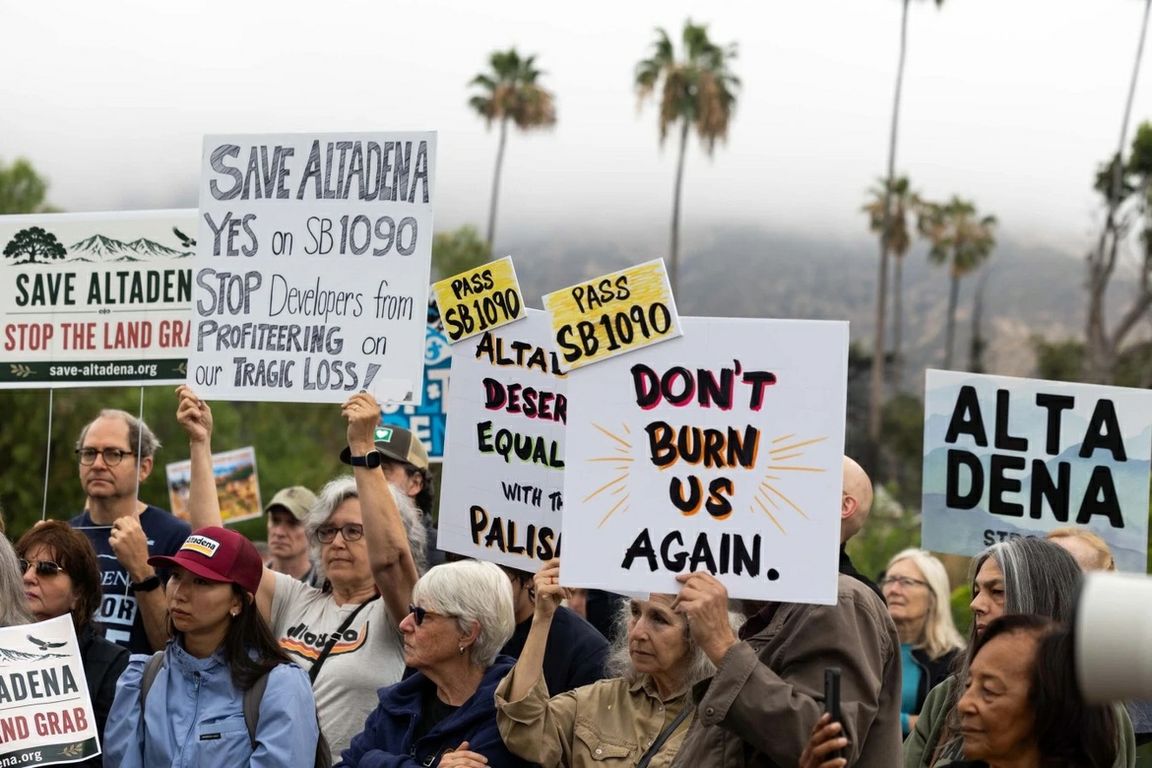
LAist reported on pushback from some Altadena residents against out-of-town developers seeking to build dense, more affordable housing in the town's burned areas, which had previously been single-family neighborhoods. Recovering and rebuilding after a traumatic event like a large-scale fire can cause friction within communities, says Megan Mullin, a public policy professor at UCLA. “There can be a tension between what individuals and households need for their own recovery and the vision that a community has for what it wants to be in the future.” Read more about UCLA in today’s CBS Mornings, NPR’s “1A” and others.
More highlights from UCLA in the News: July 24, 2026
UCLA bringing tuition-free courses to South LA | KNBC-TV
A new partnership between UCLA Extension and the Sola Foundation was announced today. The tuition free courses will launch this fall in Crenshaw, and residents won’t have to leave their neighborhood to take part.
Fighting extreme heat in 2026 | NPR’s “1A”
“Shade fundamentally changes the equation about how much energy your body needs to expend when it’s hot, all else equal. A person standing in the shade can be up to 30°c cooler than someone just a few feet away standing in the sunlight,” said UCLA’s V. Kelly Turner.
Gastro illness outbreak’s impact on businesses | CBS Mornings
“The big increase in cases that we’re seeing is not necessarily related to new infections,” said UCLA’s Anne Rimoin. “It’s related to the fact that this is a disease that can take two weeks to show up. The key here is that the lettuce has been identified.” (approx. :50 mark.)
Heat irritability | KNX-AM
“Research links higher temperatures with greater irritability, impulsivity and interpersonal conflict,” said UCLA’s Anne Rimoin. “You’re uncomfortable, your heart rate rises, you may become dehydrated, and impulse control can worsen.”