UCLA in the News

Coverage of UCLA in the world's news media, aggregated daily

Results

Veterans in STEM programs face uncertainty as research funding shrinks — and more UCLA media

A CalMatters commentary co-written by UCLA doctoral student and Marine Corps veteran Jason Williams argued that federal research funding cuts are threatening programs that help veterans transition from military service to careers in science and higher education. Williams highlighted the impact on UCLA’s Veterans in STEM program, which provides research experience, mentorship and professional development opportunities for student veterans. The authors urged support for California’s proposed Science and Health Research Bond Act, saying it could help sustain research programs and educational pathways amid ongoing federal funding uncertainty. Read more about UCLA in today’s Forbes, Associated Press and others.

War, sports collide as Iran's World Cup kicks off in Los Angeles — and more UCLA media

CBC News reported on the World Cup and Team Iran's arrival in Los Angeles — a potential collision of geopolitics and sports in an area with a large Iranian diaspora. "You've never had two countries engaged in active military conflict matching up against each other, competing in the same tournament," said Salma Mousa, a UCLA assistant professor of political science who is also affiliated with the Bedari Kindness Institute. Mousa, who studies the intersection of sports and conflicts, worries that a potential July 3 face-off between Iran and the U.S. in Texas might “increase tensions to kind of a cataclysmic degree.” Read more about UCLA in today’s Washington Times.

Could viral infections trigger dormant cancers to return? — and more UCLA media

The Los Angeles Times reported on emerging research suggesting that severe viral infections such as COVID-19 may play a role in reactivating dormant cancer cells, potentially increasing the risk of recurrence in some patients. Dr. Aditya Bardia, director of Translational Research Integration at the UCLA Health Jonsson Comprehensive Cancer Center, said the findings warrant further investigation and noted that his own research team has observed similar associations between COVID-19 infection and breast cancer recurrence. Read more about UCLA in today’s Washington Post, NPR and others.

Keke Palmer is heading to UCLA with new artist-in-residence program — and more UCLA media

Starting this fall, UCLA students will have the opportunity to learn a thing or two from Professor Palmer. The Hollywood Reporter reports that actress and entrepreneur Keke Palmer is teaming with the university’s School of Theater Film and Television on a new 5-year artist-in-residence collaboration — one that will see the I Love Boosters star leading quarterly workshops on campus. (UCLA’s Dean Celine Parreñas Shimizu was quoted. Also: The Grio.) Read more about UCLA in today’s Los Angeles Times, Grist and others.

Why reality TV is embracing female friendship — and more UCLA media

Vox explored the rise of the “girl’s girl” phenomenon in reality television, examining how shows such as “Love Island,” “Summer House” and “Vanderpump Rules” have moved from pitting women against one another to celebrating female friendships. Yalda Uhls, adjunct professor of psychology and founder of UCLA’s Center for Scholars and Storytellers, said young people consistently express a desire to see more positive depictions of friendship in media and suggested audiences may be responding to healthier relationship dynamics on screen. Read more about UCLA in today’s New York Times, The Atlantic and others.

Why new dads shouldn’t panic about low testosterone — and more UCLA media

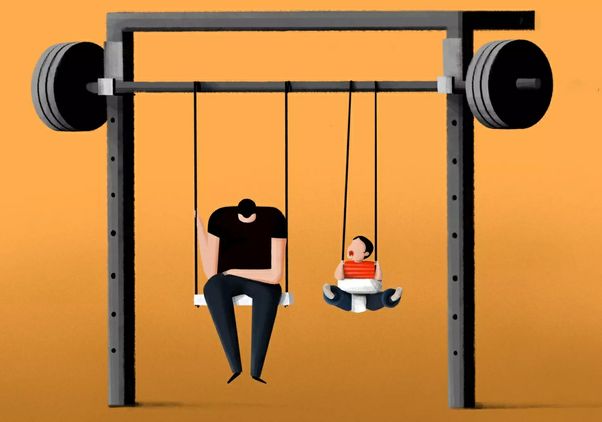
The Los Angeles Times reported on what the science says about testosterone levels in new dads in response to social media movements pushing testosterone therapy for this demographic. Dr. Jesse Mills, director of the Men’s Clinic at UCLA Health, joins other experts in stressing that men should be paying attention to symptoms of low testosterone — such as depression and low libido — rather than trying to reach or maintain an ideal number. Read more about UCLA in today’s Washington Post, Variety and others.

What does AI mean for the future of math? — and more UCLA media

The New York Times reported that technology companies are pouring vast resources into reasoning systems capable of solving open math problems, signaling a paradigm shift for mathematicians. Those in the field, like UCLA’s Terence Tao, are becoming more open to the potential for AI to become a useful tool, or even a partner, as models get more advanced. “About 12 months ago, you could still say that these are curiosities or overblown and can’t be useful,” said Tao, a Fields Medal-winning mathematician. “Now you can’t hold that position.” Read more about UCLA in today’s USA Today, CNN and others.

Making sense of America’s low fertility rate — and more UCLA media

The Wall Street Journal reported on reactions across the U.S. to a study released in April outlining falling birth rates. Experts say the alarm from these numbers doesn’t tell the whole story, nor is this trend anything new. “We measure fertility rates in real time, but women live their reproductive lives across decades,” says Martha Bailey, a professor of economics and director of the California Center for Population Research at UCLA. “The top-line number sounding alarms means they are waiting — but this generation still has lots of time.” Read more about UCLA in today’s CNN, Spectrum News 1 and others.

California’s slow ballot count makes it a target for critics. It doesn’t mean elections are rigged — and more UCLA media

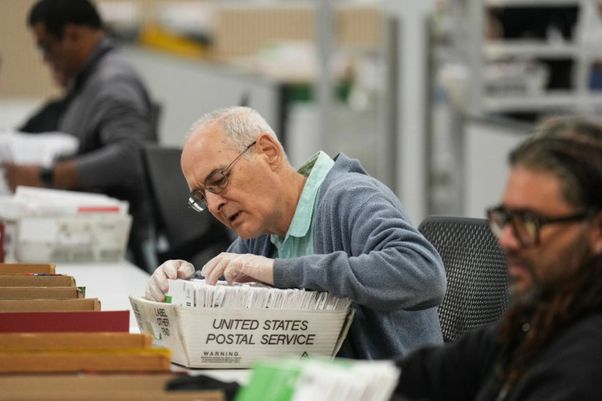
The Associated Press reported that some experts warned the count from Tuesday’s California primary might take even longer than after previous elections. “What compounds things this time around is that Democrats have been holding on to their ballots,” said Rick Hasen, a UCLA law professor. Read and hear more about UCLA in today’s Wired, New York Times and others.

New tool makes LA County’s heat illness data public for the first time — and more UCLA media

The Los Angeles Times reported on a new Los Angeles County dashboard that tracks heat-related emergency room visits and deaths, offering public access to data that was previously difficult to obtain. UCLA experts David Eisenman, Bharat Venkat and V. Kelly Turner said the tool could help officials better understand who is most vulnerable to extreme heat and evaluate whether public health interventions are working. The researchers also highlighted the links between heat illness, social inequality and chronic health conditions. Read more about UCLA in today’s New York Times, CNN and others.

Westwood Village Theater’s comeback sparks excitement for Bruins — and more UCLA media

The Los Angeles Times reported on the highly anticipated reopening of the Westwood Village theater following its purchase by a group of 35 prominent directors, including Jason Reitman, Christopher Nolan, J.J. Abrams and Steven Spielberg. The group is leading a $25 million restoration of the historic venue in an effort to revive Westwood’s role as a hub for movie premieres while also preserving a beloved gathering place for UCLA students. The article featured several current UCLA students who expressed enthusiasm for the theater’s return. Read more about UCLA in today’s Associated Press, Bloomberg Law and others.

How far did wildfire pollutants travel? New study offers clues — and more UCLA media

A Southern California News Group article highlighted new UCLA and UC Davis research findings that potentially harmful chromium-6 nanoparticles remained airborne for months after the Eaton and Palisades fires and may have traveled as far as 9 miles beyond the burn zones. UCLA’s Michael Jerrett said the particles likely exposed millions of residents to concentrations far above typical Los Angeles levels, while UCLA professor Yifang Zhu emphasized the need for continued monitoring to better understand long-term health risks and environmental recovery. Read more about UCLA in today’s Los Angeles Times, Reuters and more.  

Experimental pill offers new hope against pancreatic cancer — and more UCLA media

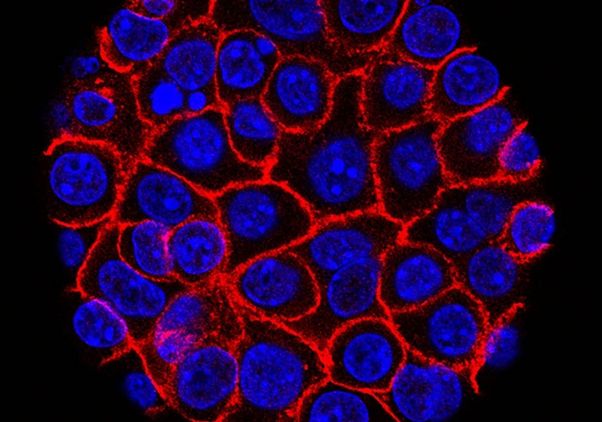
The Associated Press reported on a promising new drug that nearly doubled survival time for patients with advanced pancreatic cancer whose disease had stopped responding to treatment. UCLA’s Dr. Zev Wainberg, who helped lead the study, called the results “a very large step forward” for one of the deadliest forms of cancer. The experimental pill, daraxonrasib, targets a mutation found in more than 90% of pancreatic cancer cases and was associated with longer survival, less pain and improved quality of life compared with chemotherapy. (Also: USA Today). Read more about UCLA in today’s Forbes and Los Angeles Times.

The 9 best movies to see in this weekend’s UCLA Festival of Preservation — and more UCLA media

The Los Angeles Times highlighted the return of UCLA’s Festival of Preservation, a free biennial showcase of newly restored films from the UCLA Film & Television Archive. Held at the Hammer Museum at UCLA’s Billy Wilder Theater, the festival features a wide range of restored works spanning Hollywood classics, international cinema, television, documentaries and animation. Read more about UCLA from the New York Times, USA Today and others.

How AI has helped former reality TV star Spencer Pratt become a contender for Los Angeles mayor — and more UCLA media

CBC News spoke with UCLA’s Chris Mattmann about Los Angeles mayoral hopeful Spencer Pratt and how AI has contributed to his campaign. Mattmann, UCLA’s chief data and artificial intelligence officer, says that the effectiveness of the Pratt ads are in part due to the way AI technology has evolved just in the past few years. “It’s very realistic. And that adds to that sort of evocation of emotion and realism,” he said. “You don’t need to be deeply technical to do it.” Read more about UCLA in today’s ANC News, Time and others.

Do antidepressants during pregnancy increase autism risk? New study says no — and more UCLA media

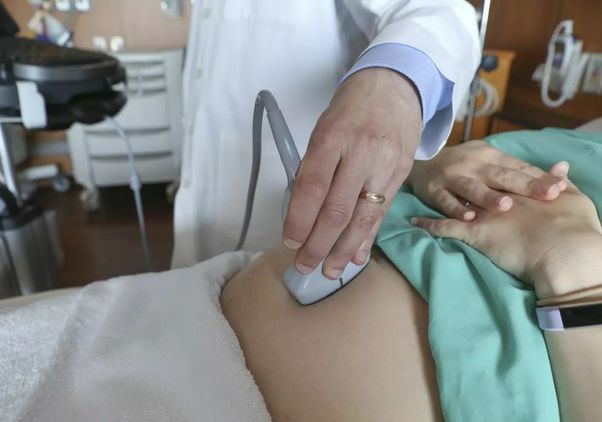
The Los Angeles Times reported on a large new study finding that antidepressant use during pregnancy does not appear to significantly increase a child’s risk of autism or ADHD once family mental health history is taken into account. UCLA’s Dr. Katie Unverferth, medical director of the UCLA Maternal Mental Health Program, said the findings offer reassurance for expectant parents weighing treatment decisions during pregnancy. Unverferth also emphasized that the risks of untreated depression must be considered alongside concerns about medication use. Read more about UCLA in today’s Independent, BBC News and others.

AI data centers are a hot-button issue. But enough to tilt the midterms? — and more UCLA media

Rolling Stone reported on the growing opposition from residents in both red and blue states to the development of AI data centers in their communities, and how the outrage could influence voting in the midterms. “Amid so much partisan division, opposition to data centers seems to be the thing that unites Americans right now,” said Megan Mullin, faculty director of the UCLA Luskin Center for Innovation. “It’s tempting to attribute this resistance to a growing wariness about technology and the titans who control it, but in reality it’s rooted in the one thing that has always united Americans: our deep affinity for where we live.” Read more about UCLA in today’s CNN, Bloomberg and others.

Meta, Broadcom and others to launch $125 million semiconductor research hub at UCLA — and more UCLA media

CNBC reported on news of UCLA's new partnership with tech titans Broadcom, Meta and others to launch a $125 million semiconductor hub. The partnership connects academia and industry leaders to accelerate research and workforce development for AI-powered chip technologies. Faculty and student researchers will work with the founding companies to help shorten the timeline for new chip innovations to reach a rapidly-changing market, said Ah-Hyung “Alissa” Park, the Ronald and Valerie Sugar Dean of Engineering at UCLA Samueli. Read more about UCLA in today’s Los Angeles Times, America Community Media and others.

Fires ring Southern California and it’s only May. What’s going on? — and more UCLA media

The Los Angeles Times reported that there are currently five fires of 1,000 acres or more burning in Southern California, which UCLA’s Park Williams described as abnormal for this time of year but not unprecedented. Park, a professor and hydroclimatologist, pointed to a study suggesting that human-caused warming has advanced the onset of the fire season by six to 46 days across most of the state. UCLA climate scientist Alex Hall said a collision of natural factors can also create the perfect storm. Read more about UCLA in today’s Time, Wall Street Journal and others.

UCLA researchers identify oak tree populations as well adapted to climate change — and more UCLA media

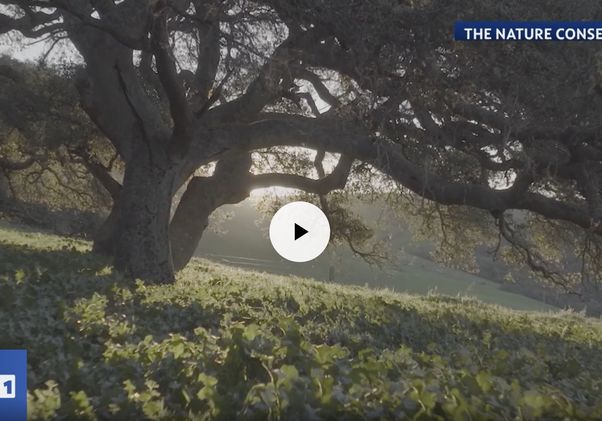
Spectrum News 1 reported that researchers at UCLA and the Nature Conservancy have pioneered a new gene sequencing research project with the goal of saving native oak trees and creating a more heat- and fire-resilient native landscape across California. Victoria Sork, a distinguished professor of ecology and evolutionary biology at UCLA, partnered with the Nature Conservancy on a research program to identify native oak tree populations that are more adapted to heat and climate change by studying their genetics. Read more about UCLA in today’s Fast Company and Popular Science. 

In governor's race, Democratic candidates lean into immigration as young Latinos eye affordability — and more UCLA media

Matt Barreto, founder of the UCLA Latino Policy and Politics Institute, spoke to CapRadio about the California governor’s race and said affordability now dominates concerns among all demographics, including young Latinos. “There’s always that disconnect between Latinos being a huge part of the state economy, the state population, the public school system, but a relatively smaller part of the electorate,” Barreto said. Read more about UCLA from today’s Sacramento Bee, The Guardian and more. 

When should women start getting mammograms? — and more UCLA media

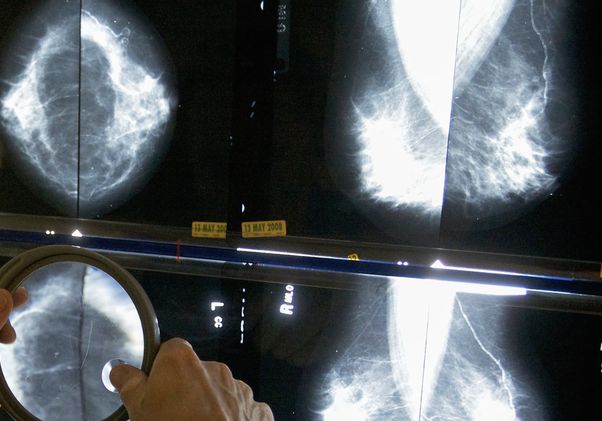
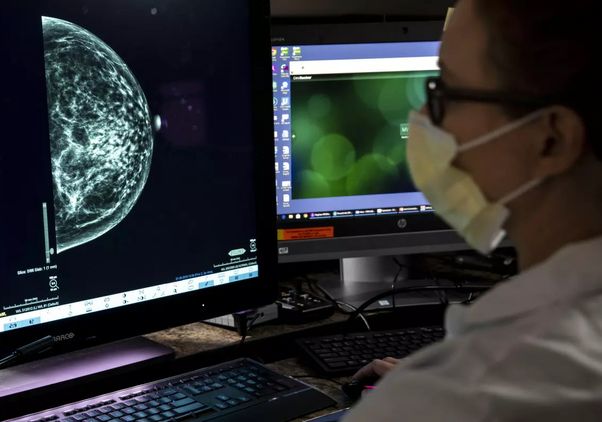
The Associated Press examined why medical groups continue to offer differing recommendations on when women should begin routine mammograms and how often they should be screened. UCLA Health’s Dr. Carolyn Crandall said there is a narrower balance between the benefits and risks from mammograms for women in their 40s, when false positives and unnecessary follow-up procedures are more common. The story also explored how genetics, breast density and emerging risk-based screening models may shape future guidelines. Read more about UCLA from today’s CNN and New York Times.

Xavier Becerra bets on decades of experience in California governor’s race — and more UCLA media

The Associated Press discussed Xavier Bacerra’s bid for governor of California, speaking with several who have worked with the candidate, whether directly or indirectly, in government. “He has this breadth of experience that none of the other candidates have,” said Matt Barreto, a political scientist and cofounder of the UCLA Voting Rights Project, which Becerra partnered with in a recent lawsuit. “What that means is that he has the ability to portray himself to the voters as having been through the fight.” Read more about UCLA in today’s Los Angeles Times and Pasatiempo.

After the Eaton Fire, residents face growing fears over toxic contamination — and more UCLA media

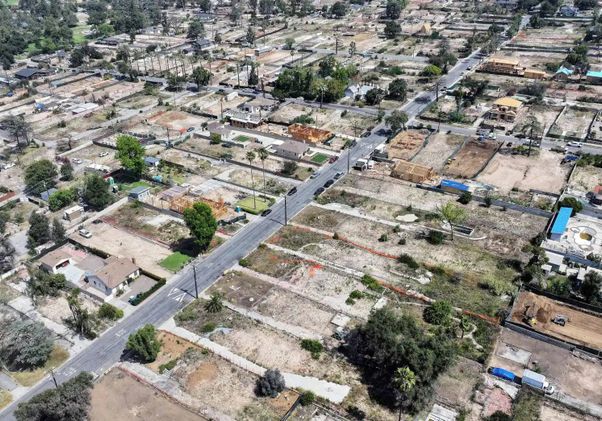
NBC News examined the lingering contamination concerns facing Altadena residents more than a year after the Eaton Fire, including elevated levels of lead and other hazardous materials found in homes and soil. UCLA civil and environmental engineering professor Sanjay Mohanty said testing from roughly 1,300 affected properties found that many homes and burned lots still exceeded California safety thresholds for lead contamination even after cleanup efforts. Mohanty also criticized the lack of soil testing requirements during debris removal, saying the policy left subcontractors “unaccountable.” Read more about UCLA in today’s Bloomberg Law and PBS.

Should parents face criminal charges for kids’ e-motorcycle collisions? — and more UCLA media

The Southern California News Group reported on the debate over whether parents should face criminal charges for children’s e-motorcycle and e-bike collisions following an uptick in incidents, some proving fatal for innocent bystanders. Shirin Bakhshay, an assistant professor at the UCLA School of Law, said prosecutions targeting parents in connection with their children’s actions are fairly new and appear to reflect frustration among authorities who believe current laws and public education efforts have not been effective in stopping dangerous behavior involving electric two-wheelers. Read more about UCLA in today’s PBS News and LAist.
Load More Items Loading...