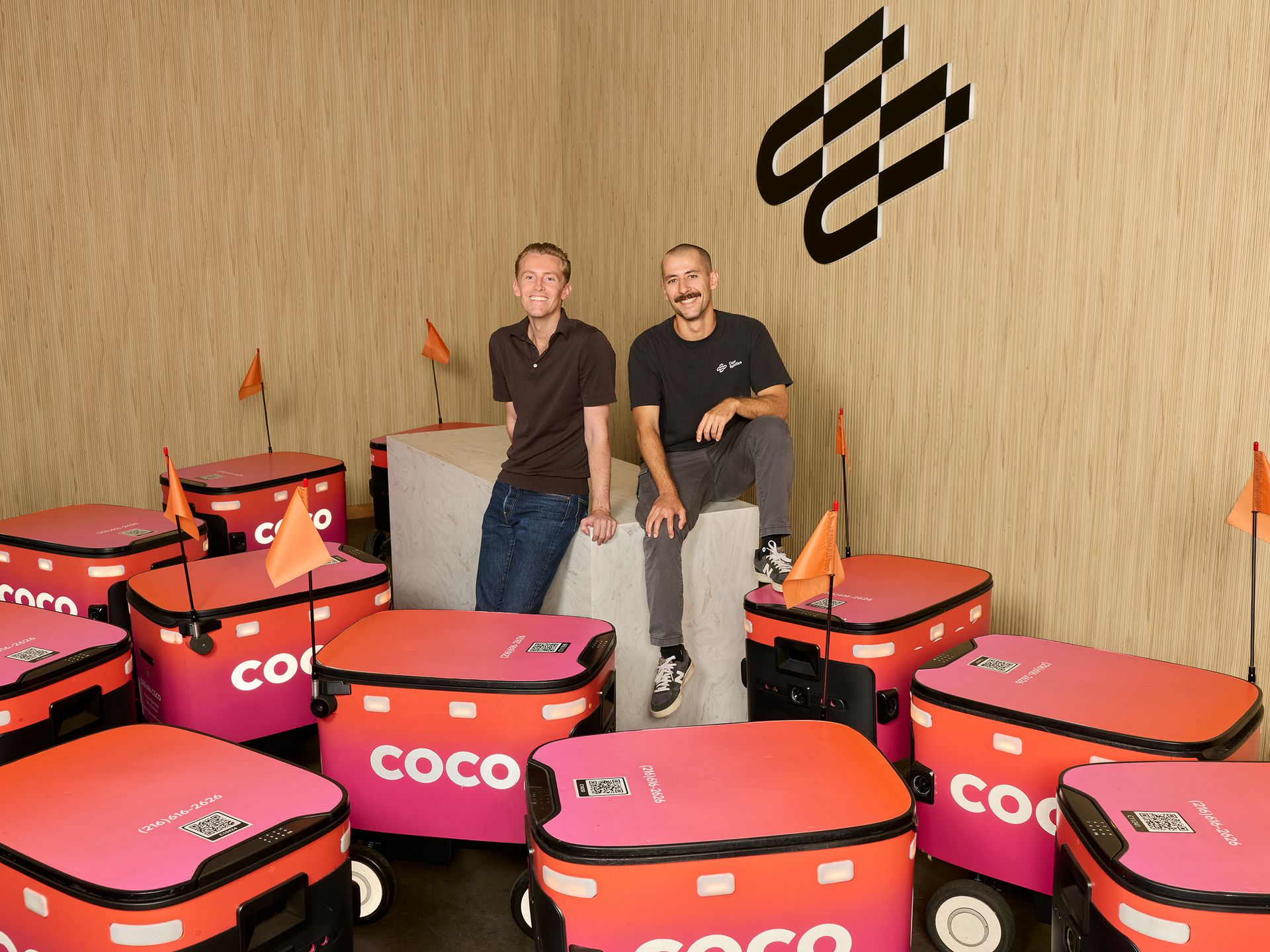
There are a lot of questions to ask your new college roommate. How often do you clean your room? Are you a morning person or a night person? Oh, and of course: Want to launch a company together that we’ll continue long after graduation?
For these three Bruin pairs who met as undergraduates, the answer to that last question was a resounding “yes.” And while it might seem surprising that a college pal might become your long-term professional business partner, it’s truly all in a day’s work for Zach Rash ’19 and Brad Squicciarini ’19 (Coco Robotics); Presley Campbell ’22 and Alden Kramer ’21 (Campbell&Kramer); and Lev Afonine ’26 and Ruemon Bhattacharyya ’26 (BioStrive).
They’re just three examples of how, at the intersection of two pillars of Chancellor Julio Frenk’s flagship initiatives — “UCLA Connects” and “UCLA for Life” — blue-and-gold go-getters continue to follow the great tradition of Bruin innovation and collaboration while blazing their own trails, on their own terms. Together.
COCO ROBOTICS
Building bots with your buddy
It was during a surf team informational session, on the very first day of school their first year, that lifelong Californian Zach Rash overheard Brad Squicciarini brag about “getting barreled” (picture a surfer nestled deep inside a curling wave) in his native New Jersey.
“I turned around and thought, Who’s that? Who is this man talking about good waves in Jersey?!” Rash says with a laugh. “And then later that week, in an introductory physics engineering course, Brad recognized me and took the next seat over.”
Quickly striking up a friendship, the pair spent every day talking about everything and nothing, including surfing, life and what they wanted to do after graduation. On one thing, the two computer science majors agreed: The future was in robotics.
They moved into an apartment together. Then they launched a club with the goal of working alongside fellow undergraduates to build self-driving cars. When they soon realized they were the club’s two most passionate — and active — members, Squicciarini and Rash switched their focus to developing their own research lab. “It was a sort of subdivision of an existing lab, and we built robots and deployed them around campus,” Rash says. “We did that for three years. I guess we still are."
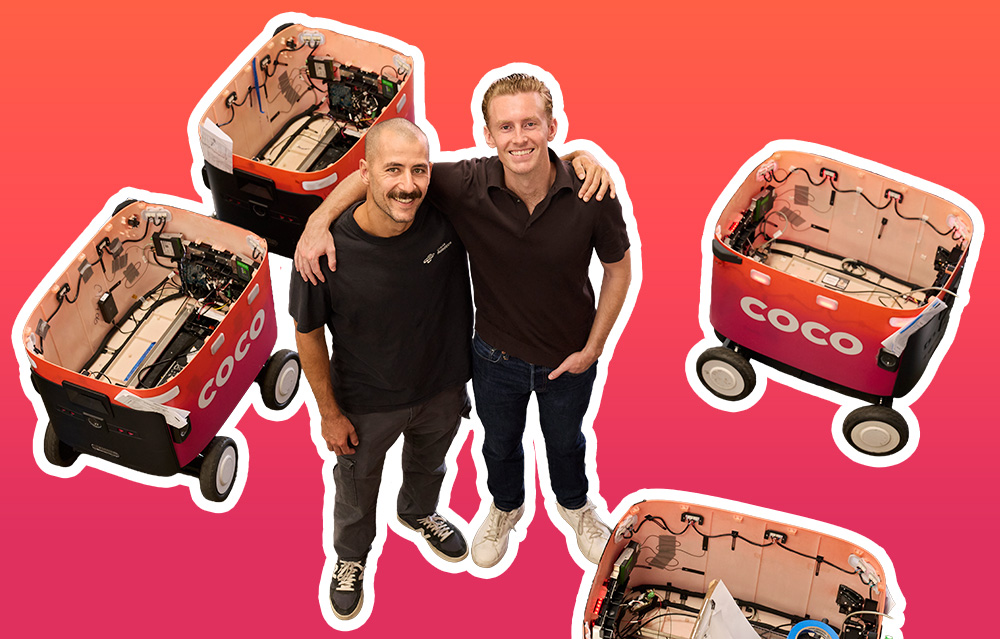
Today, their L.A.-based company, Coco Robotics, designs, manufactures and operates delivery bots. Rash is co-founder and CEO; Squicciarini, co-founder and CTO. On track to operate the largest autonomous vehicle fleet in the world, Coco Robotics boasts a fleet of more than a thousand vehicles that roam various streets in various locales delivering takeout for more than 3,000 merchant partners, including DoorDash and Uber Eats. To date, they’ve completed more than half a million zero-emission deliveries and raised $120 million in venture funding, and they’re on track to scale their fleet up to thousands more robots globally by the end of 2026. Oh, and occasionally the bots also feature customized looks for peak advertising activations — just in case you were wondering why you saw a bot outfitted as a Minion bustling down the sidewalk this summer.
In fact, if you’re on campus or elsewhere in Los Angeles, or in Chicago, Miami, San Jose, Jersey City or even Helsinki — yes, Helsinki, now that Coco Robotics has launched in Europe — there’s an excellent chance you’ve seen one of their cheerful-looking delivery bots rumbling down the sidewalk, about to sate someone’s jones for a cheeseburger. The founders say their bots help not only companies but cities, especially when it comes to keeping more cars off the road. (You can fit 18 Cocos in a single parking space.)
A huge source of pride for both young men: They’ve managed to make a globally impactful platform based on something that literally took shape in their own living room in Westwood. “I’ll never forget one time after we built several robots in our apartment, Zach got out of the shower and stepped on some aluminum shavings barefoot,” Squicciarini says. “He was like, ‘Dude, how about one rule: We don’t have metal shards in the bathroom.’”
Another early-days incident still makes them both laugh. Squicciarini was testing some control software — not their software, he emphasizes — and a bug caused the robot to drive forward and pin him against the wall outside Rash’s bedroom.
“I had to literally fight with the robot for two minutes before I was able to turn it off,” he says. “That’s when Zach happened to open his door and ask, ‘Dude, why are you making so much noise?’”
Although Squicciarini hasn’t taken Rash surfing off the New Jersey coast — yet — the two still enjoy riding the California waves and keeping their conversations, business and friendship going strong.
“We laugh sometimes because Brad and I have not been out of the same room for, like, 10 years now,” Rash says. “When you start a company with somebody, one of the biggest risks investors look for is co-founder chemistry — if the co-founders break up their partnership, the company often fails. With us, there is no world in which that is ever going to happen.”
Campbell&Kramer
Friendship is always in fashion
Orange County natives Presley Campbell and Alden Kramer first crossed paths in a UCLA Facebook group chat for prospective roommates. After moving into Rieber Hall together as first-years, they bonded over their shared love of fashion.
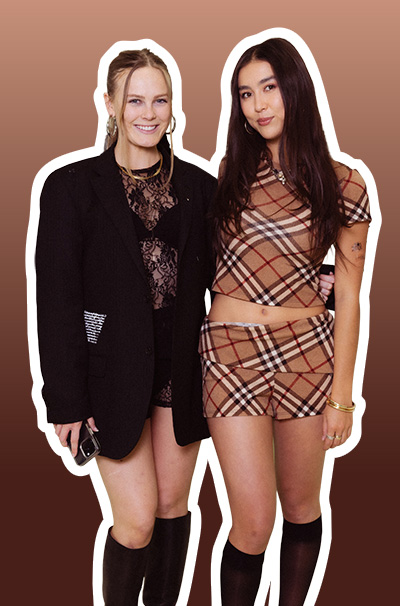
“Throughout the year, we’d go to sample sales together, we’d go to store openings, and we got more and more involved in the L.A. fashion scene,” Kramer remembers. “One day we were just sitting on our beds in the dorm and were like, ‘We should start a brand.’ We started sketching some designs then and there.”
Fascinated by fashion since childhood, the duo thought back to formative pop culture influences, from Lizzie McGuire and Teen Vogue (Kramer) to impromptu Hannah Montana–inspired fashion shows staged for a stylish aunt (Campbell). Almost overnight, they found themselves flooded with creative ideas.
Their fledgling venture set them apart from some of their fellow economics majors, who were working toward future careers in fields like consulting and accounting. But Kramer and Campbell didn’t hesitate to keep pushing, to keep exploring new terrain.
What they lacked in business (or even sewing) experience they made up for in a strong, shared vision for what they wanted their line to be. That included a commitment to ethical, environmentally friendly production, reinforced by Campbell’s enrollment in a UCLA sustainability Cluster course. Alden had an old sewing machine; the duo pooled their money to buy $50 of old clothes at Goodwill that they then cut into bits, mixing and matching and sewing them into the real-life versions of their sketches.
Less than a decade later, their business, Campbell&Kramer, is known and loved for its effortlessly cool style focused on elevated basics and laid-back knitwear. (Just ask celebrities like Hailey Bieber, who made headlines rocking the brand’s Thalia shorts at this year’s Coachella, or check out outlets like The Cut, which anointed the brand’s baby tee as the industry’s best.) Campbell&Kramer is now grossing half a million dollars in annual revenue — a remarkable stat considering an estimated 80% of new fashion brands fail within the first five years.
Success wasn’t a straight line, and it wasn’t simple, but the duo never stopped being dedicated to their work and to each other — especially because of their Bruin beginnings.
“The whole thing was built on the UCLA community,” says Campbell, recalling that early on she and Kramer sold clothes at sorority houses and around campus and were part of FAST (Fashion and Student Trends), UCLA’s fashion club that boasts more than 7,000 Instagram followers. They were also inspired — and continue to be — by other Bruins who share their stylish interests. “The models and photographers would be our classmates,” she continues. “Plus, everyone at UCLA goes on to do amazing things, and so it’s really exciting to see people become a great part of your network as we all continue to grow.”
Their hope is that their label can become a market leader as the first brand to use preexisting materials on a large scale, whether that’s via all-recycled fabric or a mixture of deadstock. Powering their progressive business sense: an authenticity born of their relationship to their clothes and to each other.
“Our partnership is absolutely essential to the brand, and the clothes represent that, too,” Kramer says. “Every piece is a combo of Presley’s and my taste, both what’s unique to each of us and how our tastes overlap. That intersection creates something delightful.”
Speaking of delightful, every now and then it hits them how far they’ve come — and the path they’re still on.
“It feels surreal, and I can’t believe how lucky we are to do something that we each separately have wanted to do since we were kids,” Kramer says. “Everything stems from us having a really great friendship foundation.”
“If you had told us in our dorm back then everything that we would go on to do, our jaws would drop,” Campbell adds with a smile. “And then we’d get right back to work.”
BioStrive
Balancing each other out, pushing each other forward
When Ruemon Bhattacharyya came to UCLA from Boston in 2022, he only knew one other person also making the trek across the country — a high school classmate. When Lev Afonine arrived from the Bay Area, he knew no one. And then the two crossed paths, on the third floor of Hedrick Hall on move-in day.
“Somehow the topic of sleep schedules came up, and I told Ruemon how I’m an early bird who’s always in bed by 9 p.m., which isn’t that common in college,” Afonine says with a laugh. “I think he’s the first person I’ve ever met who went to bed the same time as I do. We became friends right off the bat.”
Their devotion to sleep aside, the two had some key personality differences. A self-described type A East Coaster, Bhattacharyya meticulously prepared and organized for every situation, mapping out a path to a medical or sales career. Afonine, a track and field star who came to UCLA with a vague idea that he was interested in farming (yes, farming), brought a more relaxed, open approach to each day, exploring various majors and directions.
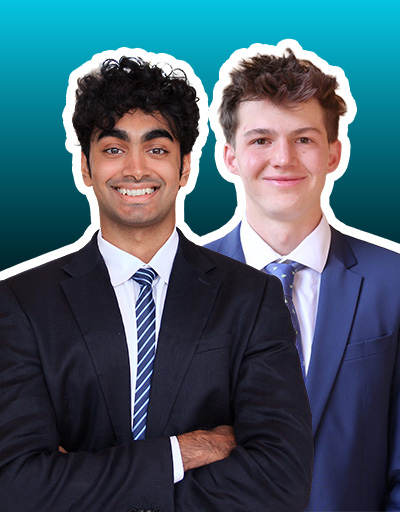
The two brought out the best in each other. They both became high achievers, lining up job offers (Bhattacharyya in healthcare, Afonine — after forgoing farming — in banking) long before graduation and applying to be in multiple clubs to receive further mentorship in areas they wanted to explore, like business. When they started discussing the challenges of the surprisingly in-depth, lengthy and rigorous application and interviewing processes to gain one of an extremely limited number of seats in these clubs, the friends had an aha moment.
“What better way to learn these skills we were hoping to gain from these clubs than to take all we’ve learned and then take the risk to start our own business instead?” Bhattacharyya says. “Being close friends and so motivated is what led us to create BioStrive.”
The venture began as a life sciences consulting firm, with the two joining forces with several classmates to provide back-end business, marketing and software development support for burgeoning companies. In about six months, BioStrive generated more than $50,000 in revenue and gave the duo invaluable insight into the field and how their unique experience could open new doors.
True to form, Bhattacharyya and Afonine aimed high. One day in the fall of their junior year, completely out of the blue, they sent a LinkedIn message to the chief medical officer of global biotech giant Amgen to see if they could get some career advice.
“It was insane — he agreed to have a phone call with us,” Bhattacharyya recalls. “When we hopped on, Lev and I were sitting there thinking, ‘We’re going to get cooked. This guy’s going to tear us apart!’”
Instead, the executive was highly enthusiastic. He encouraged the duo to pursue their interest in creating their own digital tool that a life sciences company could use, and he even offered $100,000 in seed funding if they could complete the tool within the next couple of months. The deadline ultimately proved too tight. But the executive’s confidence in their abilities gave them the push they needed.
They pivoted their company’s mission to create Emporia, an AI and workflow platform that lets life sciences companies transform scientific literature into evidence-backed commercial product claims and other collateral. In other words, it saves companies massive time and money by expediting the vetting — scientifically, commercially, legally, medically — of claims they can use to sell their medical products to consumers.
This adventure has helped Afonine, co-founder and former CFO, and Bhattacharyya, co-founder and CEO, to unite a talented group of up-and-coming experts in and adjacent to the UCLA community. These include two current Bruins (engineering master’s student Evan Li and political science student Madeline Abellera), as well as two Bruins-by-association (Afonine’s high school friend Niki Kastyshyn and Zachary Wood). All but Wood, who telecommutes from Indiana, live and work together in Westwood.
This year, the first in which Afonine and Bhattacharyya have been able to devote themselves to the company full time without the demands of school, promises to be especially momentous. They have lined up their first cohort of customers and are in talks with many of the world’s largest medical companies, including their old friends at Amgen, who remain very interested in their journey. In addition, they have their first institutional investor from a very special source: Blue & Gold Ventures, founded by current UCLA mathematics major Arhaan Goyal.
“We’re on the edge of wonderful exponential growth,” says Afonine. “It’s really exciting for Ruemon and me to be in a position where we can make these decisions about the future of our company.”
The secret to their success is a common thread running through most Bruin stories.
“I think what’s helped me most at UCLA, and going forward, are the friendships I’ve made along the way,” Afonine adds. "Frankly, meeting so many people who are smarter and more talented than me while getting the chance to learn from and work with them has been key.
“Being here taught me not to treat school as a competition, but as a growth opportunity — so I’d say going to UCLA is the best decision I’ve ever made.”
Read more from UCLA Magazine’s Fall 2026 issue.