In the early 1970s, Los Angeles pop music was divided between two serious-minded camps: the singer-songwriters of Laurel Canyon and the progressive rock longhairs of the Sunset Boulevard underground. And right in the middle of this sensitivity and noodling splashed Mogan David and his Winos — a Bruin garage band with a surreal name who took their three-chord mayhem, but never themselves, seriously.
The Winos played a handful of gigs around campus, in between lectures, climaxing in a joyfully shambolic headliner at the Ackerman Grand Ballroom in 1973. Then they graduated and went on to their real lives.
But hardcore music fans have long memories.
Earlier this year, the group’s one and only album, Savage Young Winos, was remastered by indie label Liberation Hall Records of Massachusetts. Six decades after it was recorded and ostensibly forgotten, it’s now available on vinyl again, as well as on CD and streaming. The album’s track list includes “Nose Job,” which mocks plastic surgery, amid other two-minute thrashes with titles like “Street Baby.” It’s maximum energy, minimal lyrics. The LP shows the band’s influences — L.A. psychedelic bands like the Strawberry Alarm Clock, and British Invasion groups such as The Kinks and The Zombies — but in songs much less polished. And live. You can hear every questionable note.
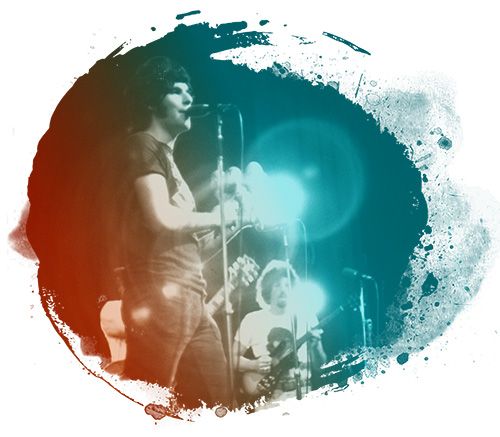
The Winos’ lead vocalist, Harold Bronson ’72, says reconstructing the album has been an unexpected trip down memory lane — to a time when UCLA dorms smelled of incense and patchouli oil, and when radio stations KLOS and KMET were students’ TikTok.
“My kids don’t care about this stuff, but people out there do, apparently,” says Bronson. He acknowledges that The Winos were not designed or destined for musical longevity, unlike fellow Bruin bands Sparks and, later, Linkin Park, but rather were of the moment.
“We met writing on the Daily Bruin,” he says of the band’s five members. “We all knew we would go our own way after a while, but we loved music and playing for people.”
Bronson and fellow Wino Richard Foos went on to grow a Westwood Boulevard record store into Rhino, a multimillion-dollar record business famed for its luxuriously repackaged albums by artists ranging from Aretha Franklin to Fleetwood Mac to Madonna. Another Wino was Paul Rappaport ’71. In his memoir, Gliders Over Hollywood: Airships, Airplay, and the Art of Rock Promotion, published last year, Rappaport recalls his 33 years at Columbia Records promoting the likes of Bob Dylan, Pink Floyd and Bruce Springsteen. (The Rickenbacker guitar Rappaport holds on the Winos album cover is now owned by Elvis Costello, whose early music was rereleased on Rhino.) Rounding out the band was Jonathan Kellerman ’71, a Daily Bruin writer and cartoonist who in his graduation year won the UC–Samuel Goldwyn Writing Prize (following in the footsteps of future Oscar-winners Francis Ford Coppola M.F.A. ’67 and Eric Roth). He went on to become a bestselling novelist.
The band sold the album through mail order and a short-lived music store in Ackerman. “The last sale I recall was in 1976, when a crazy Frenchman in London ordered a box of 25 copies because in our leather jackets we looked like the Ramones,” Bronson says. “That was pretty much it for the Winos.”
Well, almost.
There was a one-off reunion show in 1993, and, now the enhanced version of Savage Young Winos. It includes bonus tracks recorded on a reel-to-reel at the Ackerman show on May 31, 1973.
“We didn’t expect anyone to turn up, because there was a strike that almost closed the campus,” Bronson recalls. “But people danced and clapped. The album is a document of UCLA back in the day, when all things felt possible.” —J.H.
::::::::::::::::::::::::::::::::::::
In high school, my friends and I used to amuse ourselves by seeing how we sounded butchering the hits of the day on my tape recorder. I named our ensemble Mogan David and His Winos — the spelling later changed to avoid getting sued — inspired by those crazy band names of the psychedelic era, such as Jefferson Airplane and Strawberry Alarm Clock. I revamped the lineup with fellow UCLA Daily Bruin writers Jim Bickhart ’70 on bass and Jonathan Kellerman on guitar. Tom Matye ’72, a high school friend also at UCLA, played piano. With the prospect of a vast improvement from my earlier ensembles, I recruited another high school friend, a drummer, for an afternoon of recording. When the day came, he weaseled out, claiming girlfriend troubles. He loaned me his drums, but I’d never played before. I did own a pair of drumsticks; I practiced on a Kleenex box.
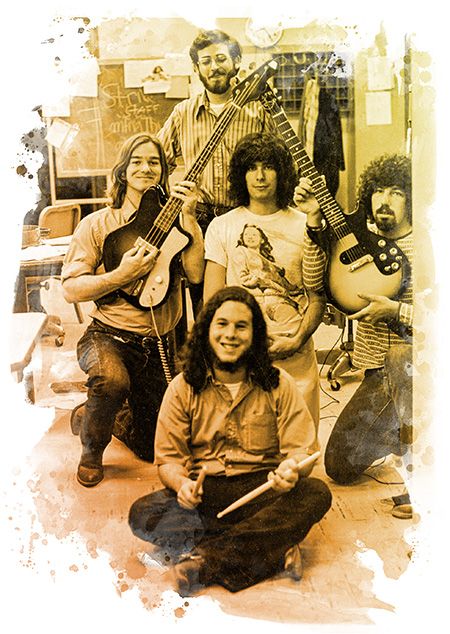
On Sunday afternoon, December 28, 1969, in the Matye family living room in Westchester, we arranged ourselves around a microphone that came with my Telectro reel-to-reel tape recorder. We recorded “Nose Job,” a song I always liked from Mad magazine. Rather than the doo-wop arrangement of the original, I fashioned ours more like a straight-ahead rocker. “The Big War,” written by Tom and me, was inspired by the Zombies’ “Butcher’s Tale (Western Front 1914).” My drums were passable.
Eleven months later, I was sharing an apartment with three high school friends also at UCLA. I became friendly with my across-the-hall neighbor, comedian George Carlin, and was able to borrow his tape recorder. I recorded the vocals in the apartment’s tiled bathroom.
I traipsed up the steps at Sproul Hall with Carlin’s heavy machine sagging my frame like I had a lead shoulder. I mixed the two songs we had done using Mark Greenstadt’s reel-to-reel. Mark idly chuckled at “Nose Job,” telling me it sounded like Frank Zappa’s Mothers of Invention. Reasoning that a record pressing plant would take my money just as it would an established company, I placed an order with Rainbo Records in Hollywood.
The record got some airplay, landing at number one on UCLA's KLA. It was the top-selling single for a week at the campus record store, with Ron Mael ’67 (later of Sparks) behind the counter. I dropped by Norty's Record Store on Fairfax Avenue, but they declined to stock it, describing it as "offensive."
The record got some airplay, landing at number one on UCLA’s KLA. It was the top-selling single for a week at the campus record store, with Ron Mael ’67 (later of Sparks) behind the counter. I dropped by Norty’s Record Store on Fairfax Avenue, but they declined to stock it, describing it as “offensive.” Paul Rappaport, the campus rep for CBS Records, and I became friends. I handed him a 45. He was entranced. Someone he knew had made a record.
I dipped my foot in the water to see if a legitimate label would distribute it. I dropped a copy at the Beach Boys’ Brother Records, thinking Kellerman’s surf guitar break might appeal to them. They passed; Dennis Wilson didn’t like it. I sent a copy to Zappa but never heard back. Barry Hansen, at Specialty, wrote back indicating that he needed something more commercial, but then said he’d play it on his Dr. Demento radio show.
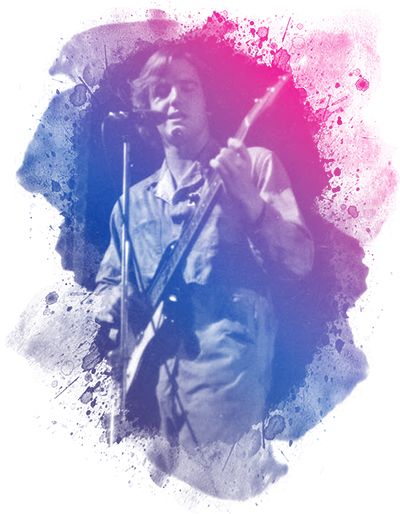
In September 1970, I met freshman Mark Leviton ’74 when he came into the Daily Bruin office to inquire about writing for the entertainment section. In addition to liking all the bands of the British Invasion, Mark and I bonded over our mutual appreciation of Zappa, the Firesign Theatre and noir crime novelist Raymond Chandler. He didn’t look like a wannabe rock star: he had short, crinkly hair and a beard and wore glasses. When I visited him at his home in Northridge, he impressed me by being able to play the Who’s Tommy solely by himself on guitar.
We wrote two songs — Mark supplied the music to my lyrics — with the intention of revamping my band. “Street Baby” depicted a homeless kid living on the streets; “Party Games” reflected the frustration we felt as shy guys approaching disinterested girls. We had a few rehearsals in preparation for going into the recording studio. I sang, Mark played guitar, and Jim Bickhart returned to play bass even though he’d graduated. Matye wasn’t into it — he was into his girlfriend — so he was gone. Kellerman was now immersed in graduate school.
With his facial hair and frizzy mop, Paul Rappaport looked like Fleetwood Mac’s Peter Green, but he played guitar more like the Rolling Stones’ Keith Richards. He thought of himself as a blues guitarist. As Paul liked our first single and our musical taste, he was a natural for the lead guitar slot. Plus, he played the same guitar as Kellerman, a Gibson Melody Maker. I loved the tone.
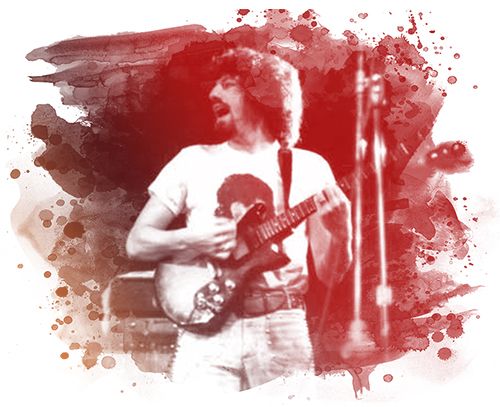
This time out we were recording in a proper studio, although a low-budget one. Paul and I knew Rich Fazekas through college radio. He engineered at Sound Sync in Riverside. On Sunday, December 5, 1971, I picked Paul up at his apartment in West L.A. and we made the 70-mile trek. My friend Todd Schneider’s younger brother, David, played drums.
During summer 1972 we performed a handful of times, commencing with the end-of-the-school-year Daily Bruin party. Joining Mark, Paul and myself were Daily Bruin writer Bill Pique ’75 on bass and his UCLA friend Rob Lampl ’74 on drums. Our summer setlist: “I Can’t Explain” (The Who), “You Really Got Me” (The Kinks), “Love Potion Number Nine” (our heavy-metal arrangement of the Searchers hit), “Nose Job,” “Just Like Me” (Paul Revere & the Raiders), “Glad All Over” (The Dave Clark Five), “Do Wah Diddy Diddy” (Manfred Mann), “The Last Time” (The Rolling Stones), “The Train Kept A-Rollin’” (The Yardbirds), “Down the Road Apiece” (The Rolling Stones), “Communication Breakdown” (Led Zeppelin), “Street Baby.
For a ragtag group, we all played well, we were fun, and people liked us. To my awareness, we were the only ones bold enough to play a repertoire that consisted mostly of ’60s rock hits. Shelly Heber, who worked in the charts department at Billboard magazine, liked us so much she had us play two parties at the house she shared with her sister Nikki on Laurel Canyon Boulevard.
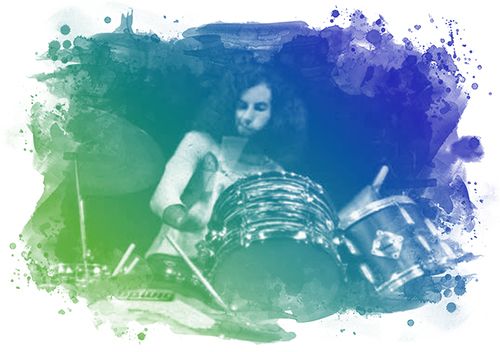
Alan Albert was an engineer at Fidelity Recorders, an eight-track studio on Yucca Street in the shadow of Capitol Records. As Paul’s friend and now the drummer in our band, he let us sneak into the studio after hours to record. Sometimes it was reasonable, like on a Sunday or after dinner, but once we didn’t start until 10 p.m., and didn’t finish until nearly 3 a.m. We needed a B-side for a single release, so we put in “Love Potion Number Nine” from our live set. Bill’s friend Mark Osterstock, also a Daily Bruin writer, played bass.
On Thursday, May 31, 1973, we were booked at UCLA’s Ackerman Grand Ballroom. It was our most prestigious appearance to date, performing on the same stage that the Jimi Hendrix Experience, Procol Harum, Deep Purple and Alice Cooper had in previous years. Sure, it was a noontime concert and the students risked no admission charge, but Carole King had played under the same circumstances in 1970.
We were just OK. Most songs were played too fast, and Paul spent a considerable amount of time tuning up between songs, curbing our momentum. During the extended solo of “Down the Road Apiece,” I ran through the seated crowd dispensing goody bags of Columbia Records promo items, like rolling papers with Jeff Beck’s photo on the cover. We were paid $175.
I had high hopes for “Street Baby,” but it sold markedly less than “Nose Job”: 57 compared to 137. Rather than release a third single, I thought we’d have a better shot with including it in a history of the band compilation — although there wasn’t much “history” at this point. I compiled an album of old and new tracks, and four songs recorded on cassette from our performance in the Hebers’ backyard. I copied the elaborate representation of the Who’s Live at Leeds album. In their repackage, they had reprints of items from their history, like rejection letters and income sheets. In ours, we made fun of ourselves by including a copy of Paul’s failed music test and the two ads I did featuring Mark and me plugging Columbia albums, among other items. I titled it Savage Young Winos as a joke. I borrowed leather jackets from the famed rock ‘n’ roll photography archivist Michael Ochs to approximate the Beatles look for our group photo and copied the album design. The order was for a thousand copies, but slightly fewer were pressed. Over the first few years, sales totaled 505.
The ’60s influences in our bones and in our hearts of the Beatles, Rolling Stones, Kinks, The Who and Yardbirds were out of favor, giving way to Santana, Deep Purple and Yes. There were few places to play. The best clubs booked major-label acts that the labels subsidized by purchasing tickets and drinks for radio programmers, deejays, writers and store buyers. So, that was it for the Winos.
Twenty years after our UCLA performance, I reunited the Winos to record two songs over a weekend at Sunburst Recording in Culver City. “I’m an Adult Now” is a lyrically inspired 1988 song by Canadian band the Pursuit of Happiness about uncomfortably maturing. “Cover Girl,” a song Mark and I composed in 1978, was consistent with other songs we wrote that expressed the frustration we felt with unapproachable girls. We considered it the best song we had written. More importantly, after not having played together for 20 years, our sound was remarkably intact.
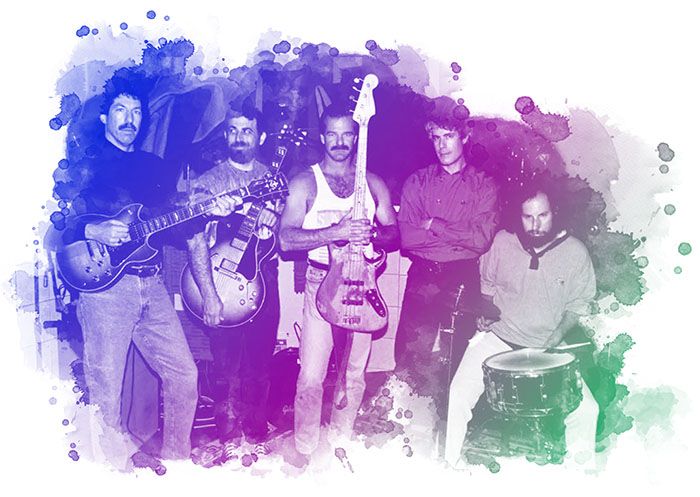
Most of us had fantasized about being rock stars, but we knew nothing about the reality. I now feel fortunate we never came close. Two of us became lawyers; three of us had long careers as high-level executives in the record business: Paul at Columbia, Mark at Warner, me at Rhino. Jim worked at Warner before opting for a career in city government. Al was also in entertainment, as VP at a company that rented cameras and other equipment for film and TV production. Jonathan Kellerman started as a child psychologist before becoming a New York Times–bestselling mystery novelist.
I loved the 2021 The Beatles Get Back docuseries. It occurred to me that, similarly, our 1993 recording session had been videotaped. I fantasized about cutting a short film, copying Get Back’s graphics, and titling it The Winos Get Back, Too. The goal was to get it nominated as an Academy Award short. My plan was dashed when Bill Pique told me he had discarded the Betacam masters in downsizing. He didn’t think to call me to see if I wanted the tapes.
Read more from UCLA Magazine’s Summer 2026 issue.