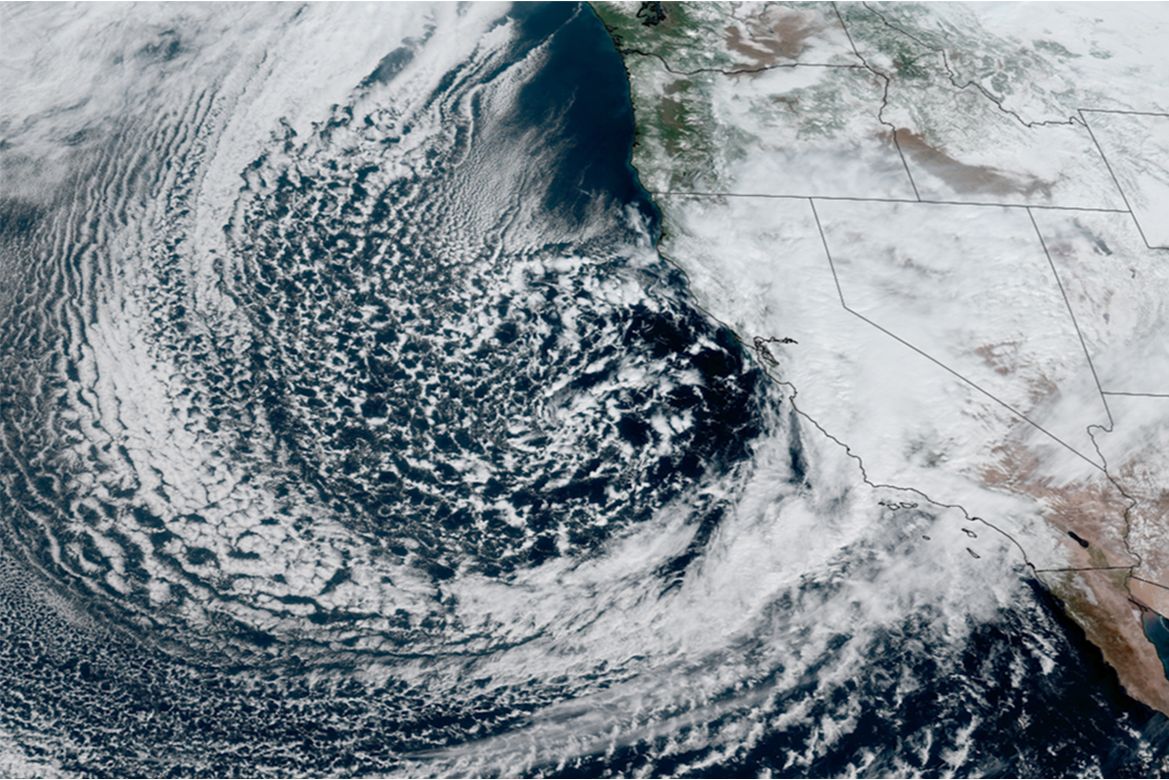
Scientists monitoring El Niño this year project that it will be the strongest yet recorded. UCLA experts can discuss the risks of flooding from both inland rain and coastal sea levels; the potential for damage to infrastructure; what causes an El Niño season and what makes this one stronger; the role of climate change; the effect on wildfires; and more.
Causes and potential effects
El Niño’s causes, the role of climate change and wildfire risk

UCLA climate scientist Alex Hall can discuss the causes and potential effects of El Niño, new UCLA research showing that El Niño and global warming combined to break the record for extreme rainfall in 2024, and the implications for this year’s El Niño. Hall can also discuss how the rains can reduce wildfire risk now but may fuel fires later. Finally, he can evaluate whether current extreme weather, from heat to rain to floods, is consistent with what scientists expect from El Niño, climate change or both. Hall, an atmospheric physicist and professor in the department of atmospheric and oceanic sciences, is also director of the UCLA Institute of the Environment and Sustainability and UCLA’s Sustainable LA Grand Challenge.
Email: [email protected]
Why the record-breaking 2024 El Niño makes this year look even worse
UCLA climate scientist Chad Thackeray can discuss new UCLA research that sheds light on what to expect from El Niño as a result of the finding that 2024 broke the record for extreme rainfall thanks to the combination of El Niño and global warming. Thackeray is a researcher in UCLA's department of atmospheric and oceanic sciences and the climate science lead at UCLA’s Center for Climate Science.
Email: [email protected]
El Niño formation, effects and Kelvin waves

UCLA climate scientist David Neelin can discuss the causes and potential effects of the El Niño phenomenon, from Kelvin waves to climate change. He specializes in the interactions among the atmosphere, oceans and land surfaces, and their effect on global climate patterns. Neelin is a climate scientist, atmospheric physicist and professor in UCLA’s department of atmospheric and oceanic sciences and is lead of the Climate Systems Interactions group.
Email: [email protected]
Municipal water infrastructure, flooding and climate change
Climate disasters and failing infrastructure

UCLA political scientist Megan Mullin can discuss El Niño in relation to the politics of infrastructure investment, disaster recovery, water storage and groundwater recharge, including the overlapping risk of climate-driven disasters and reduced public investment in disaster preparation and response. Mullin is a UCLA public policy professor and faculty director of the UCLA Luskin Center for Innovation. Her research focuses on environmental politics.
Email: [email protected]
Capturing and managing stormwater, and what rain does to recent — or future — burn areas
UCLA water researcher Edith de Guzman can discuss El Niño in relation to urban stormwater management and capture, the effects of climate change on precipitation events, and how rain can affect recent burn areas or contribute to fueling future wildfires. She can also discuss investments and trends in stormwater management in the Los Angeles region, including the county’s Safe Clean Water Program. De Guzman, a UC Agriculture and Natural Resources water equity and adaptation policy cooperative extension specialist with the UCLA Luskin Center for Innovation, has expertise in water management, equity and adaptation, and climate resilience.
Email: [email protected]
How cities can prepare for flooding
UCLA water researcher Greg Pierce can discuss El Niño in relation to water utility capacity during storms, Los Angeles’ Safe Clean Water Program, preparations cities need to make to prepare for flooding, and public financing for infrastructure investment and recovery. Pierce is a faculty member in urban planning and is co-director of UCLA’s Luskin Center for Innovation and UCLA’s Water Resources Group. He is also director of UCLA’s Human Right to Water Solutions Lab.
Email: [email protected]
Coastal impacts
Coastal flooding and infrastructure impacts
UCLA coastal flooding expert Timu Gallien can discuss El Niño in relation to topics like coastal flooding, flood control, coastal hazards, erosion, energetic waves, infrastructure impacts and sea-level rise. She is an associate professor of civil and environmental engineering in the UCLA Samueli School of Engineering and head of UCLA’s Coastal Flood Lab.
Email: [email protected]