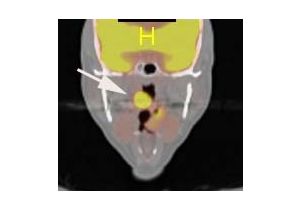
UCLA study finds that a protein linked to neurological disorders is also associated with head and neck cancer in people who are infected with human papilloma virus.
Researchers suggest that practicing the ancient Chinese martial art could potentially lower the risk for cancer recurrence and other chronic diseases in cancer survivors.
The technique, developed by researchers from UCLA and the Department of Energy’s SLAC National Accelerator Laboratory, shows promise in powering the next generation of particle accelerators.
The disease may be more harmful than previously thought, say UCLA researchers, who found genetic damage is present not only in the lungs but also in circulating blood.
Scientists explained the bizarre object in the center of the Milky Way that some astronomers believed was a hydrogen gas cloud headed toward our galaxy’s enormous black hole.
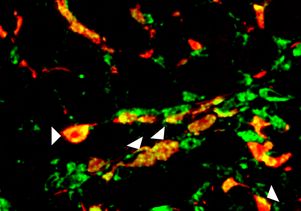
UCLA researchers have discovered how naturally occurring vault nanoparticles form in cells, which could lead to understanding the root causes of Alzheimer’s, Parkinson’s and other diseases.
UCLA research may lead to a simple saliva test to diagnose at an early stage diabetes and cancer, and perhaps neurological disorders and autoimmune diseases.
UCLA researchers have shown for the first time that the quality of diagnostic staging for biopsies of bladder cancer is directly linked with patients’ survival rates.
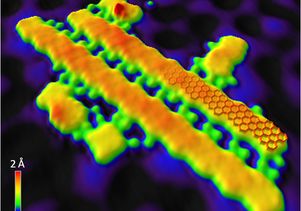
With their special electronic and optical properties, nanomaterials such as graphene and molybdenum sulfide have created excitement among scientists for their potential to revolutionize transistors and circuits.
A landmark UCLA study makes a persuasive argument for the routine clinical use of DNA sequencing as a tool for diagnosing children with rare genetic disorders.
The findings could eventually lead to radiation and chemotherapy treatments that are more effective for people with cancer and other blood-related diseases.
Research funded by the grant will help scientists understand how disrupted genes affect brain structure, both in healthy individuals and in those with neurologic and psychiatric diseases.
New UCLA research may lead to dramatically fewer bladder infections following spinal cord injuries and other traumatic injuries — infections that can cause kidney damage, and even death.
UCLA researchers have discovered that some scar-forming cells in the heart, known as fibroblasts, have the ability to become endothelial cells — the cells that form blood vessels.
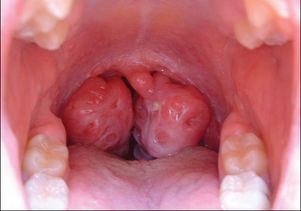
In the first study of its kind, UCLA researchers found that there was a disparity in post-tonsil removal doctor’s visits based on income status, race and ethnicity.
Research by the UCLA Center for Health Policy Research shows that a pent-up demand for health care will decline significantly after the first year of enrollment.
The $2.3 million National Institutes of Health awards go to scientists from the Eli and Edythe Broad Center of Regenerative Medicine and Stem Cell Research at UCLA for work in stem cells and neuroscience in medicine.
UCLA researchers demonstrated that, in pregnant mice, inflammation can trigger an excessive division of neural stem cells that can cause “overgrowth” in the offspring’s brain.
UCLA will create analytic tools to address the daunting challenges facing researchers in accessing, standardizing and sharing scientific data to foster new discoveries in medicine.
In a UCLA study more than twice as many people ended up with coverage. These findings could prove useful in finding ways to increase participation in plans and reduce disparities in health insurance coverage.