Researchers from UCLA and the Jet Propulsion Laboratory found that extra heat from greenhouse gases has been trapped in the subsurface waters of the Pacific and Indian oceans.
Glen MacDonald writes that rising temperatures, groundwater depletion and a shrinking Colorado River mean the most populous U.S. state will face decades of water shortages and must adapt.
A new report from UCLA School of Law’s Emmett Institute on Climate Change and the Environment provides recommendations on how to harness AB 2516 to enhance coastal climate change preparedness in California.
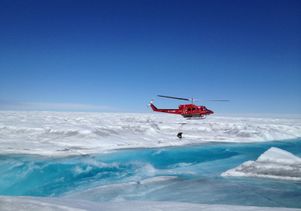
Just a few weeks ago, third-year M.F.A. student Emma Kragen was concentrating on advancing her thesis project at the UCLA School of Theater, Film and Television. Now the emerging cinematographer is assembling waterproof snow gear.
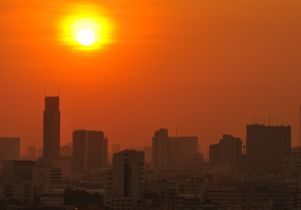
The number of cities across the globe that experience heat waves has increased since the 1970s — as has the frequency of those heat waves — as the heat island effect amplifies global warming.
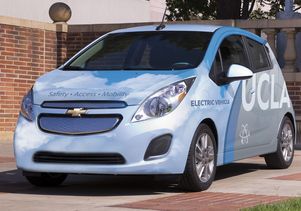
UCLA Transportation’s focus on alternative transportation and success in reducing traffic and emissions at UCLA won an award from the California Environmental Protection Agency
The scientists resolved a dispute over whether a small population of black-headed squirrel monkeys, which are found only in an isolated part of Brazil, is a sub-species of another species or its own species.
Climate model simulations of the 21st century show little change in total precipitation, but more rain instead of snow, posing flooding risk and shortening chance to capture water.
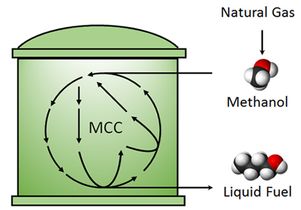
Researchers at UCLA have developed a more efficient way to turn methanol into useful chemicals, like liquid fuels, that would lower production costs in addition to reducing emission of the greenhouse gas.
Plants worldwide are more sensitive to drought than many scientists realized. The research may improve predictions of which plant species will survive climate change.
The Burkle Global Impact Initiative, which was created at UCLA to educate the public about international and humanitarian affairs by working within the creative community, helped produce a video for the United Nations Climate Summit that took place Tuesday in New York.
Thomas Smith of the Institute of the Environment and Sustainability says the next great extinction could be upon us, but humans can help threatened species survive.
UCLA professor Tom Smith says human-driven evolution is creating drug-resistant diseases, pesticide-proof bugs and mass extinctions due to climate change. "We can either choose to manage evolutionary processes or not, but evolutionary change will proceed regardless."
Six proposals led primarily by UCLA units are vying with 261 others for grant funding by the Goldhirsh Foundation, which is hoping to jump-start projects that will make L.A. the best place to play, to connect, to live, create and learn by 2050.
Environmental, atmospheric and oceanic researchers at UCLA will create a first-of-its-kind model of how coastal waters will react to climate change this century.
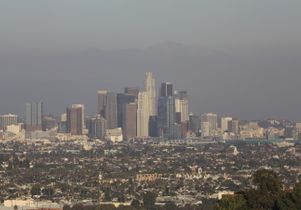
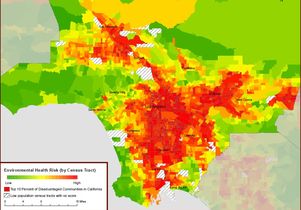
Nearly 4 in 10 Los Angeles County residents live in environmentally vulnerable communities burdened by air pollution and other risk factors, according to a study by the UCLA Luskin Center for Innovation and The Environmental Defense Fund.
Daniela Cusack and her fellow scientists who have been working for two years on finding a strategy to reduce global warming have concluded that we cannot engineer our way out of climate change.
A new report by professors from UCLA and five other universities concludes that climate engineering won't suffice, and we have to cut down the amount of carbon being released into the atmosphere.
Alex Hall, a professor in UCLA’s Department of Atmospheric and Oceanic Sciences and Institute of Environment and Sustainability, appears in “Years of Living Dangerously,” airing June 2 on Showtime, and explains how climate change will impact our lives.