The research “may reassure some people that despite testing positive on screening tests, their chances of developing Alzheimer’s disease dementia is low,” said UCLA’s Ron Brookmeyer.
UCLA research provides critical knowledge for medicinal chemists to begin designing new drugs based on cambinol that are more potent than the molecule itself.
If replicated in larger studies, the findings could lead to new types of programs to improve mental agility in older adults by combining mental training with physical fitness.
UCLA geneticist Dr. Wayne Grody UCLA geneticist says many people are ill-equipped to handle troubling medical information without the guidance of physicians.
Protein-imaging method developed by new UCLA researcher overcomes challenges of current techniques, offering untold potential in the exploration of disease and treatment.
The scientists believe the technique, which focuses on cells’ mitochondria, could eventually lead to a way to delay the onset of Parkinson’s disease, Alzheimer’s disease and cancer.
"“Dementia is an isolating disease that can bring on loneliness and is often void of opportunities for social interactions,” says Dr. Zaldy Tan, UCLA gerontologist and director of TimeOut @ UCLA.
UCLA School of Nursing researchers found that people with a certain genetic variation who took donepezil for the condition had a faster cognitive decline than those who took a placebo.
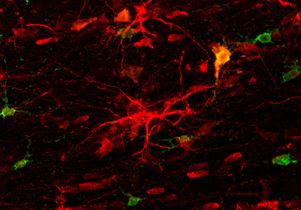
Neuroscientists at UCLA have developed a new technique for studying a particular type of cell in the brain known as an astrocyte that may play a role in diseases such as Lou Gehrig’s disease and Alzheimer's disease.
UCLA researchers note that the next decade shows great promise for things like improving food safety, fighting infections, storing energy and supplying clean energy.
Dr. Gary Small's advice for maintaining a healthy memory isn’t so different from what an internist might suggest to maintain a healthy body: Eat right, exercise and get enough sleep.
The research is the first to demonstrate how lifestyle factors directly influence abnormal proteins in people with subtle memory loss who have not yet been diagnosed with dementia.
UCLA researchers found that physical activity particularly affected the size of the hippocampus, which is the part of the brain controlling short-term memory.
Through a systematic review of Alzheimer’s studies, Ron Brookmeyer’s team at UCLA has found that the rate of being diagnosed with the disease doubles every five years in older populations.