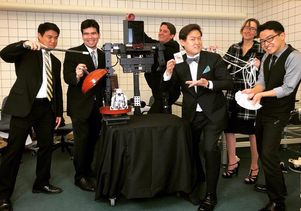
The event is being held exactly a half century after a team led by UCLA professor Leonard Kleinrock sent the first message over the Arpanet — the precursor to today’s internet.
A version of the technology, set up on the roof of a home, could provide enough power overnight to charge a cell phone or to light a room with LED bulbs.
UCLA engineering professor Ximin He said the design could be adapted to use other forms of energy — acoustic waves, or electronic or magnetic signals, for example.
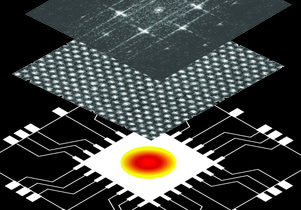
UCLA researchers and colleagues have designed a first-of-its-kind nanogenerator that can work in remote areas because it provides its own power and does not need batteries. It also acts as a weather station.
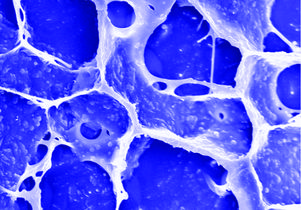
The engineers and mathematicians have designed a unique and effective system that could be used to produce clean, fresh water, or to recycle industrial water that would otherwise be wasted.
A Q&A with Danijela Cabric of the UCLA Samueli School of Engineering on the legendary actress’s less-known role as inventor of a frequency hopping technology.
“The platform is like a motion detector for the microscopic world because of its ability to lock onto any moving objects in a fluid sample,” said Yibo Zhang, a UCLA doctoral student and the study’s first author.
In tests at the U.S. Department of Energy’s National Renewable Energy Laboratory, the device converted 22.4 percent of the incoming energy from the sun, a record for that type of cell.