LAist reported that a new study found nearly 300,000 California K–12 students experienced homelessness in the 2024–25 school year, the highest rate recorded by UCLA researchers and a 10% increase from the 2018–19 peak. “The sheer magnitude of how many students are experiencing homelessness and how much it’s increased, that was the biggest finding for us,” said Grace Kim, study co-author and research analyst at the UCLA Center for the Transformation of Schools. Students experiencing homelessness are more likely to frequently miss school and fall behind academically. Read more about UCLA in today’s Los Angeles Times, NPR and others.
The Los Angeles Times reported on the unusual heat wave descending on the region this week, in which a combination of hotter nights and high humidity is leaving Angelenos feeling little relief. Multiple factors contribute to a person’s thermal burden, or the amount of heat their body carries, said Bharat Venkat, a medical anthropologist and director of the UCLA Heat Lab. Humidity is a critical one, he says — since muggy air can hold less moisture, the sweat on a person’s body doesn’t evaporate as swiftly. “Sweating is the most powerful mechanism our body has at its disposal to cool us down,” Venkat said. Read more about UCLA in today’s National Geographic Magazine, CNN and others.
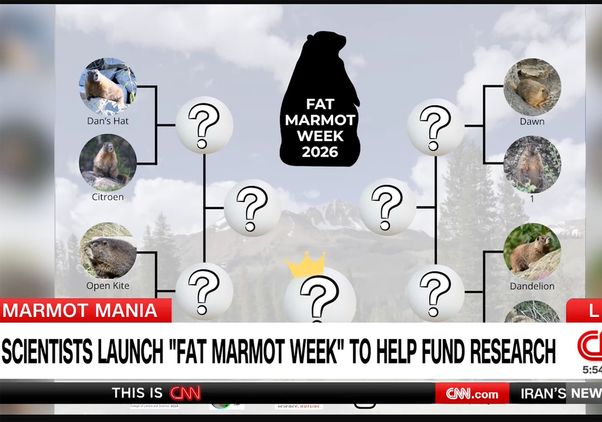
During a segment about Fat Marmot Week — a fun challenge that invites everyone to learn more about marmots — CNN spoke to Dan Blumstein, UCLA professor of ecology and evolutionary biology, about why long-term research, such as the Rocky Mountain Biological Laboratory Marmot Project, is important. “This is the second-longest study of individually marked mammals in the world, second only to the Jane Goodall study of chimpanzees,” Blumstein said. “Long-term studies give us the ability to understand how organisms, whether they're plants or animals, respond to environmental change.” (Also: LAist and KTLA-TV.) Read more about UCLA in today's Los Angeles Times, NPR and Bloomberg Law.
The Associated Press reported on a UCLA-led effort to raise funds for a project surveying marmots in Colorado’s Rocky Mountains, where the population declined by two-thirds during last year’s hibernation due to insufficient snow cover. Like Fat Bear Week, Fat Marmot Week is mostly for fun, but it also has a serious side: Scientists need to drum up donations to sustain their long-running research into the rodents amid federal funding cuts. “In some sense, we’re going to be laughing our way down as the Titanic sinks,” said Dan Blumstein, professor of ecology and evolutionary biology at UCLA and co-director of the Rocky Mountain Biological Laboratory Marmot Project. “Because what else are you going to do?” (UCLA’s Emily Renkey and Katie Adler were also quoted.) Read more about UCLA in today’s Los Angeles Times, Miami Herald and other outlets.
The Washington Post reported on promising results from a phase 3 trial of a personalized mRNA vaccine designed to prevent melanoma from returning after surgery. “This is exciting,” said Dr. Antoni Ribas, professor of medicine at the David Geffen School of Medicine at UCLA and director of the UCLA Health Jonsson Comprehensive Cancer Center’s tumor immunology and immunotherapy Program. “That hasn’t happened ever, with any cancer vaccine.” The treatment, which is tailored to mutations in an individual patient’s tumor and given alongside an existing immunotherapy, could eventually point toward new approaches for treating other cancers as well. Read more about UCLA in today’s Associated Press, New York Times and others.
USA Today reported on a new UCLA Center for Scholars & Storytellers study examining how Gen Z and Gen Alpha use media to explore religion, spirituality and identity. Yalda T. Uhls, the center’s founder and CEO and an adjunct professor of psychology at UCLA, said researchers were surprised to find that young people still primarily seek trusted guidance from people they know, including faith leaders and parents, even as online content increasingly shapes their beliefs and sense of belonging. “Gen Z and Gen Alpha are redefining what religion and spirituality look like in the digital age,” Uhls said. “They have an appetite for authentic content that reflects and amplifies their beliefs and practices.” Read more about UCLA in today’s CBS News, New York Times and others.
Marketplace reported on new findings that the average worker in the U.S. who stayed in their job between 2021 and 2024 saw their wages decline by 9% after inflation. It also found that this real wage decline — rather than inflation itself — is at the root of poor consumer sentiment. Tia Koonse, the policy director at the UCLA Labor Center, explains that if salaries go up but grocery prices go up more, a person’s real wage has gone down. “It's not rocket science, right? You gotta increase your wage to keep pace with inflation,” she said. Read more about UCLA in today’s Wall Street Journal, Los Angeles Times and others.
The New York Times reported on what scientists are discovering about toxins in wildfire smoke, as exposure to unhealthy air is rising in a world experiencing far more fires due to climate change. Dr. Kari Nadeau, dean of the UCLA Fielding School of Public Health, said standard measurements of toxic particles may be understating the risk, given that they don’t account for other substances that wildfire smoke can contain, including lead, mercury and formaldehyde. Nadeau, who is studying the consequences of the 2025 Los Angeles fires, has found that fires in populated areas may be especially toxic because they consume things like buildings, vehicles and electronics. Read more about UCLA in today’s People, CNN and others.
The Associated Press reported on court documents showing that federal agents conducted an undercover surveillance operation involving organizations and labor unions protesting immigration enforcement in Minneapolis. UCLA law professor Ahilan Arulanantham said the scope of the surveillance was concerning and could discourage people from expressing their beliefs out of fear that doing so could prompt federal scrutiny. The documents describe agents attending meetings, monitoring activist group chats and using license plate information to identify people who attended gatherings. Read more about UCLA in today’s Vox, Los Angeles Magazine and others.
Faculty Bulletin Board is a biweekly snapshot of the many ways Bruin scholars and researchers are advancing knowledge, shaping their fields and powering progress on campus and around the world.
LAist reported on Mayor Karen Bass’ support for fare-free Metro as the agency weighs the costs and potential consequences of eliminating fares. According to Brian Taylor, a research professor of urban planning and public policy at UCLA, there’s a good economic case for transit systems to go fareless when a large share of its riders are low-income and fares cover less than roughly 10% of operating costs. Los Angeles Metro meets both conditions, he said. Read more about UCLA in today’s New York Times, Washington Post and other outlets.