Perched on Home Depot shelves and across countless decorated lawns, vultures had their customary moment this spooky season. But it shouldn’t end with Halloween.
Perennially upstaged weeks later by another large, bald bird — the Thanksgiving turkey — the vulture is no less a symbol of community, service, and abundance. While vultures probably don’t envy the fate of their distant cousins during November’s fowl-forward festivities, they certainly deserve a place at — not on — the table. (Presidential-pardon the pun.)
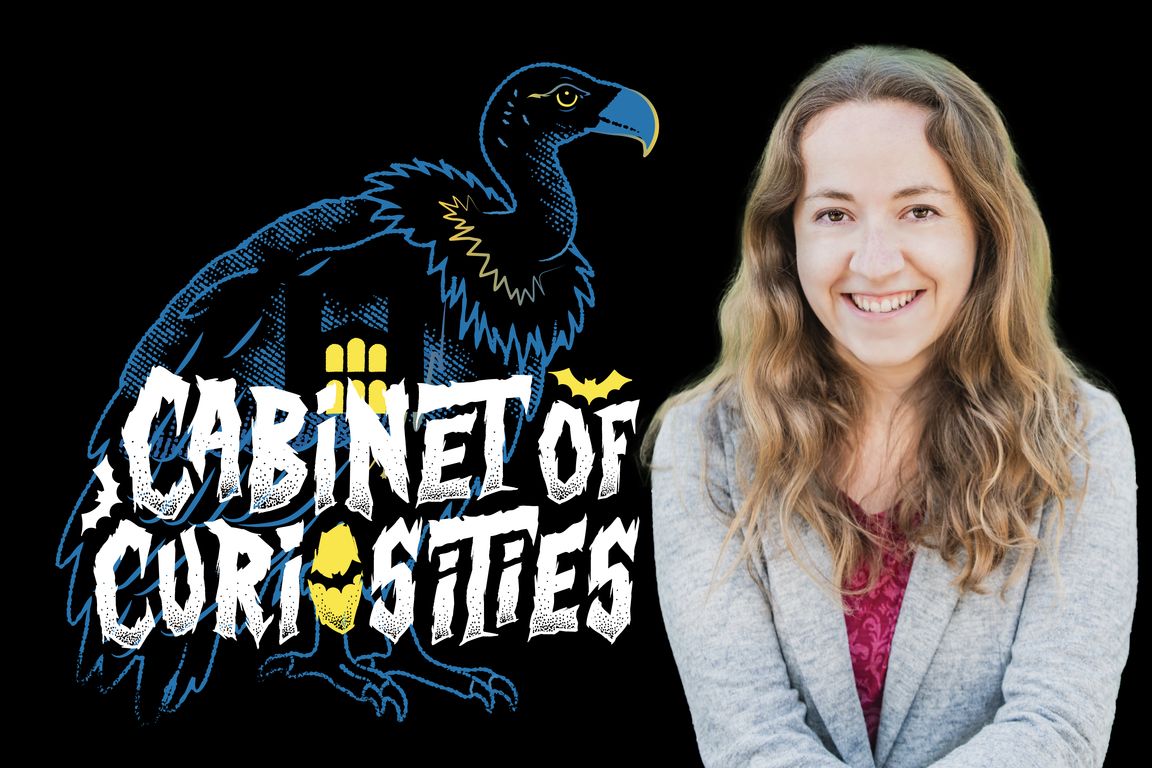
For starters, the far-from-sinister birds are giving researchers valuable information about socialization and movement ecology, according to UCLA doctoral candidate Kaija Gahm, who studies vultures in the laboratory of ecology and evolutionary biology professor Noa Pinter-Wollman and in collaboration with professor Orr Spiegel at Tel-Aviv University.
Rather than causing death or even eagerly awaiting it — it’s a myth that they circle distressed creatures in hungry anticipation — vultures instead are natural “undertakers” that provide important sanitation services, Gahm said. These helpful eco-heroes provide a service easily taken for granted: cleaning up animal remains, more politely described as “carrion.”
“Vultures are serving a role in the ecosystem that is very helpful to humans. They are stopping the spread of disease,” Gahm said on a recent episode of UCLA College’s “Cabinet of Curiosities” podcast, during which she discussed her research and dispelled several common vulture myths.
‘Vultural’ appreciation
People might be surprised to find out just how many birds fall under the umbrella term “vultures” (California condors, for one) — or that, while many North Americans colloquially refer to all vultures as “buzzards,” that term is the common name for some European hawks. Whatever your thoughts about vultures, they were likely informed at least in part by their classic cartoon depictions: perched on a dead tree with that distinct hunched back and hooked beak, a smirk creeping across their faces in anticipation of a horrible feast. (Any resemblance to your holiday dinner table is purely coincidental.)
Gahm’s data comes from Old World vultures, birds found in Europe, Asia and Africa that belong to a group that also includes eagles and kites. These birds are not closely related to New World vultures like the ones we might see here in California, but the two groups have independently evolved similar scavenging lifestyles.
The birds that Gahm studies are large enough to carry GPS tracking devices, which makes them an ideal research subject. Transmitting from halfway across the world, these trackers provide location data for each bird roughly every 10 minutes, helping Gahm and her colleagues better understand the vultures’ movements and social interactions.
One question Gahm is investigating is to what extent the birds rely on one another to locate food.
“Do they really have friends, or is it more that they just need social connections generally to obtain information about food?” Gahm asks. (Something to think about next time you catch their animated Disney dynamics as a gruesome twosome in “Snow White and the Seven Dwarfs” or as a certain fab foursome from Liverpool in “The Jungle Book.”)
Do vultures deserve their Halloween associations?
Vultures may indeed have friends, but would you want to be one of them? The key is to love them on their own terms, which, for New World vultures, might include a lot of hissing as well as urinating and defecating on their legs to cool off.
While these behaviors are hardly ideal in a houseguest, the birds are far from malicious, nor are they the killers their menacing beaks might suggest. Vultures are obligate scavengers, meaning they rely entirely on animals that are already dead for food.
Thanks to their highly acidic digestive systems and strong immune defenses, vultures can safely and happily consume decaying meat while helping prevent the spread of disease.
“Another thing that people often talk about with vultures is that they're ugly. They've got these like crazy-looking bald heads with no feathers,” said Gahm. “But when it comes to their appearance, wouldn't you want to be bald if the only way that you could eat was by sticking your head into a dead cow? I think it's just practical.”
Another thing that has endeared Gahm to the vultures she studies is how their habits begin to resemble our own as they age.
A 2024 study co-authored by Gahm and Pinter-Wollman and lead by Marta Acácio found that older griffon vultures become more set in their routines, returning to familiar roosting sites and being more selective about their social interactions.
The findings suggest that if you’d rather be watching TV on your couch than dancing at the club, you might have something in common with an aging griffon vulture.
Our vultures, ourselves
Another vulture myth Gahm sets out to dispel is the notion that circling vultures mean the birds are waiting for a sick or injured animal to die.
While vultures sometimes circle carrion as a social cue to other birds that food is available, you’re more likely to see them riding a thermal — a rising, swirling column of warm air that allows the large birds to efficiently gain altitude so they can glide across the landscape until they enter another thermal.
“It's a method of traveling that really is very energetically cheap,” Gahm said. “It allows them to cover a lot of distance without expending very much energy.”
A group of vultures engaged in catching thermals is called, charmingly, a “kettle,” a reference to the swirling motion of boiling water.
These flight mechanics controvert another myth: that vultures are nocturnal, a category they may get lumped into thanks to their macabre associations. Instead, the birds depend on the sun to create the thermals that help them travel in search of food. Gahm paints the scene of “a day in the life” of our feathered friends, which might include a slow morning at the roost, waiting patiently until conditions are right for soaring flight.
But these remarkably resourceful birds face very real threats, including poisoning from lead ammunition and veterinary drugs present in the carcasses they consume, as well as collisions with power lines. Understanding their behavior, Gahm says, is one way researchers can help protect them.
It's also why long-term studies matter. The aging research, for example, relied on years of tracking the same birds, allowing scientists to uncover changes in behavior that might otherwise have gone unnoticed.
For a bird whose reputation has suffered centuries of bad publicity, perhaps a little more understanding, appreciation and, yes, gratitude, is long overdue.
“Vultures are great,” Gahm said, “and I think they deserve more love.”