Marco Velli is the observatory scientist on NASA’s Parker Solar Probe, which will venture into the sun’s outer atmosphere to advance understanding of space weather.
The researchers demonstrated that the device could accurately identify handwritten numbers and items of clothing — both commonly used tests in AI studies.
The international team has found the first evidence of a source of high-energy cosmic neutrinos — ghostly subatomic particles that can travel unhindered for billions of light-years to Earth.
The UCLA Connection Lab, to be led by Leonard Kleinrock, will foster interdisciplinary research on a range of technologies, such as blockchain, computer networks, big data and artificial intelligence.
The Synthetic Control Across Length-scales for Advancing Rechargeables center will help accelerate research on new types of chemistry and materials that can help improve batteries’ capacity, stability and safety.
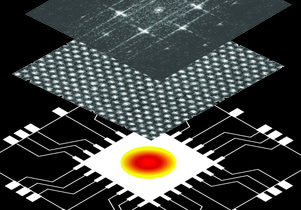
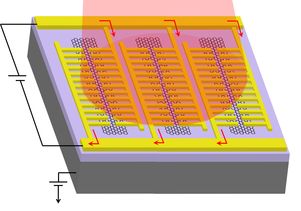
The device, designed by UCLA Engineering researchers, operates across a broad range of light, processes images more quickly and is more sensitive to low levels of light than current models.
The availability of such cells — with properties similar to those from humans and other animals — should help scientists accelerate research on therapies for cancer and autoimmune diseases.
Hosea Nelson and Jose Rodriguez have been selected among 22 early career researchers for the awards which provides funding for work advancing human health.
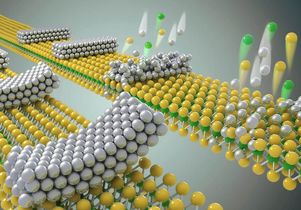
Their method joins a semiconductor layer and a metal electrode layer without the atomic-level defects that typically occur as part of the process commonly used now.
The study is the first to establish a link between susceptibility to seizures and the gut microbiota — the 100 trillion or so bacteria and other microbes that reside in the human body’s intestines.