Innovative transportation services such as car sharing, bike sharing, and transportation network companies like Uber and Lyft are changing mobility for millions of people.
Global climate models vary in how much they show rain and other precipitation changing due to climate change. UCLA researchers discovered a way to reduce these differences by 35 percent.
UCLA African American studies professor Melvin Rogers writes that it’s a deeply sad reflection of society if luck is a requirement for African Americans to be successful in America.
The association recognizes him for 'contributions to artificial intelligence through the development of a calculus for probabilistic and causal reasoning.'
Of the 47 geographical areas the researchers analyzed, 20 had significantly higher percentages of people with advanced-stage disease than the U.S. norm.
Starting this winter, freshmen will have a chance to dive into UCLA’s rich history through a series of Fiat Lux seminars designed to explore various aspects of the institution’s founding.
As part of an international competition, they created the “Safe Spot” campaign to undermine the recruiting tactics of the Islamic State group by using the Internet to foster ideals of acceptance, safety and community.
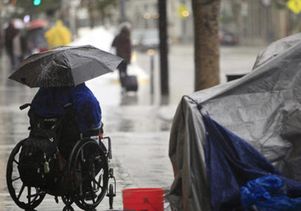
UCLA emeritus professor Gary Blasi urges Los Angeles Mayor Eric Garcetti and other local leaders to declare a local emergency as El Niño weather approaches.
With help from faculty and students at UCLA and Waseda University in Tokyo, UCLA professor Michael Emmerich has developed and launched an app to teach students to read premodern calligraphy used in classical Japanese texts.
Heart and lung transplant patients at UCLA have a lot to celebrate during the holiday season. So staff at UCLA's heart and lung transplant programs help them celebrate life by hosting two spectacular annual holiday parties — one for adults and another for children.
Logic would suggest that millions of years of evolution would have perfected spatial localization in humans. A new UCLA study helps explain why that’s not the case.
The $1.75 million grant will be used to create a toolkit to analyze genomics data, allowing researchers to understand how threatened populations respond to changes in habitats and climate.
The UCLA Goldberg Migraine Program will be led by Dr. Andrew Charles, who says the donation will enable scientists to develop new therapies and provide the best possible care for migraine sufferers.