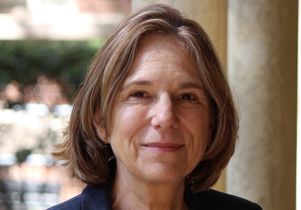
Lynn Vavreck notes that in 2016 more people care about the party of their future in-law than cared in 1958, and there is more desire for same-party marriage than there was in the 1950s.
As Donald Trump begins his presidency, UCLA political scientist Lynn Vavreck joins other scholars in dissecting the contentious 2016 presidential election.
Economist Lee Ohanian on how the president-elect’s plans to reduce globalization and immigration could undermine his promises of job growth and prosperity.
Cindy Fan says that Trump’s phone call with the president of Taiwan could undermine the advantages all parties have derived from the “One China” policy.
The wave of protests that erupted after Donald J. Trump’s unexpected presidential victory was no surprise to Zachary Steinert-Threlkeld, an assistant professor in the UCLA Luskin School of Public Affairs Department of Public Policy.
Misunderstanding voters’ feelings, the natural unreliability of polling and insufficient skepticism from journalists contributed to predictions showing Hillary Clinton would be president.
Lynn Vavreck notes that ads using someone’s own words against them register as more memorable and truthful to voters, a strategy Clinton has used several times.
What can we learn from this election season and how can we use this knowledge to advance racial and political equity? A panel of UCLA scholars and researchers will discuss the election's impact on underprivileged populations.
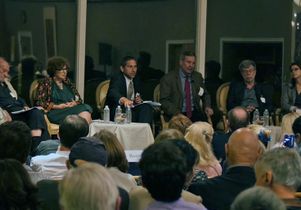
As part of the UCLA history department’s “Why History Matters” series, the panelists discussed demagogues, the media and gender dynamics in the contest between Clinton and Trump.
UCLA Anderson Forecast’s quarterly outlook for the national economy foresees real gross domestic product growth in the 2 percent to 2.5 percent range throughout 2017 and 2018, where it has been for the past seven years.
Laurie Hart taught seminars over the summer at the University of the Aegean in Lesvos, Greece, where thousands of refugees who fled from Syria and other countries are encamped.
A UCLA political scientist and an American University political historian talked about the key factors in the presidential election Tuesday night before a packed crowd at the Hammer Museum.