UCLA-led research shows that adding nanoparticles of aluminum oxide allows for more control over manufacturing processes, which could make them more efficient and reliable.
A UCLA-led research team reports that the moon is at least 4.51 billion years old and probably formed only about 60 million years after the birth of the solar system — 40 million to 140 million years earlier than had been thought.
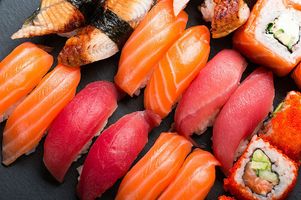
Almost half of the fish ordered at Los Angeles-area sushi restaurants turned out to be mislabeled, which has both environmental and public health implications.
The key is “sequentially switched delay lines,” an approach similar to the way passenger trains are routed from one track to another, to allow them to enter and exit train stations at the same time and avoid collisions.
UCLA professor Henry Kelly examines historical canonical legal procedures to correct the popular myths around the Italian astronomer’s belief in a sun-centered solar system.
The team found a way to correct the instability by resetting the stem cells from a later stage of development to an earlier stage. These results could have great impact on the creation of healthy tissues to cure disease.
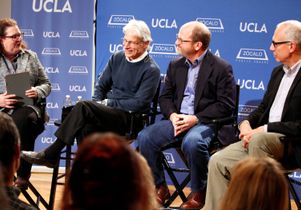
Two UCLA faculty members — molecular biologist Robert Goldberg and international law and policy scholar Edward Parson — defended the use of genetically modified organisms in food production at a Zócalo/UCLA discussion held in downtown Los Angeles.
Researchers from the schools of dentistry, medicine and engineering developed a digital health platform capable of optimizing efficacy and safety during chemotherapy.
Neuroscientists at UCLA have developed a new technique for studying a particular type of cell in the brain known as an astrocyte that may play a role in diseases such as Lou Gehrig’s disease and Alzheimer's disease.
The development of DZ-2384 by UCLA chemists led to an international research collaboration which found that the molecule appears to help fight several types of cancer.
The technique, called a "non-malleable commitment," is the electronic equivalent of a lockbox and requires only two rounds of one-way communication from the sender to the recipient.
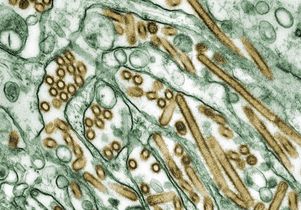
UCLA researchers note that the next decade shows great promise for things like improving food safety, fighting infections, storing energy and supplying clean energy.
A study by UCLA researchers found that a noninvasive method can help to determine whether an individual will enter remission after just one week of medical treatment.
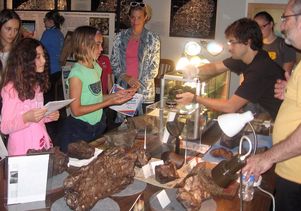
Touching a large meteorite, making your own cloud in a bottle and attending a planetarium show are just some of the activities visitors can look forward to at Exploring Your Universe.
UCLA scientists and colleagues identify the structure of a molecule that kills mosquitoes carrying malaria. The findings are a step toward genetically engineering a toxin that would be lethal to species that carry other diseases.
Multicolored laser light could be used to cool atoms of hydrogen or carbon to nearly absolute zero, allowing scientists to study chemical reactions at the quantum scale.
The UCLA professor emeritus, who directed the California NanoSystems Institute at UCLA, was honored with two others for designing and developing molecular machines.