The combination of two cancer-targeted therapies and immunotherapy helps a person’s immune system attack cancerous tumors and does so with fewer side effects.
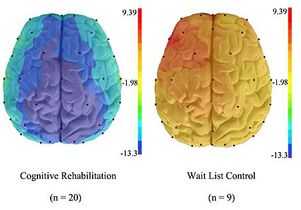
A series of mental training exercises has been shown to help mitigate the effects of “chemo brain,” which affects up to 35 percent of women after their treatments for breast cancer.
The doctors developed a predictive “calculator” called a nomogram after analyzing 30 years’ worth of data from liver transplants for people with liver cancer.
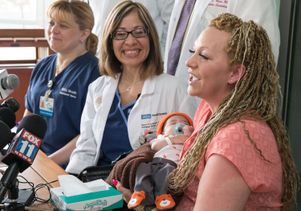
Born with a heart defect that couldn’t be fixed with surgery, a baby receives a heart transplant at 23 days old. Five-week-old Dravyn Johnson left Mattel Children’s Hospital UCLA for home today with his mother.
Development of a blood test to diagnose the disease would have the advantage of being safe, affordable and easy to administer in large groups or in rural areas.
People with both disorders had abnormal activity in the visual cortex of the brain during the very first instants when the brain processes “global” information, as opposed to a tiny detail.
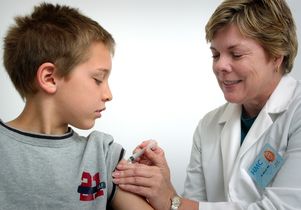
Dr. Nina Shapiro looks at the progression of the anti-vaccination movement in upscale Los Angeles, and emphasizes how the conversation must shift from addressing non-immunization as a political issue to the health crisis it is.
Life scientists have created an accurate new method to identify markers for many diseases — a significant step toward a new era of personalized medicine, tailored to each person’s DNA and RNA.
Funding from the Hirshberg Foundation has elevated the UCLA center to one of the nation’s premier comprehensive programs for pancreatic cancer and diseases.
An air filtration system developed specifically for school buses reduces exposure to vehicular pollutants by up to 88 percent, according to a study by UCLA Fielding School of Public Health researchers.
Five community health projects led by UCLA's Dr. Bowen Chung, Dr. Maria Garcia, Dr. Gilberto Granados, Audra Langley and Dr. Jyoti Puvvula were selected to receive $20,000 each in funding.
Abundant research has revealed that pregnancy is a key period of increased risk for developing obesity in women and that obesity in pregnancy may genetically “program” offspring to become overweight or obese later in life.
Screening travelers for fever on arrival has been criticized as ineffective, but the scientists found it can catch cases that screeners miss at departure.
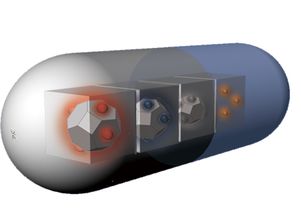
UCLA bioengineers have developed a revolutionary approach that brings together traditional drugs and nanotechnology-enhanced medications to create safer and more effective treatments.
The UCLA study offers a new approach for treating depression in older adults that could get them out of depression much faster than the standard antidepressants.
The UCLA Health System notified 179 patients on Feb. 18 that they may have been exposed last fall to the carbapenem-resistant enterobacteriaceae bacteria during an endoscopic procedure.