UCLA urban planners create an interactive mapping tool to analyze whether developments near Los Angeles light-rail and subway projects displace people.
The findings could also help speed research of CTE, helping scientists better understand its prevalence in the population and in studying potential therapies.
Findings from analyzing the body’s biological clock suggest that genetic or environmental factors linked to ethnicity may influence how quickly a person ages.
The research is the first to demonstrate how lifestyle factors directly influence abnormal proteins in people with subtle memory loss who have not yet been diagnosed with dementia.
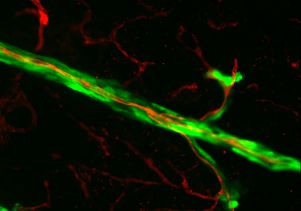
The findings are a major step toward confirming an unusual theory of how some cancer cells metastasize, and the study could lead to new strategies for keeping melanoma from spreading.
UCLA researchers have found that bisphenol S the chemical used to replace BPA in plastics, is just as harmful to the reproductive system and at lower doses.
The new head of the Office of Intellectual Property and Industry Sponsored Research, and of Westwood Technology Transfer, was previously with Israel’s Weizman Institute of Science.
UCLA professor Blaire Van Valkenburgh said the animals in question “are all that is left of a once much more diverse megafauna that populated the planet only 12,000 years ago.”
A team of scientists including researchers from UCLA has developed an RNA sequencing technique that could advance scientists’ use of stem cells in regenerative medicine.
UCLA researchers found that physical activity particularly affected the size of the hippocampus, which is the part of the brain controlling short-term memory.
A UCLA study crunched the numbers from more than 74,000 wine reviews in top magazines and, statistically speaking, environmentally friendly wine tastes better.