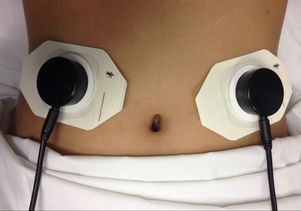
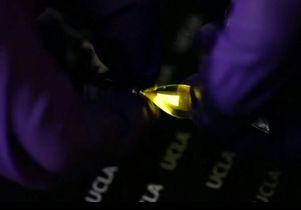
UCLA researchers have developed a disposable biosensor that attaches to the abdomen and may help doctors determine which patients should be fed following surgery.
Researchers at UCLA have set the stage for a watershed in mobile energy by using a unique graphene material to significantly boost the amount of energy supercapacitors can store.
The center will advance the study of “program obfuscation,” the use of new encryption methods to make a computer program invisible to an outside observer while preserving the way it works.
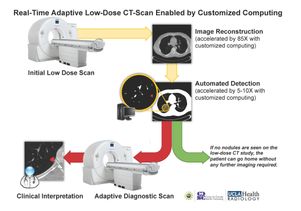
The NSF and semiconductor giant Intel Corp. have partnered to support UCLA research that could reduce radiation from CT scans and lead to the development of new cancer treatments.
Unlike many of today's other imaging technologies that use light waves and radio waves, the device uses terahertz waves, which provide high efficiency and signal clarity.
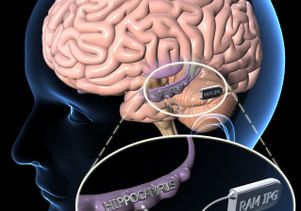
As part of a major federal initiative, campus researchers have been awarded $15 million to create a wireless, implantable device that could restore memory to millions.
The UCLA-led team's new approach could lead to new materials with significant improvements in performance, such as self-lubricating bearings for engines, and it may eventually have applications in medicine.
Identifying enzyme catalysts that improve the speed and efficiency of the drug-production process can be a major boon. Figuring out exactly why a particular enzyme works so well, UCLA researchers say, is an altogether different quest.
A rolling water treatment plant designed by UCLA researchers made a pit stop on campus this week before heading north to the San Joaquin Valley, where it will help address California’s inadequate water supply.
A device and manufacturing process created by UCLA researchers could lead to a significant leap in the quality of images on smartphones, computer displays, TVs and inkjet printers.
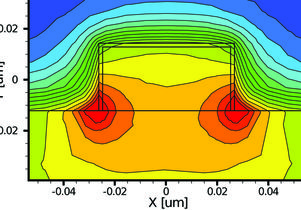
The UCLA researchers' findings counter years of conventional wisdom that a biosensor can be made more sensitive simply by reducing the diameter of the nanowires that make up the device.
Officials will break ground on facilities at the Los Angeles State Historic Park that will showcase innovative installations created at UCLA's IMLab as a result of a partnership between the UCLA School of Theater, Film and Television and California State Parks.
UCLA engineering professor Yoram Cohen's Gray2Blue system cleans up a home's gray water for reuse in irrigating the garden. It could save Californians billions of gallons of clean water every day.
“I’ve always been interested in carrying out experiments to try to understand how things work,” said professor Richard Kaner, who knew from childhood that he wanted to become a scientist.
The online master’s degree program at the UCLA Henry Samueli School of Engineering and Applied Science has been ranked the No. 2 online engineering program in the country by U.S. News and World Report.
UCLA is the highest-ranked...
A Nobel laureate; leading-edge scientists, scholars and doctors; national champion athletes; and selfless philanthropists were among the multitude of True Bruins who played pivotal roles in making 2013 a remarkable year for UCLA. For this unofficial...
Flexible smartphone screens, room-illuminating curtains and nanodiamonds that deliver chemotherapy directly into tumors are among the innovations resulting from the joint work of UCLA and private industry.
The grant from the California Energy Commission will help to identify and develop new materials, methodologies and software tools for zero-net energy buildings.
The new cells could serve as a power-generating layer on windows and smartphone displays without compromising users' ability to see through the surface.
A hidden message left by a UCLA architect in 2011 was recently uncovered in Boelter Hall, where sharp-eyed passersby can spot a coded note in the pattern of floor tiles.
Building a bridge from the laboratory to the marketplace, the Institute for Technology Advancement has launched technology firms and aggressively mined industry expertise to help shape research.