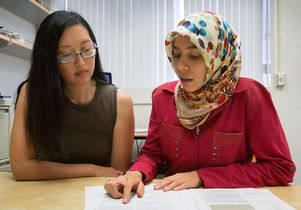
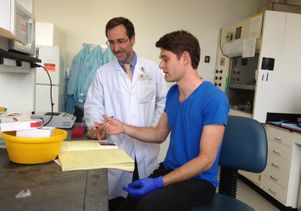
The two-year, $2.15 million grant from the California Institute for Regenerative Medicine will fund research by April Pyle, Melissa Spencer and Huan Meng.
The research could improve scientists’ ability to understand health care, economics and the environment, and to glean much more pertinent insight from data.
Magali Delmas, an environmental economist at UCLA, has been focusing on finding the most effective strategies to motivate people to change their behavior and conserve electricity.
In industrial and multi-family housing, the optimism of the past few years continued, according to a survey by the UCLA Anderson Forecast and the Allen Matkins law firm.
Researchers have identified mechanisms that determine how the deadliest form of skin cancer can become resistant to immune checkpoint inhibitors, which could lead to the development of new treatments.
UCLA study shows men and women had opposite responses in a part of the brain related to emotions and blood pressure control during blood pressure trials.
The study shows the effectiveness of using a vaccine to activate an immune response against advanced brain tumors and it could lead to promising treatments for people with glioblastoma.
An innovative program that serves low-income and uninsured children in Los Angeles has more than tripled preventive dental visits for children from birth to age 5, according to a new UCLA policy brief.
In addition to uncovering interesting insights about the auto industry, the UCLA study offers a new lens through which researchers could analyze cultural and technological change.
Findings from UCLA-led research lend support to the idea that physician assistants and nurse practitioners could fill gap in health care services as nation faces doctor shortage.
Many midlife and older gay men experience the stress of being part of a sexual minority group. They perceive that they need to conceal their sexual orientation, or that others are uncomfortable with or avoid them because they are gay.
Asian-Americans who have a certain genetic variant are more likely to crave carbohydrates and fast food than those without it, according to a UCLA study.