In Northern California, people think of Silicon Valley. In Southern California, the lens is often on Hollywood. But, says Rajit Gadh, director of the UCLA Smart Grid Energy Research Center (SMERC), “Many people don’t realize the level of innovation happening here.”
At UCLA, that innovation doesn’t live in a single lab or discipline. Rather, it moves across them. Engineers work alongside clinicians, artists alongside data scientists, policy experts alongside community partners. “As we take on high-impact problems, we quickly realize that each one requires a different mix of expertise,” says Sam Emaminejad, an associate professor in the Electrical and Computer Engineering Department at the UCLA Samueli School of Engineering. “One of the beauties of UCLA is that I don’t have to go far to find it — whether it’s clinicians, chemists or fellow engineers, it’s all within reach.”
That proximity has helped shape a distinctive model of innovation — one built not just on discovery, but also on collaboration. It’s a model recognized nationally: UCLA has been awarded the Carnegie Community Engagement Classification for a third time, placing it in an elite group of universities that integrate community-engaged work across research, teaching and service. Gadh says, “There’s a culture here of working together — faculty, students and industry partners.”
The result is a university where ideas don’t stay ideas for long. They move into power grids, city systems, communities and the human body itself — tested, refined and scaled in real-world conditions. Across climate and energy, civic life, the arts and global health, UCLA is not just imagining the future. It’s building it.
Global Innovation and Industry Research: The Body Keeps the Score
How do you build bioelectronic devices that actually work inside the human body — where everything is wet?
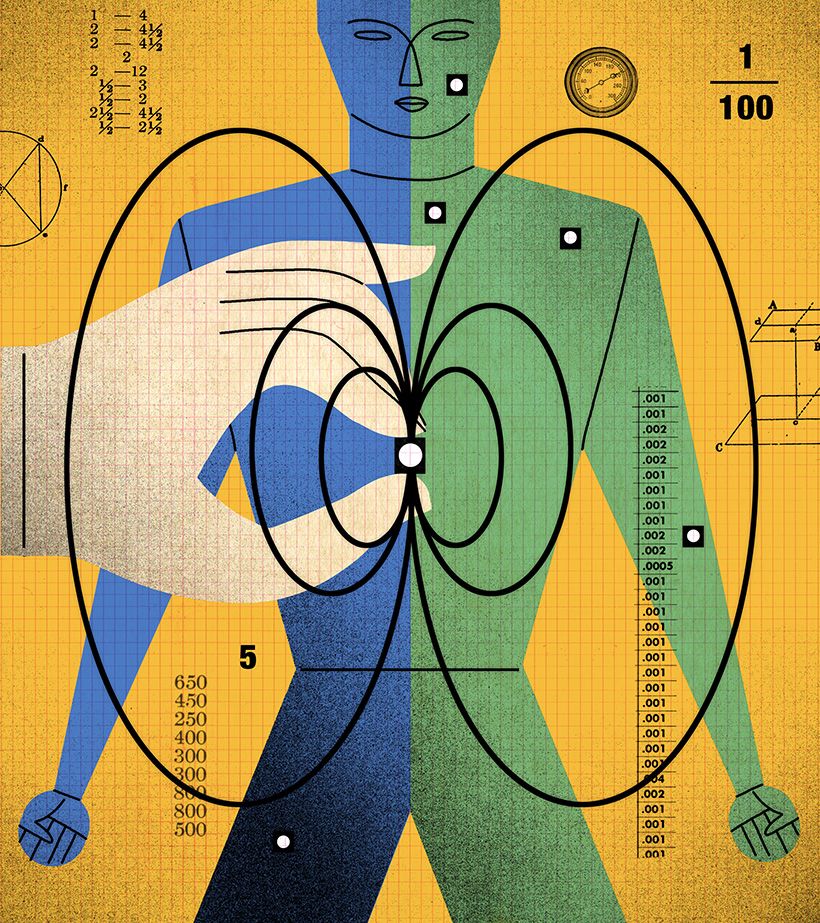
That was the question asked in 2021 by Jun Chen, an associate professor of bioengineering at UCLA Samueli. Finding the answer, says the UCLA materials scientist and bioelectronics researcher, meant rethinking the physics. “Most signals — electric, optical, thermal — are easily affected by water,” he explains. “But magnetic fields can penetrate water. That’s how we make devices that are intrinsically waterproof.”
That insight led Chen and his team to revive and reinvent a 19th-century discovery called magnetoelasticity, transforming it for use in a new class of soft, wearable (and implantable) biosensors. Their first high-profile application is a 3D-printed gel pen that can detect the tremors associated with Parkinson’s disease. The pen converts tiny, irregular motions into electrical signals, allowing clinicians to quantify early-stage disease. Deceptively simple, the tool could become a standard early-screening test in doctors’ offices within just a few years — and, within a decade, it could help reshape how disease is detected and monitored altogether. “This is a fundamentally new platform technology,” Chen says. “The pen is one application in sensing; we can also use it for many other scenarios.”
One of those: continuous cardiovascular monitoring. A thin device placed over an artery can translate subtle pulse vibrations into rich streams of data — far beyond a standard blood pressure reading. “We can get information about heart rate, blood pressure, even pulse wave velocity,” Chen says, noting that the system works even in sweat or underwater.
The same principle can allow a device to track respiration by measuring the rise and fall of the chest, and it can even be used to detect fatigue. In one prototype, an ultrathin sensor sits on the eyelid, analyzing blink patterns to determine when a driver may be dangerously tired. “We can quantify how serious your fatigue situation is,” Chen explains.
Looking ahead, the implications extend well inside the body. Chen’s team is developing “smart” vascular grafts and stents that don’t just keep arteries open, but also monitor themselves for failure, detecting early signs of re-blockage before it becomes life-threatening. In other words, he says, “The stent becomes both the solution and the diagnosis.”
From handwriting to heart health, the common thread is invisible: magnetic signals, quietly translating the body’s smallest movements into actionable insight, and pointing toward a future where diagnosis is continuous, precise, and everywhere. Chen, still in his early 40s, still has a lot of road left on that journey. “I want to invent things that give us a better way to live,” he says, “and hopefully make a meaningful contribution to human civilization.”
Global Innovation and Sensors, Part Two
Emaminejad is turning collaboration into a kind of operating system for invention. His lab builds wearable biosensors that read the body’s chemistry continuously — tracking molecules like cortisol from sweat or monitoring drug levels beneath the skin — while partnering with clinicians, psychologists and engineers across campus to test the biosensors in real-world conditions. One collaborator has been Anne Andrews, professor of psychiatry at the David Geffen School of Medicine at UCLA. Andrews’ work in biosensing transistors helped enable the lab’s cortisol-sensing smartwatch.
Emaminejad approaches his research by following a simple but ambitious North Star: to move medicine from occasional, reactive snapshots to constant, continuous, real-time, contextual insight. Instead of conducting a single lab test weeks after a dosage change, he’s building sensors that will stream data in real time, helping doctors catch problems early and tailor care to each patient.
Proximity is a vital part of Emaminejad’s process. Students can prototype, validate and iterate in days, often with direct access to diverse patient populations and clinical expertise. The result: tools designed not just to function in the lab but robust, practical and ready for everyday use.
Ecosystems and the Climate: Rewiring the Future of Energy
What if the electric grid could think for itself?
That’s the question that SMERC director Rajit Gadh first asked in 2010, well before electric vehicles were common. In those early days, Gadh’s team even borrowed battery-powered golf carts to run proof-of-concept experiments, a workaround that underscored just how ahead of the curve the research was.
Now, on a campus where tens of thousands of people move, charge devices and drive electric vehicles each day, SMERC has turned infrastructure into a living lab.
The center’s integrated microgrids — small, self-managing energy systems — are a breakthrough, flipping the script on how electricity actually works. Instead of a one-way system that delivers power from distant plants, microgrids create local energy networks where solar panels, electric vehicles and batteries work together and respond in real time.
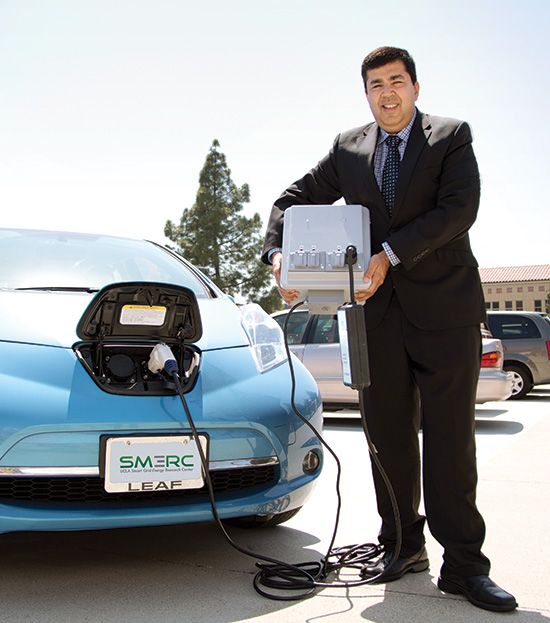
“The traditional grid was one-directional,” says Gadh. “The smart grid is bidirectional: Power, information and control all flow both ways.”
In practice, this means that parking garages double as microgrids. Cars become batteries. Solar energy flows through a system that constantly learns and adjusts — tracking demand, shifting loads, and feeding power back into the grid when it’s needed most. Sensors capture data by the second; software turns the data into decisions.
And this is where all that collaboration comes in. In 2009, to note just one example, UCLA partnered with the Los Angeles Department of Water and Power and regional institutions to secure a major smart-grid demonstration grant, launching a new model of collaboration among academia, utilities, and industry. The goal was not just to study a future grid, but also to build and test it. Campus sites like Parking Structure 9 became early proving grounds for integrated microgrids: systems that combine solar power, battery storage, and electric vehicles into a coordinated energy network.
Work like this reinforces the fact that what makes UCLA distinctive is not just the technology, but also the setting. Rather than a controlled lab, the Westwood campus offers a dense, unpredictable environment shaped by human behavior. Thousands of daily decisions — when to plug in a car, when to use energy, when to store it — become part of the experiment. “An EV parked on campus is essentially a battery sitting there all day,” says Gadh.
SMERC’s work shows how that out-of-the-box thinking plays out in practice. In one project, researchers gamified EV charging, incentivizing drivers to plug in during peak solar hours. Those who charged when the sun was shining earned “SMERC coins,” which could be redeemed for faster charging. The payoff was immediate: a measurable increase in local solar use, and a powerful insight into how behavior shapes energy systems.
From laboratories to neighborhoods, from collaborations with local poets to partnerships with former Ph.D. students, the work unfolding across UCLA's schools, centers and labs is remarkable in both its range and reach.
Because these systems are tested in real conditions, with real people, the lessons travel. Insights from campus experiments have informed how cities and utilities across Los Angeles approach electric vehicle infrastructure, renewable integration and grid resilience. It’s innovation that moves from concept to real-world application — one solar panel, parking garage and charged vehicle at a time.
Beyond SMERC’s microgrid work, UCLA researchers are advancing other key fronts in climate and energy, including:
Beating the Heat: UCLA researchers helped develop a national shade map that reveals where tree cover exists (and where it doesn’t) across major U.S. cities. By identifying “shade deserts,” the tool provides a data-driven roadmap for reducing heat risk and guiding more equitable climate adaptation, especially in communities most vulnerable to rising temperatures. [See our accompanying story in this issue.]
Cutting the Carbon: Researchers at UCLA’s Institute for Carbon Management are working on new ways to capture carbon dioxide from factories like cement and steel plants before it reaches the air. Some approaches can even turn that pollution into useful materials, such as building products or clean fuels. The goal is to tackle the ongoing problem of emissions, which can’t easily be fixed with solar or wind alone — and to reduce the pollution that contributes to extreme heat, wildfires and poor air quality.

Civic Tech, Policy and Data: Expanding What Cities Can Be
What if cities had a broader sense of what was possible?
That’s the question that Adam Millard-Ball, a professor of urban planning at the UCLA Luskin School of Public Affairs, is asking on a global scale. His recent “active travel” study challenges long-held assumptions about walking and biking in cities, drawing on large-scale data and case studies from more than 11,500 cities across 121 countries, going beyond just familiar examples like Copenhagen or Paris.
The idea is to offer cities a broader range of models that reflect their own geography, budgets and political realities. What’s possible? If cities worldwide matched Copenhagen’s street design, global walking and biking could increase by 412 billion miles each year, cutting carbon emissions from private vehicles by an estimated 6% and netting $435 billion in public health benefits.
The approach reflects a broader shift in civic innovation from one-size-fits-all solutions to adaptable, data-informed strategies. By combining data from partners like Google with on-the-ground policy insights, this research helps cities understand not just what works, but what might work for a specific city.
And while the climate benefits are significant, Millard-Ball emphasizes that the most universal impact is human. “There’s a part of the population that cares about climate change and a part of the population that doesn’t,” he says. “There’s a part of the population that cares about biking and a part that’s anti-bike. But walking is something that pretty much everyone can get behind.”
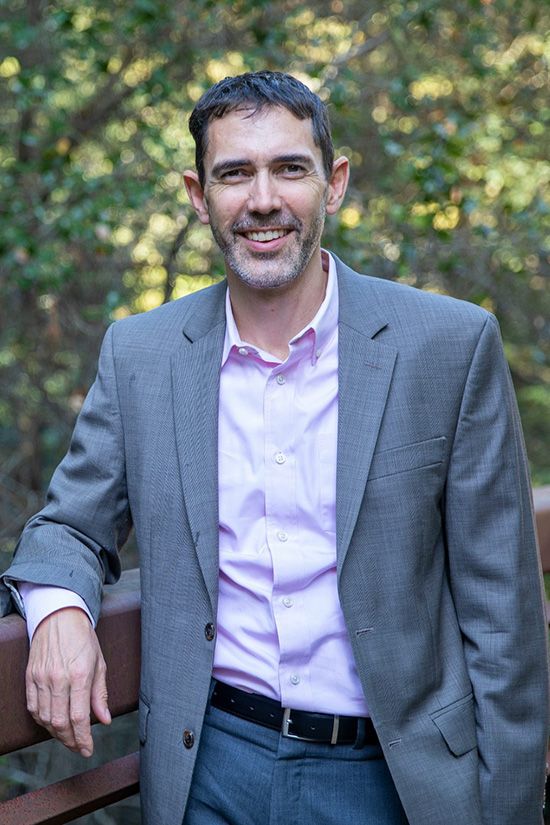
That insight, one grounded in both Millard-Ball’s data and our collective lived experience, could help unlock political and public support in ways that abstract climate goals often cannot.
At the same time, the work underscores the unique role universities play in civic innovation. “You can do things here that you couldn’t do outside the university,” Millard-Ball says, pointing to the time, independence and student collaboration that make long-term, public-interest research possible.
The result is innovation measured not just in technology deployed, but in more informed decisions by cities across the world. By expanding how cities understand mobility, health and climate, UCLA’s work in civic tech and policy is helping shape more livable, equitable urban futures. And that’s an ROI with the best possible payoff: millions of lives improved.
Beyond this work, UCLA researchers are advancing civic tech, policy and data innovation in other critical areas including:
The Fire Next Time: Researchers at the UCLA Center for Neighborhood Knowledge and the UCLA Latino Policy and Politics Institute (LPPI) are studying what happens after wildfires. By analyzing U.S. Census and job data, they’ve found that residents of some communities, especially those with a high density of Latino households, face bigger hurdles returning to work, finding housing and rebuilding their lives. Ultimately, this work will help policymakers design more equitable disaster response and long-term recovery strategies. This research makes clear that Latinos are central to wildlife recovery, says UCLA LPPI’s director of research, Silvia R. González. “They are residents, workers and contributors to Southern California’s economic life, and they are part of the workforce helping communities recover and rebuild,” González says. “A more effective recovery starts with recognizing that.”
Stopping Homelessness Before It Starts: At UCLA’s California Policy Lab (CPL), researchers are helping Los Angeles County with a predictive tool that uses healthcare, housing and social services records to identify people at high risk of losing their housing. “This preventative approach can be a more humane and cost-effective way to address the homeless crisis, and we’re seeing it gain traction in California and nationally,” says Janey Rountree, CPL’s executive director. Instead of waiting for someone to end up unhoused, the system flags early warning signs so caseworkers can step in with support, ideally preventing housing loss before it happens.
Arts and Community: From Immersion to Action
If humans experience a more visceral connection to a landscape, could they be moved to act?
That’s the question Steve F. Anderson, associate dean of academic affairs at the UCLA School of the Arts and Architecture, professor in UCLA’s Department of Design Media Arts, and author of Technologies of Vision: The War Between Data and Images, set out to answer. The result is Machine Visions: Mojave, an immersive, joystick-driven experience, via interactive environment, that reflects a distinctly UCLA approach to innovation: one that blurs boundaries across art, climate and emerging technology.
Anderson knew that presenting climate change through mountains of abstract data alone was unlikely to move the needle in terms of engagement. So he now invites participants into a living, shifting desert. As they navigate the Mojave landscape, their gaze activates the environment: Joshua trees grow and branch, moths swarm and vanish, time accelerates.
“The idea is for people to have a different kind of connection to the landscape,” Anderson says. “It’s one thing to know intellectually that we’re having an impact. It’s another to feel connected to those spaces in a more visceral, embodied way.”
Drawing on immersive media, 3D modeling, and artificial life systems, Anderson and his collaborators (including a former Ph.D. student and contributors to the project’s NASA-generated soundtrack) have created a dynamic environment that compresses ecological time. A Joshua tree’s centuries-long response to climate change becomes something you can witness in minutes. The result is not a literal scientific model, but a bridge between scientific insight and human experience.
Anderson knows one installation won’t solve climate change. But it just might do something else. “My hope is that people will be moved by this experience,” he says, “and ask what their impact is on our environment and take action about the transformations we don’t want to be responsible for.”
In that sense, Machine Visions: Mojave is more than a mind-expanding work of art. It’s an experiment in empathy — and a reminder that innovation isn’t only about new technologies, but also about new ways of seeing.
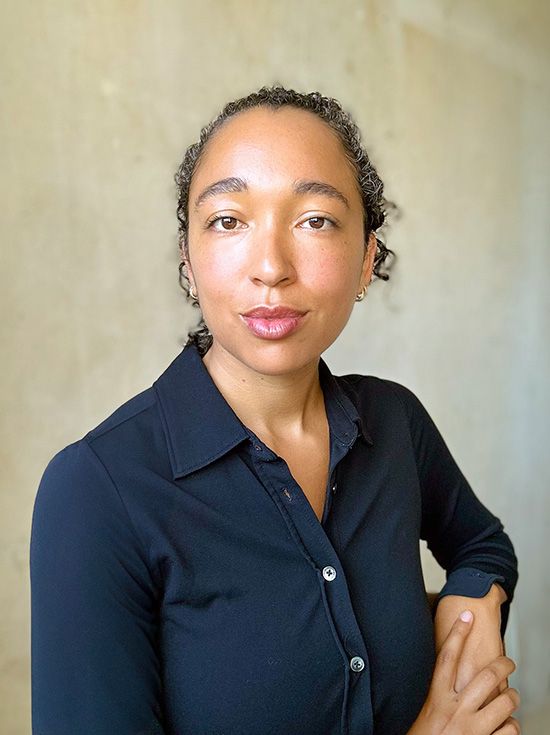
Elsewhere at UCLA, arts-driven initiatives are addressing global and community issues through interdisciplinary collaboration:
Ecology as Collaborator, or Listening to the Living World: Now in its fourth year, the Liberated Planet Studio Artist Research Program — led by Ayasha Guerin, assistant professor of Intersectionality and Practice-Based Research and Media Making in the UCLA World Arts & Cultures/Dance Department — supports Los Angeles–based artists exploring the intersection of environmental and racial histories through site-responsive work. By pairing creative practice with place-based research, the program examines how ecological challenges are shaped by inequity. “Artists in the program approach ecology not just as a subject or medium, but as a teacher and collaborator,” Guerin says. A prime example: Plantcestors, a collective film led by artist Joelle Estelle Mendoza, which follows a white sage puppet after an encounter with LAPD at a downtown protest. The film unfolds into a hybrid documentary that brings together human and nonhuman voices to explore ecological violence and Indigenous survival in Tovaangar (the Tongva word for what is now the Los Angeles Basin).
The Sound of Renewal: At the UCLA Herb Alpert School of Music, associate professor Thomas Hodgson leads Altadena After the Fire: Reimagining Place Through Music and Poetry. Supported in part by a 2025 Chancellor’s Arts Initiative seed grant, the project pairs composers with local poets to explore how wildfire reshapes community and landscape, creating conversations around resilience, sustainability and community memory. “Altadena has an incredibly vibrant poetry scene,” Hodgson says. “For this project, we’re creating a new song cycle set to verses by a local poet and others from across the Los Angeles area.” Taken together, he adds, the work reflects “themes of climate change, habitat loss, human loss, hope and renewal.”
From laboratories to neighborhoods, from collaborations with local poets to partnerships with former Ph.D. students, the work unfolding across UCLA’s schools, centers and labs is remarkable in both its range and reach. Step back and something larger comes into view: not just innovation, but a kind of collective momentum of ideas moving, connecting and taking shape in the real world.
It’s not something easily engineered. It emerges from proximity, from curiosity and from a culture that invites disciplines to overlap and ideas to travel. The result is not only new technologies or new knowledge, but new ways of seeing what’s possible — a kind of intellectual awe.
As Millard-Ball puts it, reflecting on his own work but in a sentiment that speaks more broadly of the whole campus: “The idea is to expand the set of possibilities.”
Read more from UCLA Magazine’s Summer 2026 issue.