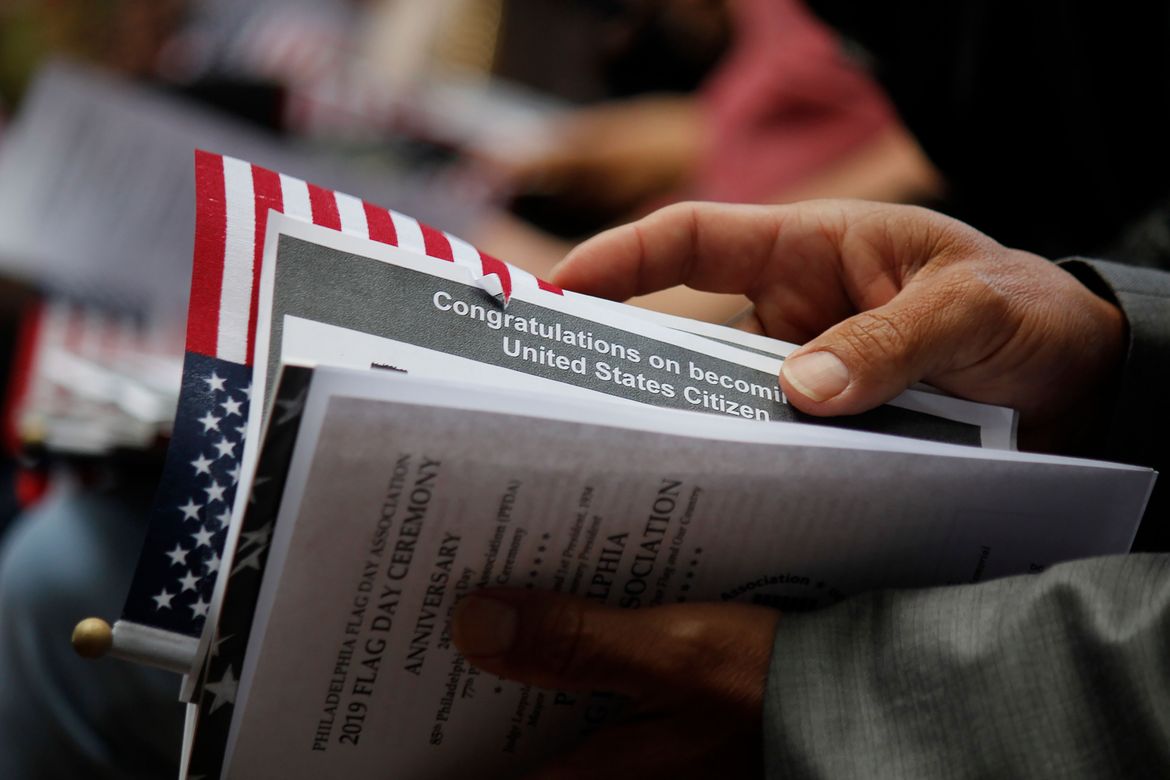
A new data brief from the Center for Neighborhood Knowledge at the UCLA Luskin School of Public Affairs finds that naturalization has become increasingly difficult in the United States, with 76% fewer legal immigrants gaining citizenship under the current administration compared to the previous administration.
“This data shows that the heightened restrictions on immigrants in this country go beyond border control and deportations,” said Paul Ong, research professor and director of the center, who co-authored the brief. “The very pathways to legal citizenship are being altered and taken away.”
Naturalization rates rose sharply from the early 1990s through 2024, surpassing an average of 70,000 per month as ethnically biased restrictions were eliminated. Starting in late summer 2025, approvals declined amid updated requirements, including a new civics test and moral character evaluation, and slower application processing. Average processing times doubled from early 2024 to late summer 2026, and monthly approvals fell 83%, from 88,000 in April 2025 to fewer than 16,000 in August 2026. If this trend continues, rates could return to post-World War II levels.
The decline has broadly impacted the country, particularly in California, where San Jose experienced the largest drop nationally. Fresno, Los Angeles and San Francisco also saw above-average declines. Florida, New York and Texas had the next-highest declines among states. Researchers warn that these trends could leave legal immigrants in prolonged uncertainty and disenfranchise over half a million who would have become eligible to register and vote in November’s midterm elections.