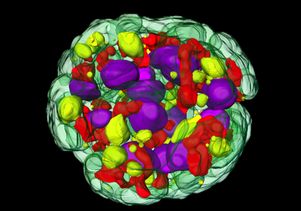
UCLA research published in the journal Proceedings of the National Academy of Sciences is the first proof that a single material can be both static and moving.
Each is among 14 scientists nationally to be named by the Howard Hughes Medical Institute as HHMI professors. UCLA is tied for second in the number of 2017 recipients.
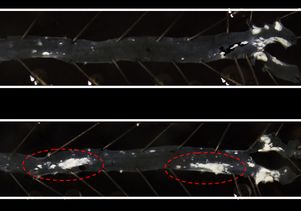
The protein, NOTCH1, was known to be a key player in the development of blood vessels in embryos, but researchers weren’t sure whether it was also critical to adults’ health.
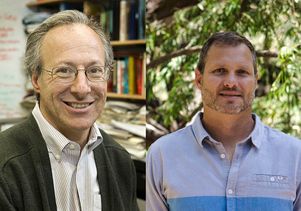
Elaine Hsiao, assistant professor of integrative biology and physiology, and Hosea Nelson, UCLA assistant professor of chemistry and biochemistry, are among 18 winners.
UCLA researchers’ study using zebrafish shows how the disease turns a repair mechanism into one that damages nerve cells. The findings could lead to treatments to prevent nerve damage in leprosy and other diseases.
The new consortium could not only help generate life-saving treatments, but also create significant economic activity from spin-off companies to licenses and collaborations with industry.
Daniel Blumstein, a professor in the UCLA Department of Ecology and Evolutionary Biology, is the recipient of the 2017 Gold Shield Faculty Prize, presented annually by Gold Shield, Alumnae of UCLA.
The finding represents one of the clearest examples to date of the phenomenon — stretches of DNA that exist for no reason other than promoting their own inheritance — at the molecular level.
In bright light, mammals rapidly recycle spent pigments via a process that ensures photoreceptors retain levels of light-sensitive pigments sufficient for uninterrupted sight.
UCLA Ph.D. student Andy Tay writes about a crucial a challenge to long-distance space travel — overcoming the long-term effects of microgravity on our bodies.
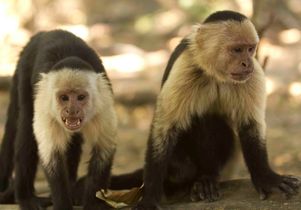
UCLA's Congo Basin Institute led a team of UCLA and Cameroonian students into a rain forest in central Africa to reopen a field station in a jungle with a thriving ecosystem with birds, elephants and monkeys.