UCLA’s Sarah T. Roberts spoke with the executive about how the world’s largest social media platform balances free expression with creating a safe community for all.
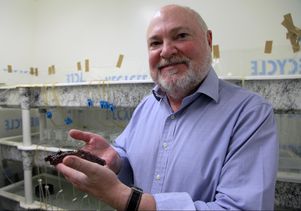
The research in marine snails could lead to new treatments to restore memories and alter traumatic ones in people with Alzheimer's disease and those dealing with post-traumatic stress disorder.
“Tissues are wonderfully complex structures, so to engineer artificial versions of them that function properly, we have to recreate their complexity,” said UCLA professor Ali Khademhosseini.
Researchers led by UCLA’s Dr. Paul Krebsbach are the first to characterize the mechanism of the gene, and they found it regulates the molecular process that dictates cell growth and human development.
“The center will provide CNSI with the cutting-edge technology to help us maintain our leadership in biophotonics research,” said UCLA’s Laurent Bentolila.
The study, led by Professor Amander Clark, could lead to important advances in an area of medicine that historically has been underfunded and underappreciated.
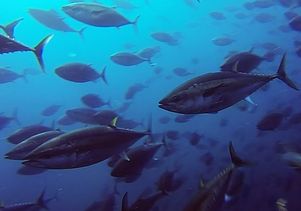
“Today’s rich biodiversity among marine fish shows the fingerprints of the mass extinction at the end of the Cretaceous period,” said Michael Alfaro, a professor of ecology and evolutionary biology.
Researchers used cryo electron microscopy to obtain the first atomic model of the particle, which is made up of more than 3,000 protein molecules comprising tens of millions of atoms.
The studies found a link between risk-related terms that Google and Twitter users researched or tweeted about and subsequent syphilis trends that were reported to the CDC.
The advance could help bring high-quality medical diagnostics into resource-poor regions, where people otherwise do not have access to high-end technology.
Working to upend one of the most stalwart of construction materials, a team of UCLA researchers created a near carbon dioxide-neutral version of concrete.
The research, which enabled viewing of an enormous blue star nicknamed Icarus, increases understanding of the fundamental composition of the universe, said UCLA’s Tommaso Treu, co-author of the study.