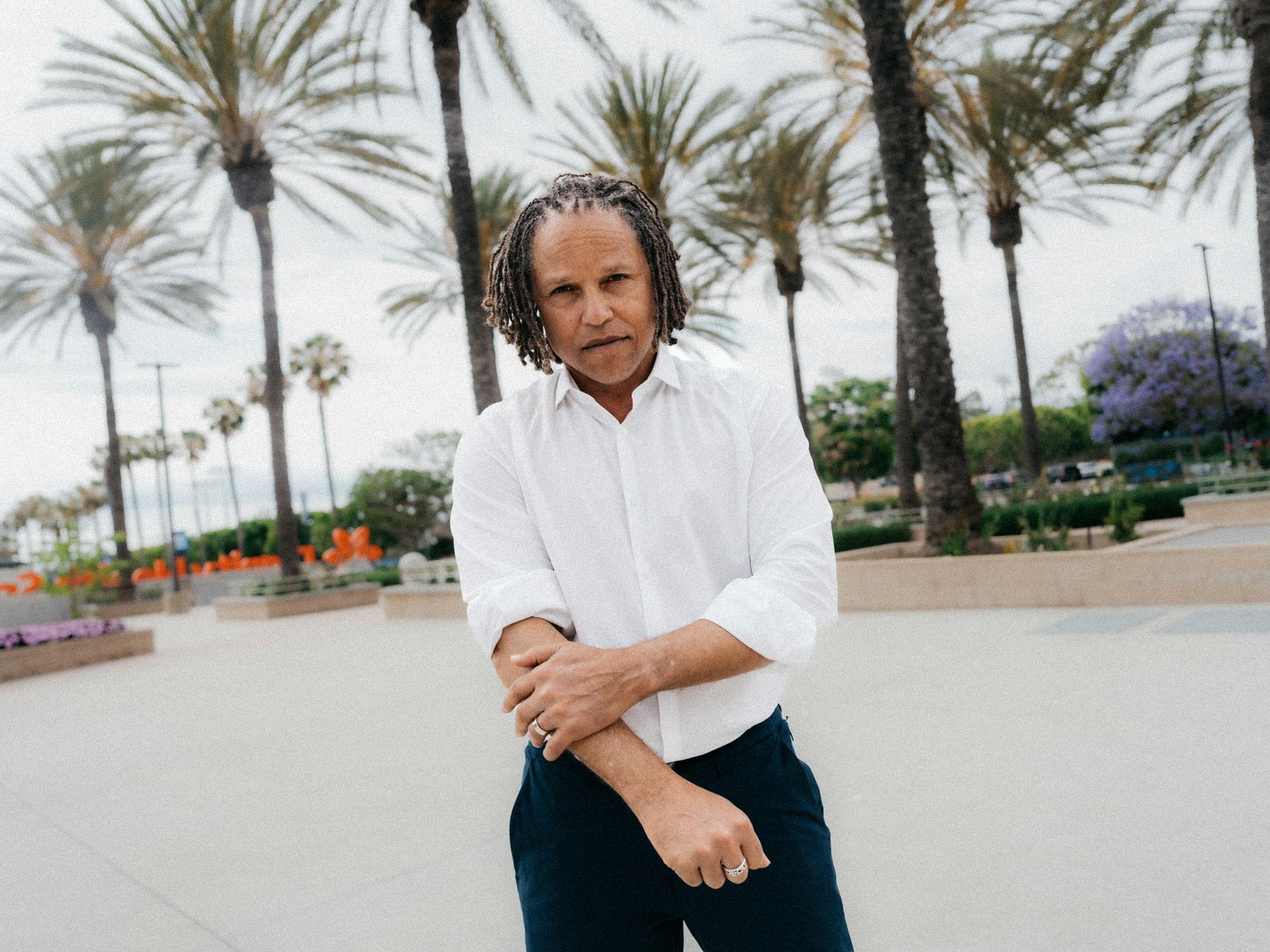
On April 26, Cobi Jones, a legend of both UCLA and U.S. soccer, finally got what he deserved: a statue. He joins an exclusive club of L.A. sports icons whose likenesses have been immortalized in bronze. On UCLA’s campus, it’s Coach John Wooden; outside of Crypto.com Arena downtown, it’s Kareem Abdul-Jabbar ’69, Magic Johnson, Shaquille O’Neal, Kobe Bryant, Jerry West and Wayne Gretzky. There’s Jackie Robinson at the Rose Bowl and Jackie Robinson (again), along with Sandy Koufax at Dodger Stadium. Now, at Dignity Health Sports Park, home of Major League Soccer’s L.A. Galaxy, there is a 9-foot figure of Jones — making a speedy run down the pitch, no doubt, his trademark dreadlocks flying through the air — situated alongside fellow club greats Landon Donovan and David Beckham.

Jones’ Hall of Fame career (he was inducted in 2011) seemed highly unlikely when he first arrived in Westwood in 1988 and walked on to the soccer squad, then helmed by Coach Sigi Schmid ’76. At that point, no one — least of all Jones himself — would have predicted that his path would culminate in MVPs, broken records and, ultimately, sporting immortality. Indeed, Jones’ accomplishments are unmatched in the history of U.S. men’s soccer.
After earning an athletic scholarship through his stellar play, Jones emerged as a leader on UCLA’s NCAA national championship–winning team in 1990. He is the single-season record holder for most assists in UCLA history, has represented his country at the national team level a record 164 times, and notched 21 assists (also a record) while participating in three World Cups — including 1994, the last time the soccer nations of the world competed for the FIFA World Cup Trophy on U.S. soil.
Three decades ago, Jones was a founding member of the L.A. Galaxy in the inaugural season of MLS. He scored the first goal in club history and still holds the club record for appearances, goals and assists, racked up over the course of a 12-year career that yielded five MLS All-Star honors and two MLS Cup victories. In 1998, he took home the award for U.S. Soccer Male Player of the Year.
When the World Cup returns to the U.S., hosting duties will be shared with Mexico and Canada. Jones will be offering color commentary on several of these matches for Fox Sports. Here, he reflects on his own World Cup experiences as a player — and hints at what surprises might await us in the 2026 edition.
You are an official L.A. World Cup 2026 Community Ambassador. What’s changed since 1994?
A lot. Even those who remember ’94 and how massive that event was for the country and for the cities, you have to understand that was only 24 teams. This is going to be 48.
Let's rewind back to your time at UCLA. Just how did you end up in Westwood?
For me, it was the best of all worlds, right? Growing up in Southern California, I knew the school very well. There was the opportunity of the soccer team at UCLA that everyone had heard about, so I'm just like, OK, well, let's give it a shot and make the most of it down at UCLA. I had to go through that tryout process at the beginning, where I made the team.
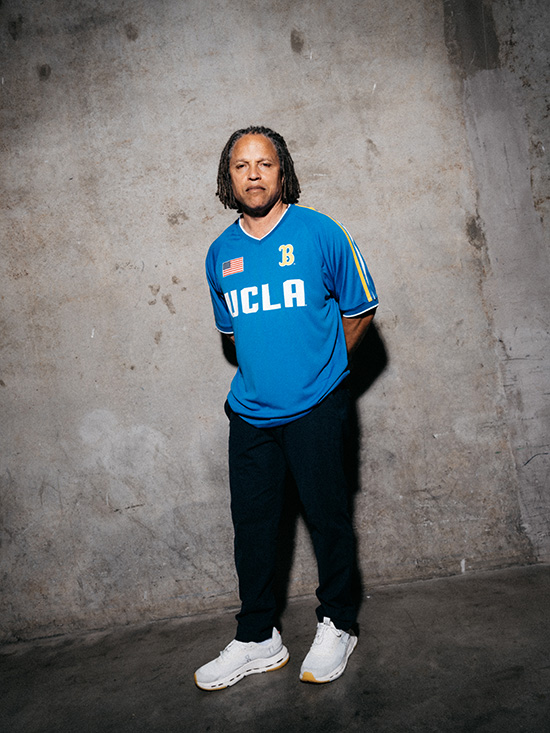
Let’s talk about Coach Schmid. He was a UCLA alum who went on to coach the U.S. national team and later the Galaxy. So he was your coach for a good portion of your career.
Sigi had a huge impact on my career and many players’ careers. He was the catalyst for a lot of players to be able to go to that next level, because after that first season at UCLA, with his status within U.S. soccer at those youth national teams, he got me the call-up to have my first Olympic team camp. That was the first time that I got to be seen on a national U.S. soccer stage. Then, of course, with the Galaxy, he came on as a coach, and we ended up winning the first championship. That was a huge moment for all of L.A. and for MLS. And for myself.
What would you say is the most important thing you learned at UCLA?
I would say, stay tight with your friends. Find your people. That's extremely important. I always hear people talk about, “Oh, UCLA's campus is just so big, there are so many people. How can you handle a school like that?” You don't hang out with everybody on campus. You've got to find your group of friends, and make sure that they’re tight, that they’re supportive, they’re people that are good for you and you’re good for them.
Do you stay connected with some of your classmates from back then?
I’ll be seeing a few of them in a couple of weeks. Over the last few years, we’ve tried to meet up once a year, even for a quick weekend, and just hang out. Laugh like we’re right back in our college apartment.
You played in three World Cups. What's your greatest World Cup memory?
Damn. Can I bring two up?
Sure.
The first is just that first World Cup [’94] — you know, everything about it, but especially the moment when I had my first start against Brazil. Walking out at Stanford Stadium and just seeing that against Brazil, there were more in red, white and blue out there cheering, and faces painted and flags waving than the Brazilian samba that we all know so well. That was just a moment of pride, me walking out next to the likes of — I mean, literally next to — Romario and Bebeto. And the performance that we gave! We were fighting tooth and nail until the end. That was a very proud moment for me, especially when no one was expecting the U.S. to make it out of the group. For us to play that well against the eventual World Cup champions. Losing 1-0? Not bad.
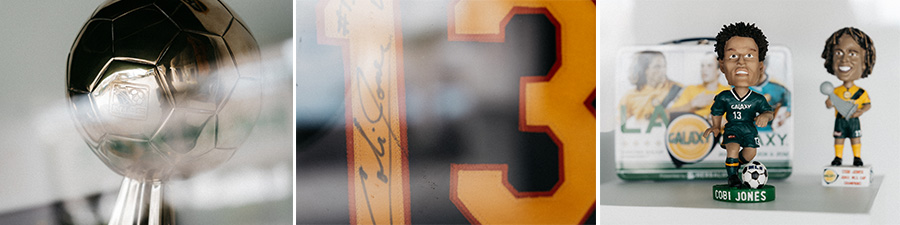
Not bad at all.
The second moment: Beating Mexico in the 2002 World Cup. The wonderful Dos a Cero [2 to 0] was so special for me, because being within the region of CONCACAF [the Confederation of North, Central America and Caribbean Association Football, one of FIFA’s six continental governing bodies], you always have a battle: Which team is better? Mexico was on top for so long, then we started to grow. Any games that we won or did well against them, they were just like, “Oh, that doesn't matter, that wasn’t a real match. Oh, that was a friendly. This tournament didn’t matter.” But then you meet them on the world stage, the biggest tournament where everything matters, and we come out on top, 2-0, USA over Mexico. It was a fantastic moment that will live with me forever.
Looking ahead to this year’s tournament, what are the odds that the U.S. team can duplicate or exceed either of those moments?
I really don't know. But my expectation is that they do exceed it. I think they need to exceed it, because this is an opportunity. All eyes of the world are on you, but more importantly, all eyes of the U.S. are on you, and the opportunity’s there, as individual players, that you can be immortalized and people will be talking about you 30-some-odd years later and about what you did in the World Cup. Every World Cup is an inflection point, where you grow the game.
This conversation comes at a good time. Not so good results-wise, after losses to Portugal and Belgium, but the United States’ group was finalized since Türkiye qualified. How’s your outlook for the U.S.?
I still believe they’re going to get through the group stage and make it to the next round. Now that you’ve added Türkiye in there, that's going to be a big challenge. I’ve been asked a lot: Is the U.S. still the favorite within the group? U.S.A., at home, it’s a quality team, you see all the positives there, but then they haven’t had the best performances over the last couple of games. And then you look at Türkiye and how they're going, [and] you could argue them being a top team because they’re battle-tested. But no one knows what’s going to happen.
Which players are you watching out for this World Cup?
For team U.S.A., it’s Weston McKennie. I want to see how he does, because I think he’s the engine of the team. You can see him defending strongly, and then all of a sudden, a cross is coming in, and McKennie’s there. Just the amount of ground that he covers … and over the last few months he’s started ratcheting up. It’s like in his mind, it clicked: World Cup time, let's go! Then for Spain, of course, I want to see Lamine Yamal. I want to see how he performs at the World Cup level. Regardless of everything else, the World Cup’s always just a notch above. Cristiano Ronaldo — I want to see: Can he hold it together? Is he better on the bench or starting? One of the picks to win it is France. They have everything. Let’s go with [Ousmane] Dembélé.
What do you make of soccer culture in L.A. today? You’ve been here for the whole evolution, from the beginnings of the Galaxy to there now being two MLS teams and the National Women’s Soccer League’s Angel City Football Club, of which you’re a part owner. And now the city is hosting World Cup matches.
Looking at L.A., I don’t think it’s changed much, because I’ve always thought L.A. was the No. 1 soccer city in the country, and people didn’t believe it at the beginning. I know for a fact that within MLS — when there were national team players being assigned to teams — two people were asked before me to go to L.A., and none of them did, because they didn’t believe L.A. could hold a team. I jumped all over it. I said, “Heck yeah, this is my hometown, I’m there.” And we showed from the beginning that we’re the No. 1 market for soccer, and over the years, we’ve shown it again by the fact that we’re holding three professional soccer teams here in the city of Los Angeles. I mean, come on!
Read more from UCLA Magazine’s Summer 2026 issue.