“Jackie is a great basketball player,” Abe Saperstein said of the former Bruin who once led the Pacific Coast Conference Southern Division in scoring for two straight seasons during his time in Westwood. “And we want him.”
It was September 1947. The owner of the Harlem Globetrotters was, of course, talking about the only Jackie who mattered; the one who, in his rookie season with the Brooklyn Dodgers, had broken baseball’s color line and transfixed the nation, forever charting a new future for American sports. Jack Roosevelt Robinson.
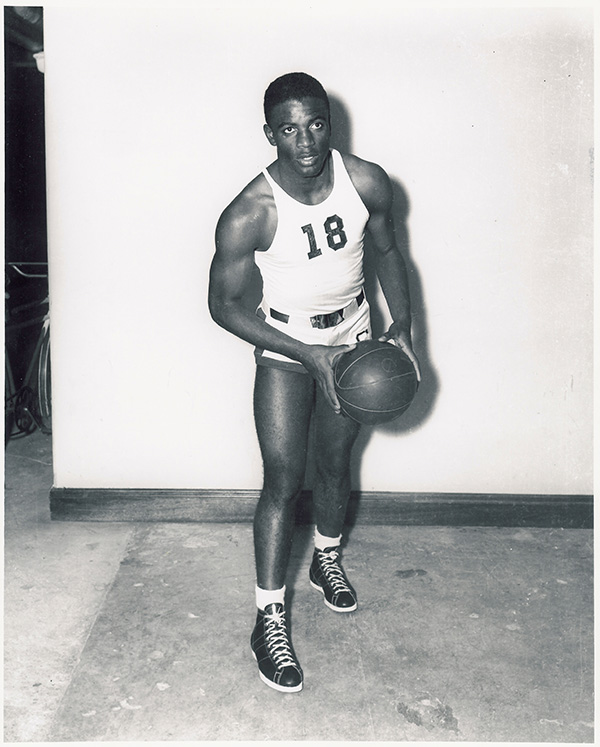
He had already led his team to the National League pennant. Next up, a World Series tussle with crosstown rivals New York Yankees.
But first, a new offer. Saperstein — the Illinois businessman who had founded the all-Black traveling team in 1926 and christened them the “Harlem Globetrotters” to associate his stars with the center of Black culture in the United States — was putting something special in front of Robinson. A $6,000 contract to play for his team during baseball’s offseason — a sizable amount for just four months’ work. Saperstein would even throw in a $4,000 bonus to sweeten the deal.
This wasn’t a reach. Aside from his playing days with the Bruins, Robinson had (briefly) played well with the unaffiliated Los Angeles Red Devils basketball team in 1946. But by ’47, UCLA’s first four-sport letterman had resolved to focus on one field of athletic pursuits. There was still much for him to overcome — and to achieve — within the sport of baseball.
Still, it had been worth a shot.
The Globetrotters did their best to recover, as any scorned suitor might. They would survive.
Basketball’s First Dream Team
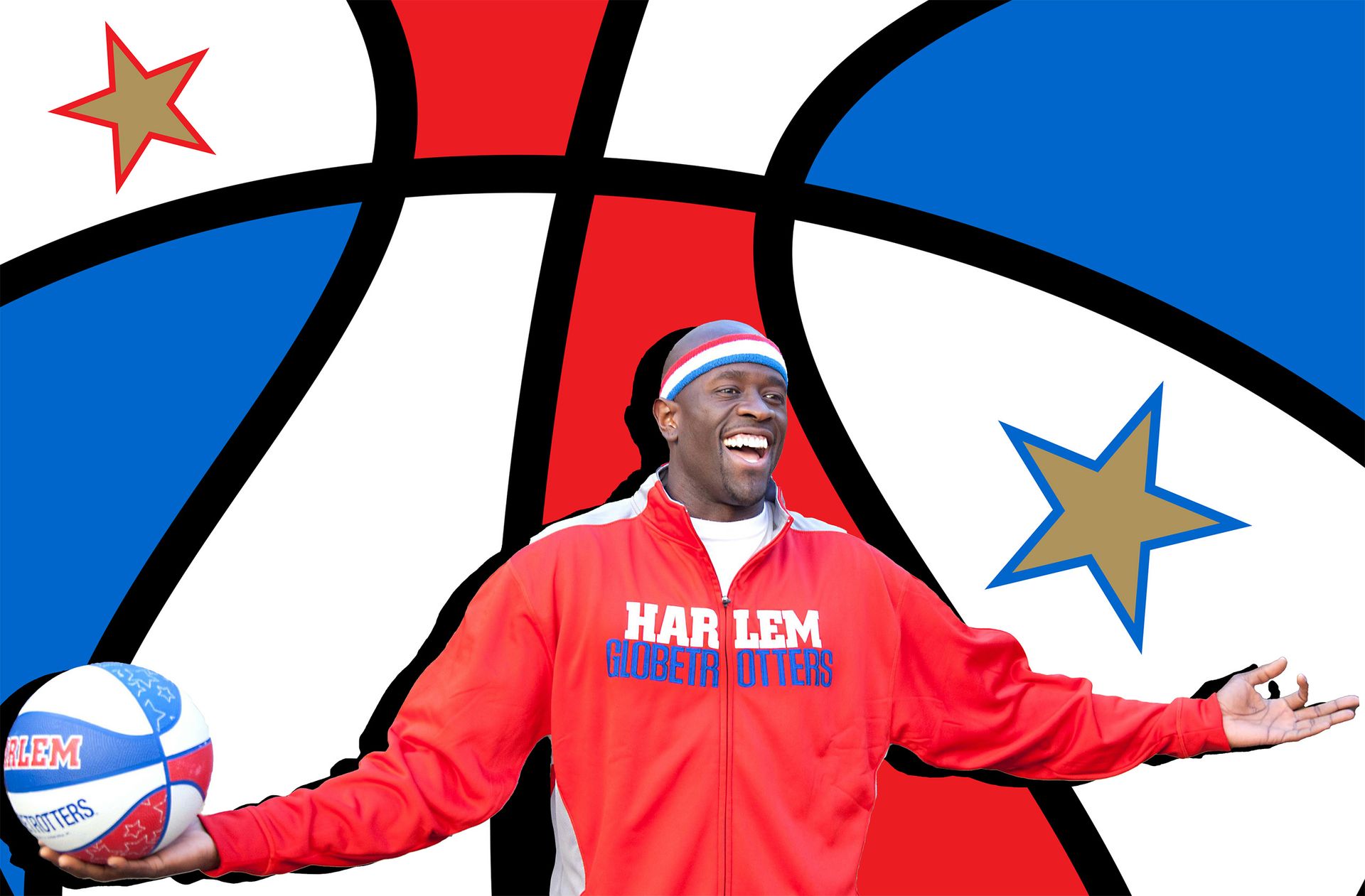
Today, we’re 79 years past that moment. And the Globetrotters are now in their centennial season. In a sport that once disdained on-court joy and punished personal attention-grabbing (no offense to the famously no-frills Coach John Wooden), for decades the team provided something else: a clever, buoyant blend of athletic prowess, humor and just plain fun via their continual beatdowns of those hapless Washington Generals. Long before the “Dream Team” of the 1992 Olympics, the Globetrotters provided the world a glimpse of a unique version of American basketball.
Bruins have been a significant part of the effort, particularly in the modern era. Five former UCLA players are on the Globetrotters’ all-time roster; only six universities have produced more. Two other UCLA legends — Jackie Joyner-Kersee ’86 and Kareem Abdul-Jabbar ’69 — are honorary members. (Fun factoid: Abdul-Jabbar himself turned down a Globetrotters contract offer of $1 million in 1969. Things got even more awkward in 1995, when, at age 48, Abdul-Jabbar and his team of fellow former NBA stars ended the Globetrotters’ 8,829-game winning streak.)
Former stalwart Bruin point guard Darrick Martin, who played for several NBA teams, says of his experience as a “Trotter,” “I definitely enjoyed it. And cherish it. I got to be part of something that’s historic around the world.”
Folks saw Martin don those Triple Double shorts as part of the Globetrotters’ Fall College Tour in 2003. Set up three years before, this exhibition series pitted the team against the best squads in NCAA men’s basketball. Regular Globetrotters suited up alongside hoopers like Martin — those with years of pro experience behind them and a need to stay sharp and in shape with hopes of winning another contract.
This combo came with unexpected results. A win against Syracuse University on the night that team hoisted its 2003 NCAA championship banner. A shocker in East Lansing against Michigan State University, where Martin stole the show by scoring 38 points, 18 of those in the last 6 1/2 minutes.
“[The Globetrotters] were really excited about winning the exhibition games,” says Martin, who got picked up by a team and resumed his pro career after the tour. “I think it gave them more credibility as basketball players. Maybe they thought they weren't seen as real basketball players. So, to be a part of those teams that were beating high-level colleges, it was really good.”
Rigorous Practice, Effortless Entertainment
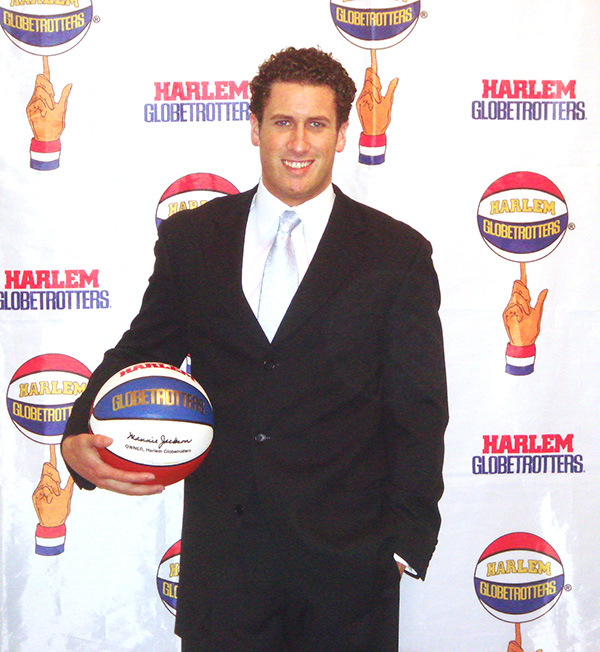
A four-year starting Bruin point guard and NBA veteran, Pooh Richardson, got an up-close look at what it takes to turn a talented professional into a Harlem Globetrotter. Before the 2002 season, the retired former Minnesota Timberwolves first-round pick spent time around the team at the invitation of then-owner and chairman Mannie Jackson. He does appear on the Trotters’ all-time roster.
“I saw an opportunity just to have fun,” Richardson says. “Just to learn what they do, how they do it … . The thing I felt was fascinating was the rigorous practicing of a routine. How long it takes for everyone to get on it, especially if it was an individual who had never really done those things before.
“It was just all about the repetition of it,” he adds. “Those guys work hard, man. They really do.”
For a decade, another Bruin, Nick Cardinale ’01, helped oversee those efforts. Coming into the Globetrotter fold as assistant general manager in 2004, Cardinale took the reins fully as GM in March 2005 — a post he held for more than eight years.

UCLA is #1 ... again! Read all about it.
During that time, he worked not only with the players, but also with the touring operations of the team — or teams. With three to four different Globetrotter squads touring the country at once, often playing seven days a week, coordinating it all required Cardinale to dig deep into his management tool kit. For games abroad, it was his job to handle everything from fielding calls from consulates to sorting out visas to making sure things were all set for a particular night’s game.
“One of the three teams [was] almost always playing somewhere important,” says Cardinale, now COO of Quint, a sporting and entertainment hospitality company. “And that importance could be tied into some type of PR initiative, or it could also be tied into a sponsor initiative. It was a grind. I always felt fortunate I got to go home on Monday. The guys just got back on the bus, and they're off to the next city.”
Ambassadors of Goodwill
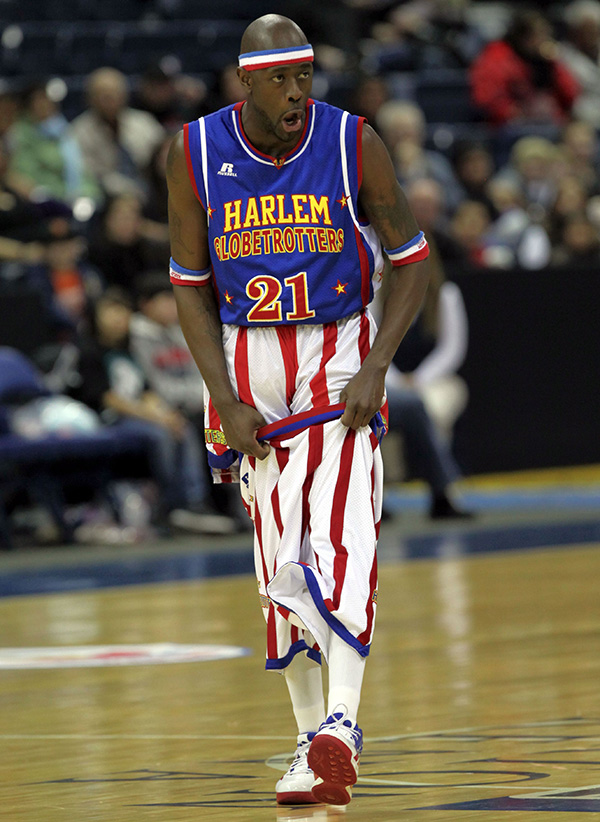
No one understood that grind better than Kevin Daley. While not listed as a Bruin on the Globetrotters’ all-time roster (but a Bruin nonetheless), Daley is most certainly the greatest Globetrotter to come out of UCLA.
He arrived on campus in 1996, a transfer from the University of Nevada, Reno, to play for Jim Harrick. He did what transfers were supposed to do in those days: sit out a year and ready himself to play the 1997–98 season for a championship-winning coach. By the time the season came around, though, Harrick was gone, and Daley spent his first — and only — season at UCLA playing limited minutes.
It was a bold move — especially bold in that era. Daley’s options were few. Still constrained by the NCAA’s archaic transfer rules, he couldn’t bear to sit out yet another season just for the chance to play at another Division I school. Instead, he moved on to Azusa Pacific University, in the National Association of Intercollegiate Athletics (NAIA), where he starred for two seasons.
Then, purgatory. For years, Daley played overseas before trying to catch hold of a basketball lifeline in the States. By the time the Globetrotters spotted him in a 2004 summer league, Daley was drawing his daily nourishment from peanut butter and jelly.
It turned out to be worth the wait. The Trotters welcomed the affable, good-natured Daley into what would become his true basketball home. It was apparent to the team that he was more than just a skilled athlete. His dunks were peerless, but he also knew just how to play to a crowd. He was a genuine star.
Before long, the team would groom him as a “showman,” the man at the center of every Globetrotter display, a role made famous by Meadowlark Lemon. To keep their trust, Daley dug into old Globetrotter footage as well as the wamp-wamps of physical comics, from Lucille Ball to The Three Stooges. It was his job to draw from that past, to make it his own.
Which he did. For a decade, Daley was not only a showman, but the showman for an entire generation of Globetrotter fans. He proved a great brand ambassador for the U.S. State Department’s Ambassadors of Goodwill, traveling the world and even conducting an entire show in Spanish. Once unmoored after leaving Westwood, Daley reigned as the most beloved Trotter of his time.
“What sticks out the most to me is the impact that we had on people that went beyond basketball,” Daley says. “When I signed up, I thought I was signing up to just a basketball team.”
That proved to be hardly the case. Players from other basketball teams don’t wait after every game to sign autographs for fans on the court. Nor do players like Daley get letters from a woman battling cancer in the hospital, thanking him for giving her a comic respite from her sickness. Or visit, at his own expense, a teen struggling with mental health issues, whose parents had written to him about their child’s admiration for the Globetrotters and their showman.
“I think I learned about how to conduct yourself and how to treat people,” Daley says of his time with the Globetrotters, “no matter who they are.”
Read more from UCLA Magazine’s Fall 2026 issue.