For more than 60 years, the Fowler Museum at UCLA has been one of the cultural jewels of the Westwood campus, tucked away next to Royce Hall and in front of the UCLA Anderson School of Management.
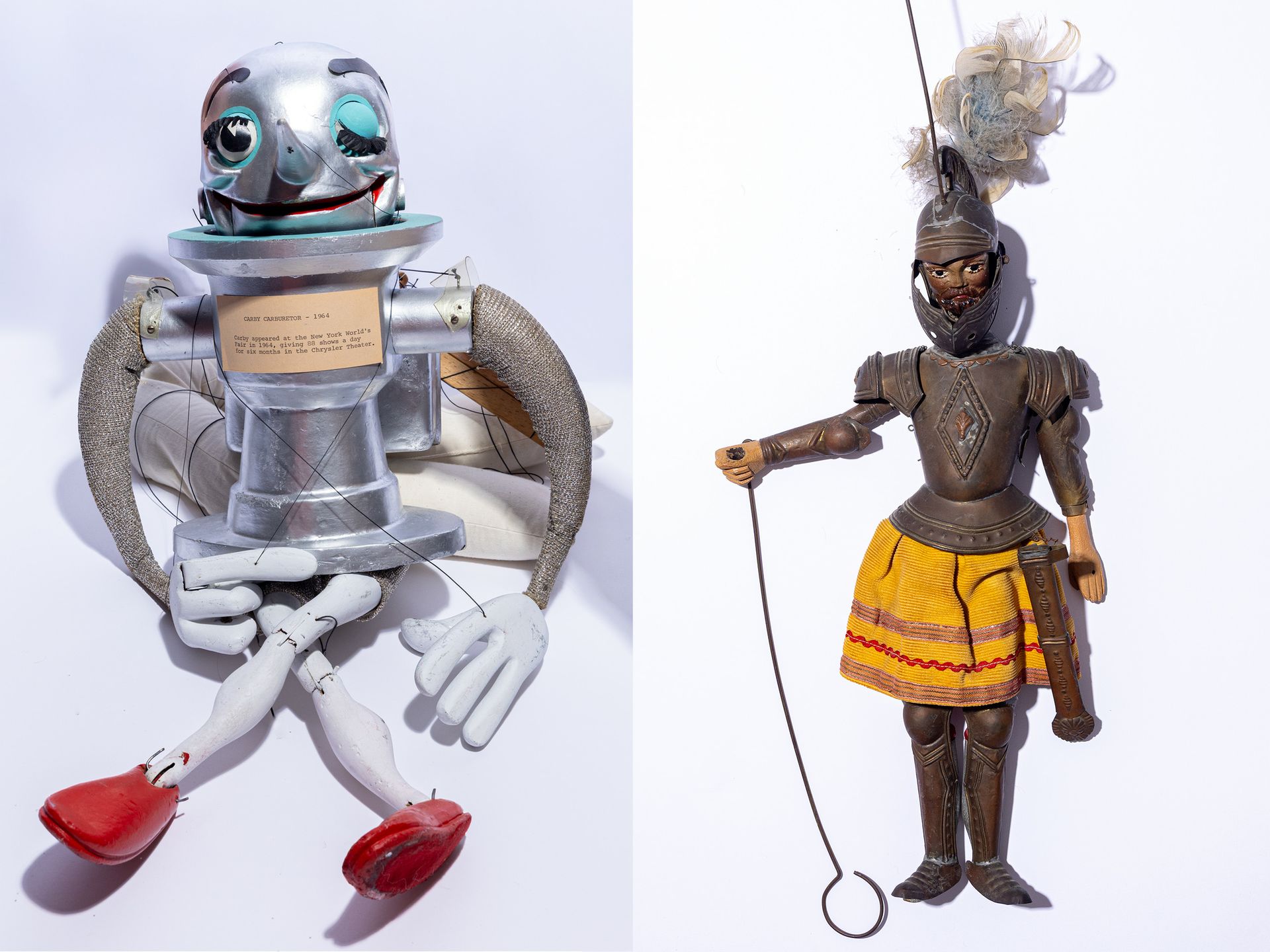
Inside its walls, you might expect to find — and, in fact, will find — cultural treasures from Africa, pre-Colonial America, Asia and the Pacific, and Latin America, along with the museum’s fascinating permanent exhibits. The latter includes an oddly mesmerizing collection of silver from the 16th to 19th centuries accrued by the museum’s primary benefactor, Francis E. Fowler, Jr. What you definitely would not expect to find is one of the largest collections in the world of … puppets.
Swipe below to see a gallery of some of the Fowler's impressive c0llection:
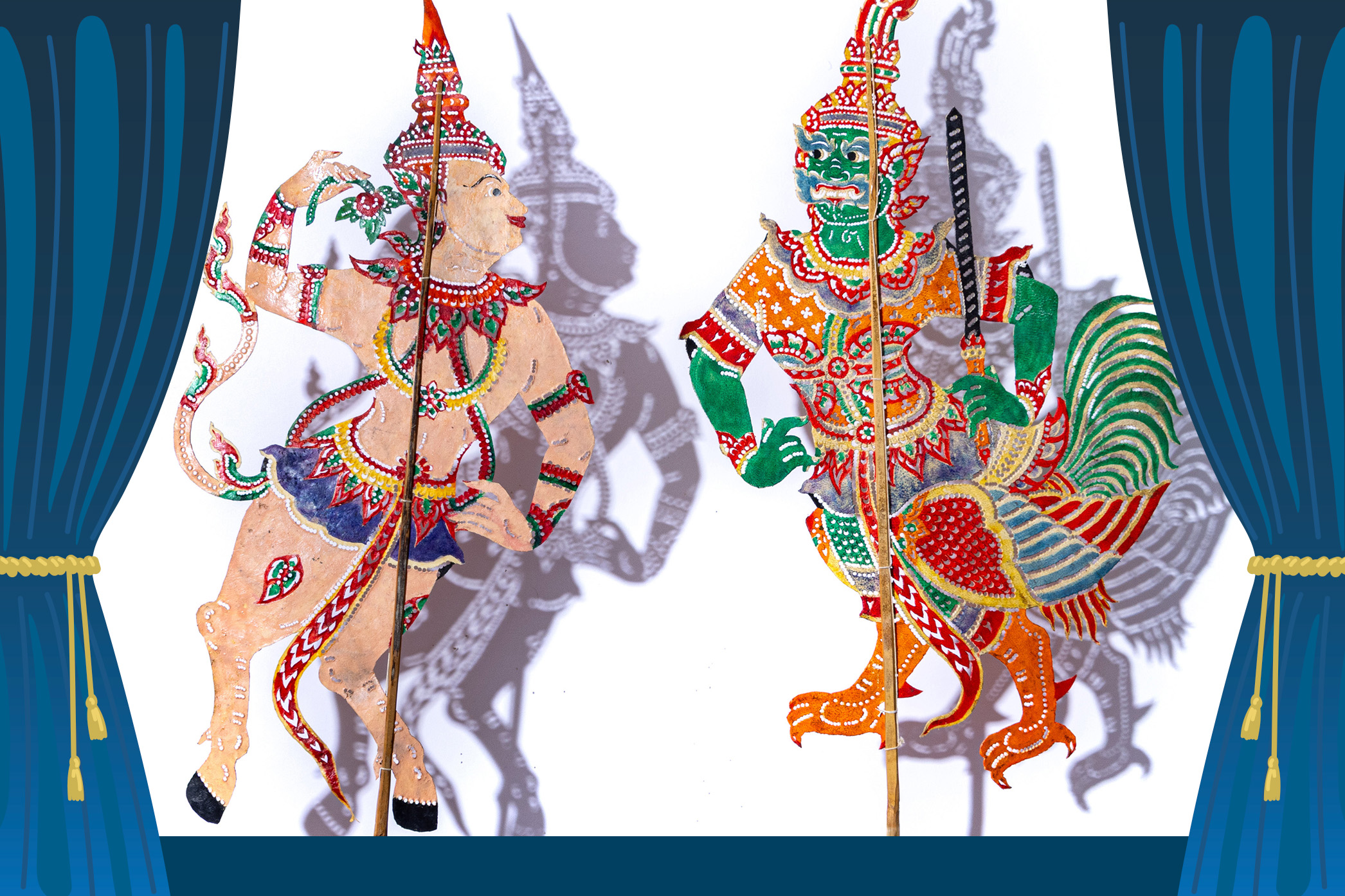
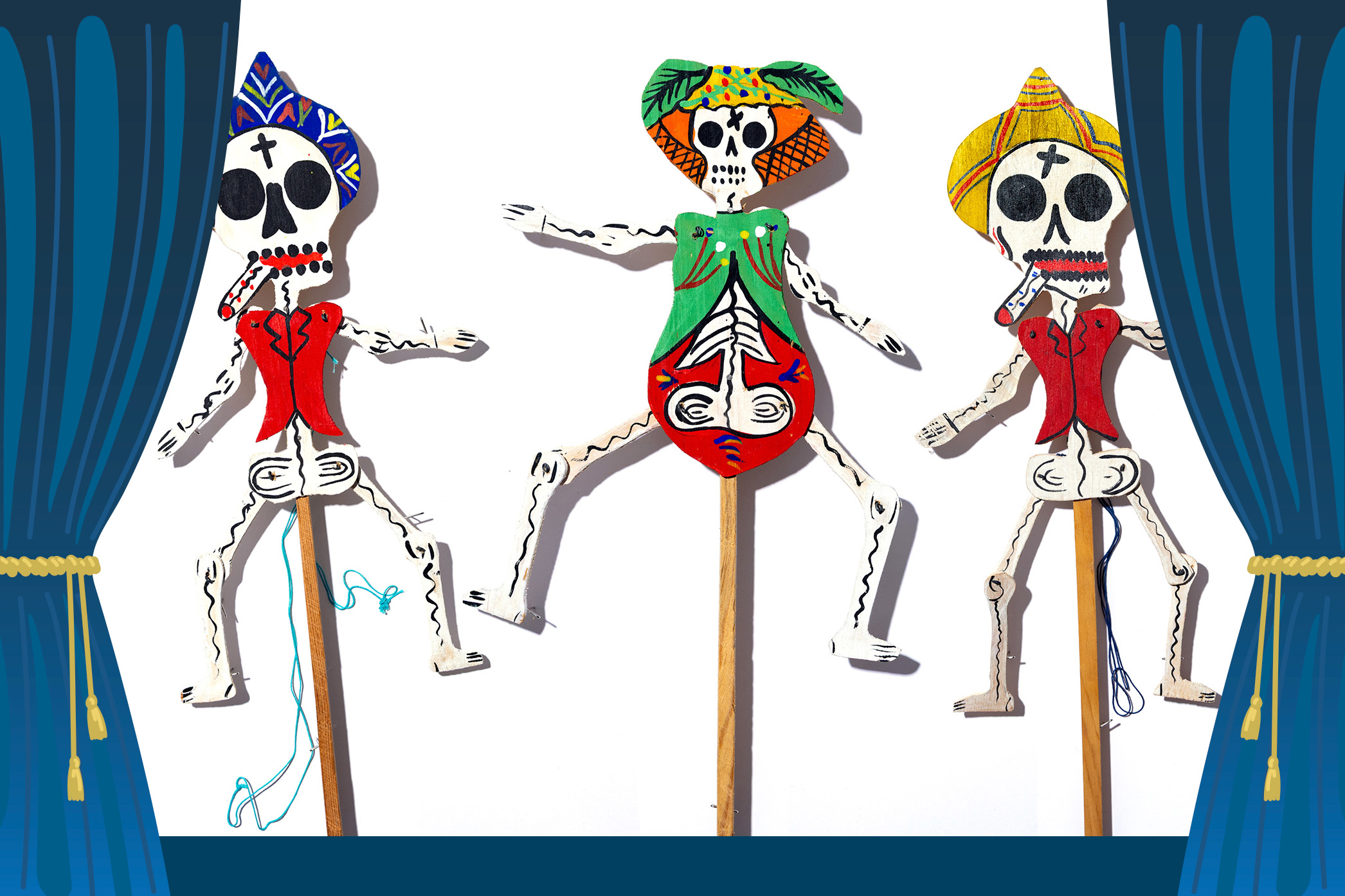
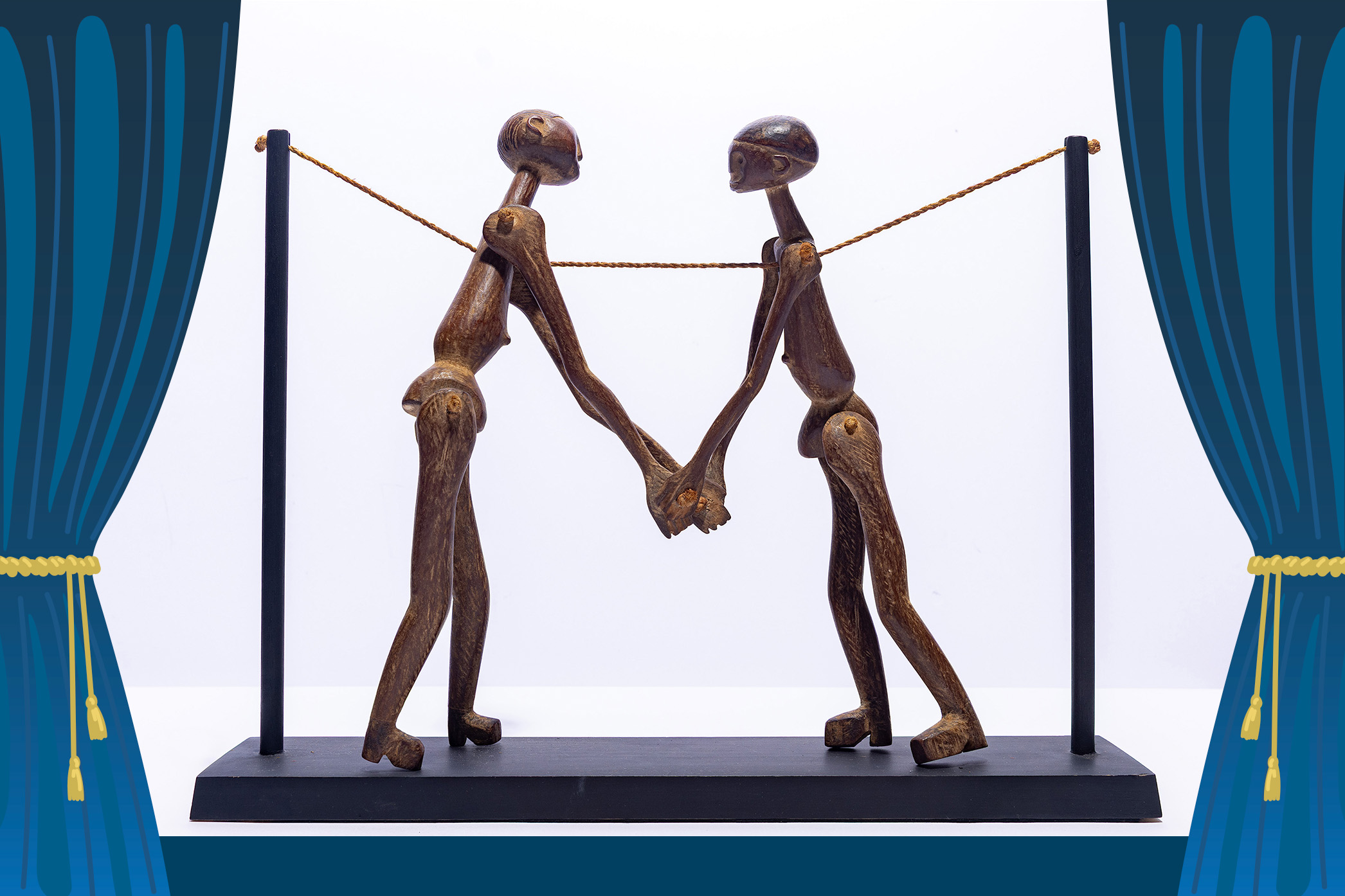
This is not the world of Bert and Ernie (though of course we love them, too, and have a special Bruin connection to them). Rather, the Fowler collection boasts more than 1,300 puppets representing brilliant puppet-making traditions across all of Asia, with viewing by special appointment only. While the art of puppetry extends back centuries, the roots of the Fowler collection are a bit more recent: 1954. That’s when longtime UCLA theater arts professor Melvyn B. Helstien introduced puppetry into the curriculum at what was then the UCLA Department of Theater Arts. He went on to serve two terms as president of UNIMA-USA, the U.S. branch of the Union Internationale de la Marionnette, which was founded in 1929 to promote the art form.
The art of puppetry is still alive and well at UCLA outside of the Fowler’s impressive holdings, represented in both the students drawn to its cultural resonance and storytelling and the professors who maintain a steadfast commitment to passing on its traditions.
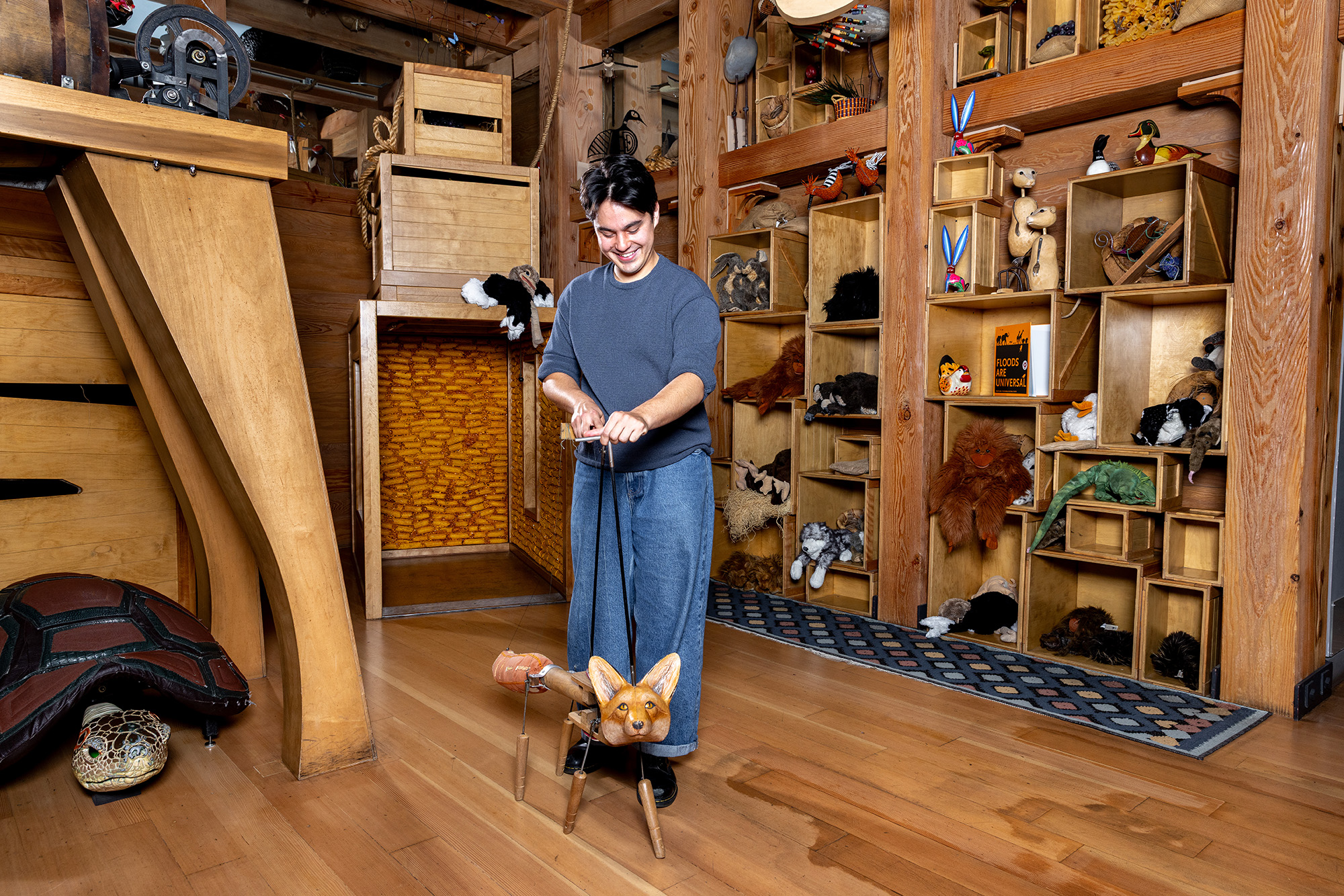
The Student: Finding his “puppet people”
Puppetry, as Kelsey Kato ’19 will tell you, can look like a lot of things — sometimes even things that seem to transform before your eyes.
A graduate of the UCLA School of Theater, Film and Television, Kato is a puppeteer, educator and storyteller at the Skirball Cultural Center’s ongoing children’s exhibition Noah’s Ark. The exhibit is inspired by stories of floods all around the world. In one such tale from Hindu mythology, a man saves a fish from a river and takes it home, but as time passes it keeps growing, eventually revealing itself to be the god Vishnu in disguise. To tell this story, Kato built and puppeteered a small fish marionette, then larger and larger ones, ending the show with a giant fish puppet “reveal.”
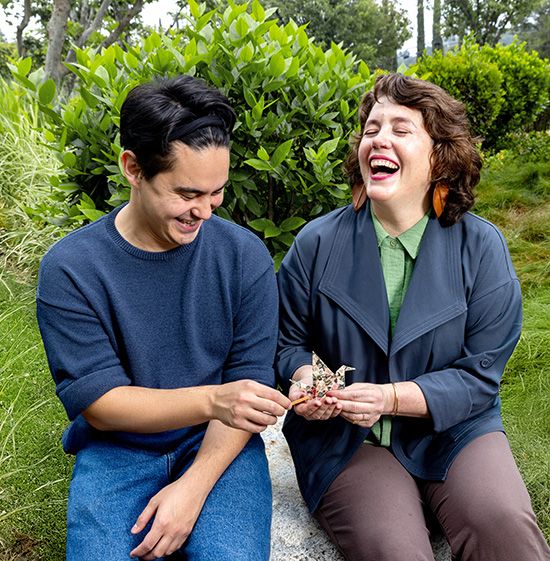
The art of puppetry itself, Kato points out, is rooted in a rich global history of its own. “I’m half Japanese, and I think of Bunraku puppetry, which is influential in terms of modern American theatrical puppetry. And Bunraku is sacred — just like traditional Japanese theater, it’s very spiritual, it’s very removed,” he says. “And that makes me think about how puppetry, at a deep level, is a sort of spiritual act: You’re taking something that doesn’t live, and you’re engaging in this conceit that OK, I’m moving it, and it has this outside life. I think that’s part of how it inspires a sense of wonder when you see it — it makes you think about your lived experience.”
Kato first tested the puppetry waters as an undergraduate in a class taught by Perry M. Daniel M.F.A. ’10; the two are good friends today. After graduation, Kato explored the world of “puppet people,” as he calls his peers in the puppetry community, working at the Pasadena Playhouse before landing his job at the Skirball and joining the Los Angeles Guild of Puppetry, of which he’s now vice president. He also works with the experimental theater company Rogue Artists Ensemble and with Freak Nature Puppets, a grassroots collective where artists create puppets from unconventional materials. There he met not only dear friends, but also his romantic partner, fellow puppeteer Siena Jeakle.
Kato says Freak Nature’s uninhibited ethos has given him the permission and willingness to engage in greater creative risks, a quality he sees reflected in the kids he works with, many of whom are great puppeteers themselves.
“I hope to inspire others to be creative, to make things, to not be afraid to engage in their childlike sense of wonder and creativity,” he says. “That’s something that I think puppetry can do.”
The Professor: A commitment to curiosity
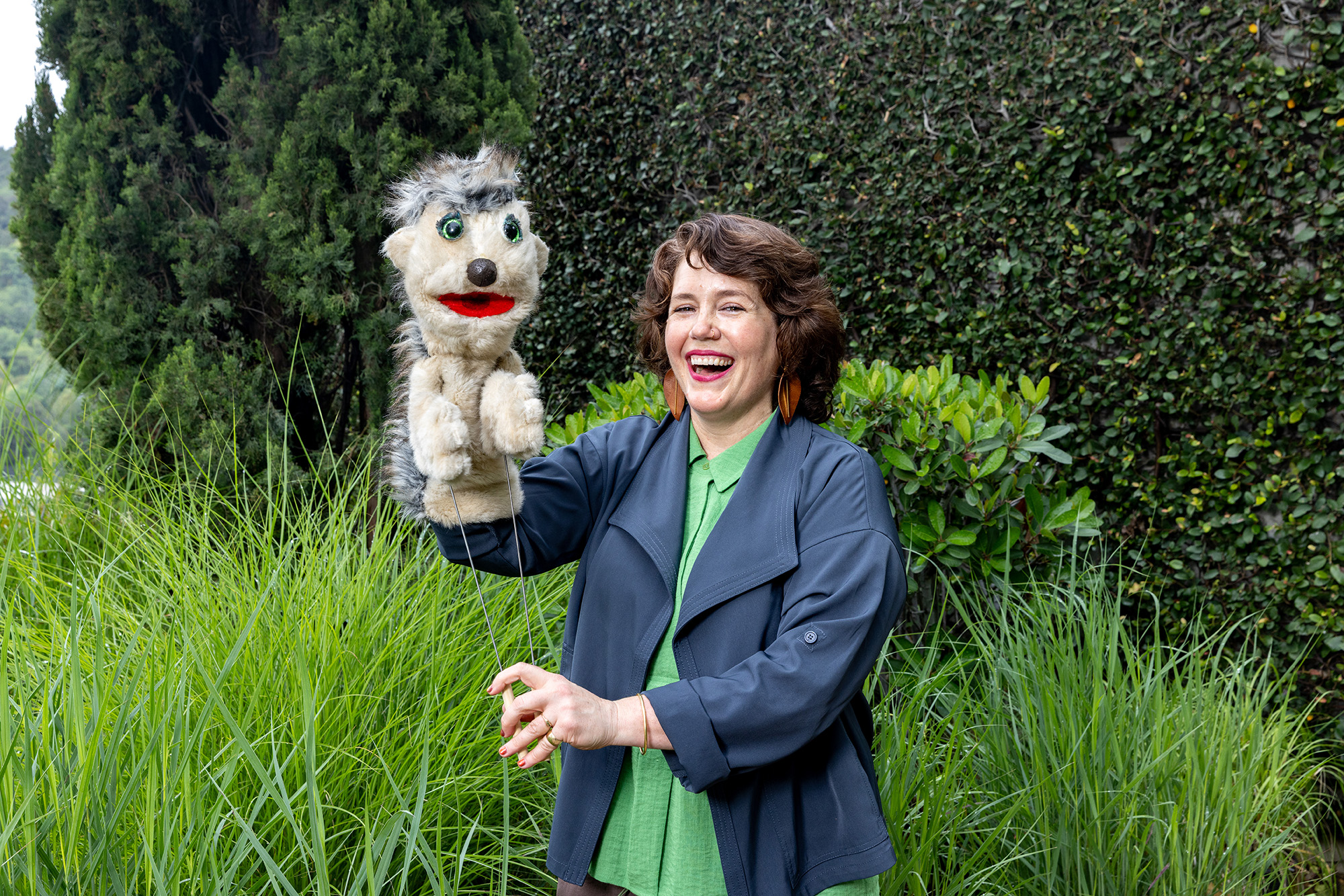
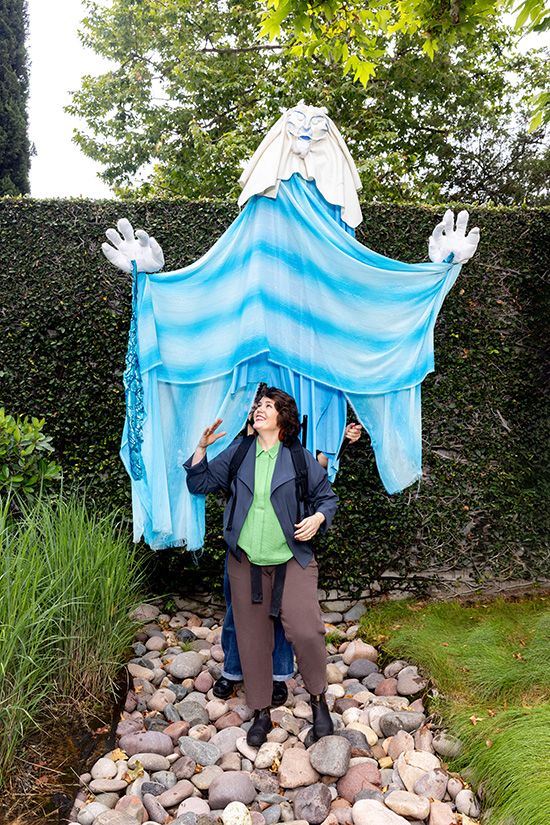
A teaching artist in UCLA’s Department of Theater, Perry Daniel is basking in the afterglow of the Skirball Cultural Center’s annual Puppet Festival, where she recently performed as part of a four-person silk dragon designed by one of her mentors, Robin Walsh.
“When you’re puppeteering, there’s a focus and flow that allows for freedom, where nothing else exists except for that one step, that one breath,” Daniel says. “And then, of course, there’s the special sauce of hearing, if it’s live theater, the response from the audience — you know, yesterday a kid going, ‘Whoa! Dragon!’”
For Daniel, finding that freedom has been a winding and rewarding journey. Originally from Charlottesville, Virginia, she cut her teeth on New York’s improv and comedy circuit, where she was bitten by the puppetry bug before heading west to earn an M.F.A. in acting at UCLA. She joined the faculty soon after.
In the Los Angeles Guild of Puppetry, she discovered a hub of community, learning and discovery. It was an experience reflective of the spirit of sharing that, for her, defines puppetry as an art form. Daniel served as the guild’s co-president from 2021 to 2024 while continuing to teach at UCLA; with support from the department, she built the popularity of puppetry within the theater program. She is also the long-serving program director of UCLA ArtsBridge, which sends Bruin artists out into the Los Angeles school system to share their craft, as well as co-creative director of the UCLA Acting and Performance Summer Institute.
Daniel’s puppetry world has been particularly fast-paced of late: This past spring she, along with her colleague David Beaudry M.M. ’98, D.M.A. ’02, debuted a new Department of Theater course, titled Advanced Puppetry and Wearable Technology. She was also part of the puppeteer team for the world premiere of the surrealist play Octopus’s Garden at Boston Court Pasadena, which was directed by UCLA Theater lecturer Jessica Kubzansky and featured puppetry design and fabrication by Bruin alum Emory Royston ’16.
Beyond all of the rigor and scholarship and discipline and drive, Daniel says, is a serious commitment to guarding and cultivating play, the freedom to be curious and to express oneself. It’s something she works into the building blocks of her UCLA courses and hopes she imparts to her students as they venture out on their own career journeys.
“If they can learn what it is that drives them, perhaps that could be of service as they shift into professional fields,” she says. “Because you’re going to be bombarded with so many voices and feedback and yeses and thousands of noes, but if you have heard and know your own voice first, maybe that’s a place you can return to.”
Read more from UCLA Magazine’s Summer 2026 issue.