Life scientists have created an accurate new method to identify markers for many diseases — a significant step toward a new era of personalized medicine, tailored to each person’s DNA and RNA.
An air filtration system developed specifically for school buses reduces exposure to vehicular pollutants by up to 88 percent, according to a study by UCLA Fielding School of Public Health researchers.
UCLA analysis of movies and TV shows in 2012 and 2013 reveals that race and gender representation in Hollywood is out of step with the rest of America, its authors say.
Most of the laws of nature treat particles and antiparticles equally, but stars and planets are made of particles, or matter, and not antiparticles, or antimatter. That asymmetry puzzled scientists for many years.
Screening travelers for fever on arrival has been criticized as ineffective, but the scientists found it can catch cases that screeners miss at departure.
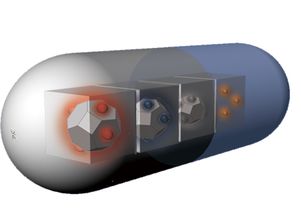
UCLA bioengineers have developed a revolutionary approach that brings together traditional drugs and nanotechnology-enhanced medications to create safer and more effective treatments.
The UCLA study offers a new approach for treating depression in older adults that could get them out of depression much faster than the standard antidepressants.
California could better coordinate transportation spending to support improved maintenance of existing roads and improved public access to walking, biking and transit infrastructure.
Scientists found that removing a specific molecular switch from a mutant protein can trigger symptoms in mice that are similar to those found in people with the disease.
The Latino physician workforce per capita has declined by 22 percent since 1980, resulting in a shortage of doctors with the cultural familiarity necessary to serve a rapidly expanding population.
Researchers developed a thermal imaging technique that can “see” how the temperature changes from point to point inside the smallest electronic circuits.
The Department of Education’s college rating system could hurt universities that enroll large numbers of students who plan to graduate from other institutions.
Study found that paramedics can give intravenous medications to stroke patients within the “golden hour,” the window during which treatments are most likely to help patients avoid long-term neurological damage.
Research at UCLA played key role in developing the treatment, which could signal a new strategy for arresting tumor growth and extending the time before cancer worsens.
Darwin’s writings focused much more on species that had changed over time than on those that hadn’t. So how do scientists explain a species living for so long without evolving?