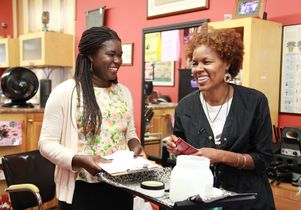
A Ph.D. student in the UCLA Fielding School of Public Health, Teni Adewumi is helping to raise awareness of the potential adverse health effects of certain products used at beauty salons.
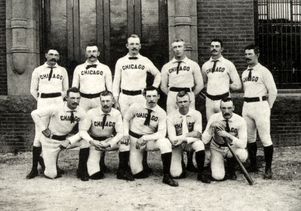
Waugh, an authority on American history and lifelong baseball fan, explains how baseball has (and hasn’t) changed, why it became the national pastime and how she teaches the sport’s history.
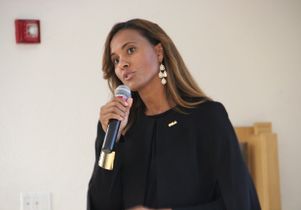
Christine Simmons, chief operating officer of the Los Angeles Sparks basketball team, welcomed new African-American students to UCLA at the 10th annual Black Convocation and urged them to tap into opportunities afforded by their enrollment and serve interests beyond their own.
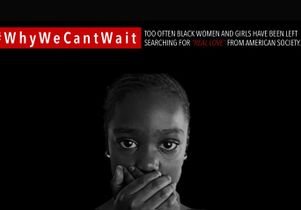
Law professor Kimberlé Crenshaw writes in the Washington Post about how intersectionality brings to light the invisibility of many constituents within groups that claim them as members, but often fail to represent them.
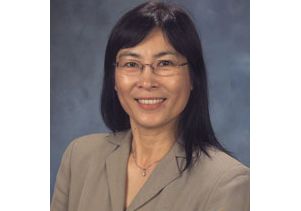
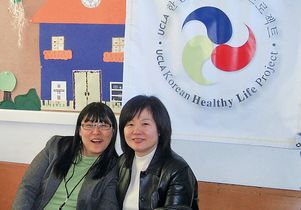
Los Angeles-area Korean Americans who heard presentations in their churches were more likely to get tested, according to researchers at the UCLA Jonsson Comprehensive Cancer Center.
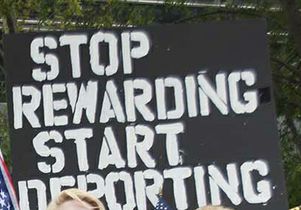
Professor Carola Suárez-Orozco and Dean Marcelo Suárez-Orozco write in an op-ed about how Donald Trump-style immigration rhetoric hurts immigrant children and the children of immigrants.
Professor Melvin Rogers writes in the Atlantic that Ta-Nehisi Coates’ bestselling new book about racism and African American identity fails to recognize the importance of hope.
On the 50th anniversary of the Watts riots, historian Robin D.G. Kelley writes in the L.A. Times that the era gave birth to social justice and arts organizations that remade the community and whose legacy continues today.
History professor Brenda Stevenson writes that 150 years after emancipation in the United States, there are still 20 to 30 million people enslaved around the world.
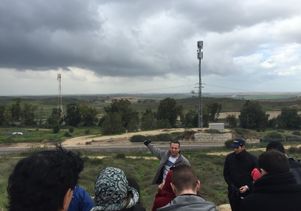
Ten UCLA students will be headed for talks with staff at the State Department, White House and United Nations and other Middle East experts before heading for ground zero of the Palestinian-Israeli conflict.
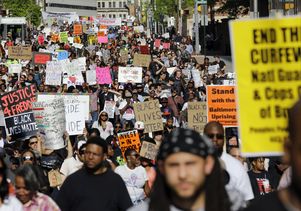
Dismissing unrest in America’s cities as aimless violence overlooks the roots of people’s anger, according to the panelists at a UCLA-Zócalo event examining the history of urban resistance.
Fernando Torres-Gil writes that Americans can learn a lot from how two of the country’s fastest growing populations are learning how to embrace change.
Psychologist Phillip Atiba Goff and his team at the UCLA Center for Policing Equity have launched the Justice Database to measure disparities in policing and provide data that have never been collected before.
The UndocuBruins Research Program is the first to serve and guide undocumented students at UCLA and encourages the exploration of topics and populations that are rarely examined.
UCLA study shows that by 2040 there will be an additional 6 million-plus registered Asian American voters in the United States — an increase of more than 100 percent — and explores what this means for future elections.
History professor Robin D.G. Kelley writes that claiming rioters are sabotaging “legitimate” efforts to bring about racial and social justice mistakenly presupposes that “legitimate” efforts have been working.
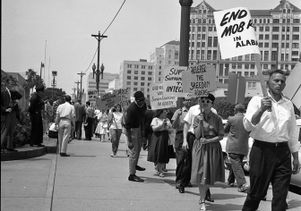
On Tuesday, April 28, the campus community, together with 2,000 K-12 students, will gather for events to commemorate the day 50 years ago when Dr. Martin Luther King Jr. visited UCLA and addressed nearly 5,000.
To reach a vulnerable population largely unaware of the health risks, a team from the Fielding School of Public Health held small group discussions in more than 50 Los Angeles-area Korean churches.