► Read tributes to Dolores Huerta from UCLA faculty and staff.
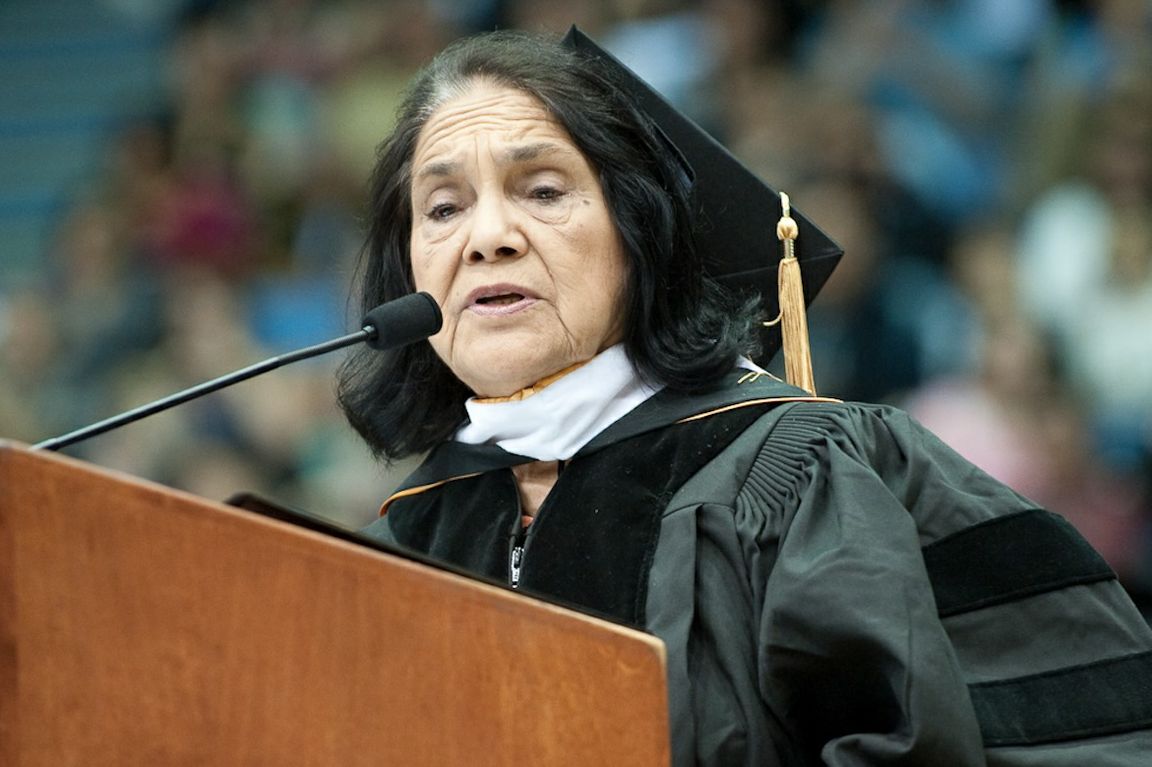
When Dolores Huerta received the UCLA Medal, the campus’s highest honor, at the College of Letters and Science commencement ceremony in 2009, she turned the spotlight toward the young hunger strikers protesting against the Los Angeles Unified School District.
“They are on a 17-day water-only fast,” she told the crowd. “They are trying to keep the LA school district from firing 2,500 schoolteachers and increasing class sizes ... this [medal] is dedicated to them.”
It was a gesture that reflected a lifetime of organizing — and her conviction that ordinary people could come together to demand change.
Huerta, the legendary labor, civil rights and feminist icon who co-founded the United Farm Workers, the nation’s longest-lasting labor union for agricultural workers, died Oct. 28 at age 96. Her death has prompted tributes across Los Angeles and the nation, as generations of organizers, educators and community leaders reflect on the movements she helped build and the countless lives she touched.
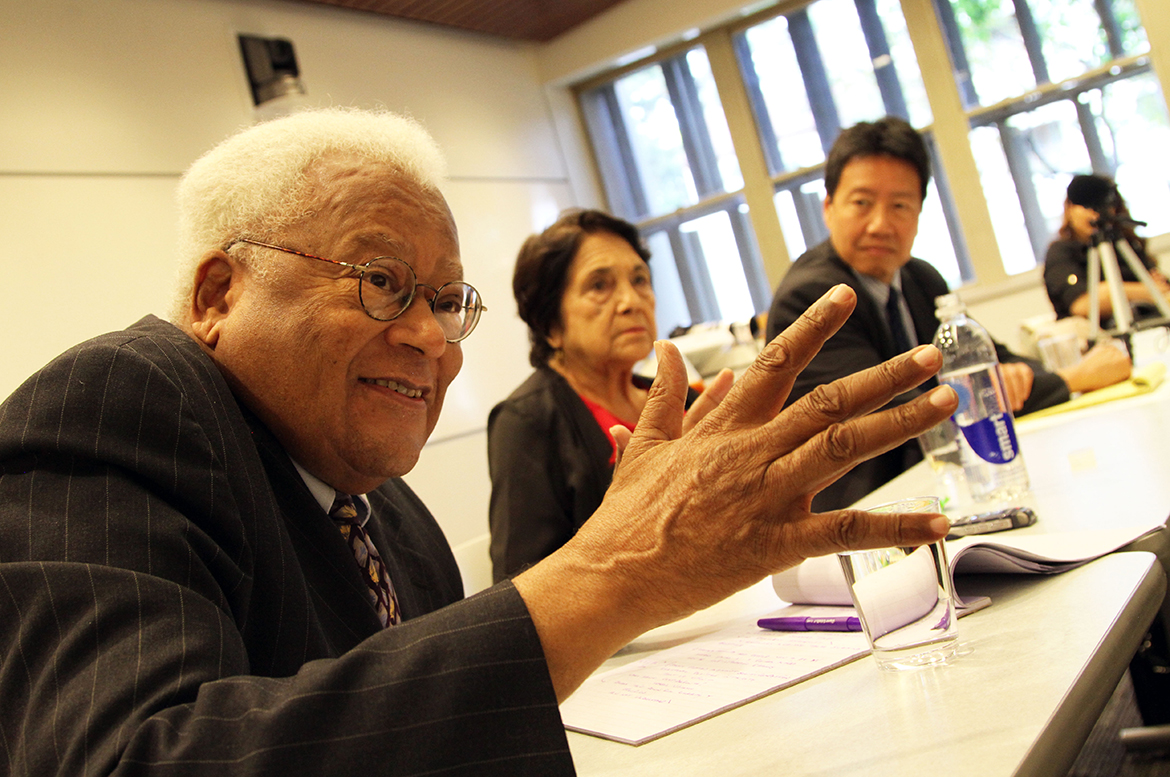
At UCLA, those reflections carry a particular resonance. Her connection to the campus lives on through personal encounters, lessons drawn from her organizing and the community-engaged initiatives inspired by her relentless commitment to justice. Many students, faculty, staff and alumni have had the opportunity to be inspired by and organize alongside her, whether during class lectures, speaking events, programs such as the Chicano Studies Research Center’s California Freedom Summer, or through the curriculum of the Labor Center’s James Lawson Jr./Dolores Huerta Nonviolence Project.
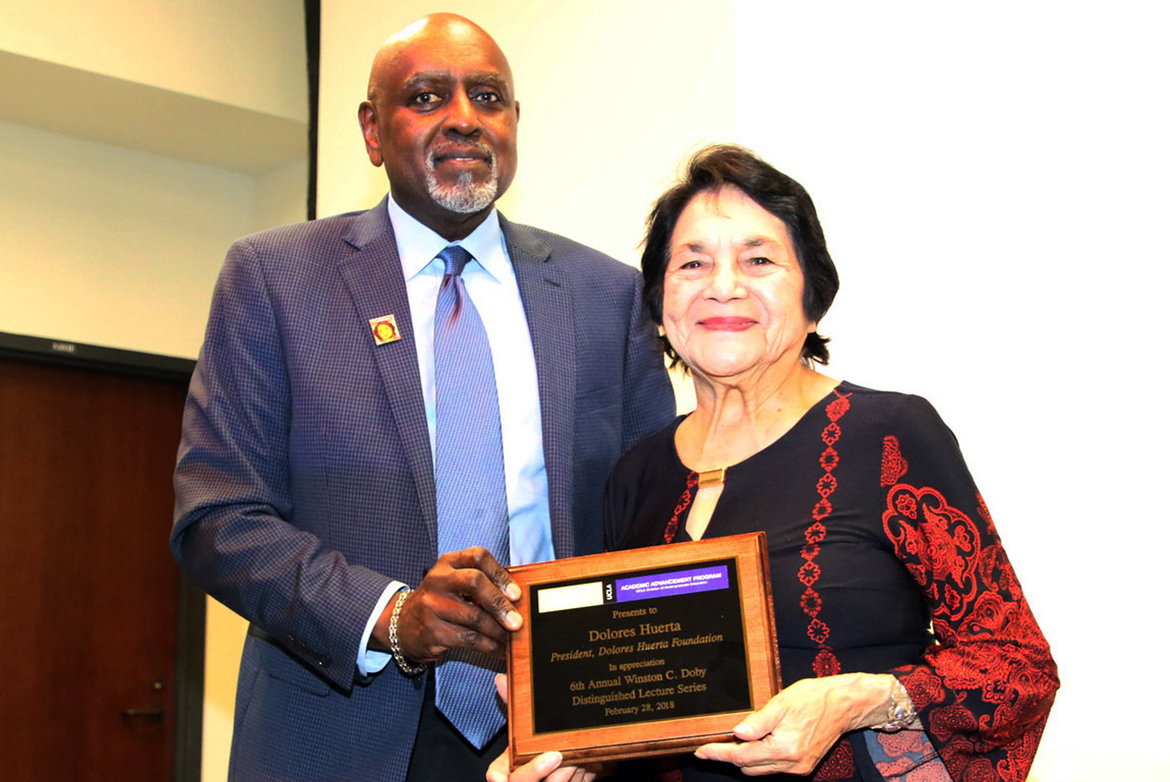
In 2018, she delivered UCLA's sixth annual Winston C. Doby Distinguished Lecture, established by UCLA’s Academic Advancement Program (AAP) in memory of its first director, Winston Doby, who served for more than 40 years as an advocate for social justice and equal access for all students in higher education.
“Ms. Huerta has been an inspiration to generations. She has been a force for integrity and compassion,” then–Chancellor Gene Block said in his introductory remarks. “As a leader insisting on inclusion and fairness, she, like Winston, has worked to improve the lives of countless people. We owe them both a debt of gratitude.”
In 2021, the UCLA Department of Spanish and Portuguese established the Dolores Huerta Community Service Award, recognizing students’ involvement with Latino communities on campus and across greater Los Angeles through Spanish community-engaged learning courses.
That year, Huerta helped present the first award to a student who researched the disproportionate impact of human trafficking on the Latino community and shared an important message with the audience.
"Cada momento es una oportunidad para organizar, cada persona un activista potencial, cada minuto una oportunidad de cambiar el mundo," she said, then translating into English. "Every moment is an organizing opportunity, every person a potential activist, every minute a chance to change the world."
Her memory is immortalized on campus as part of “La Memoria de la Tierra: UCLA,” an 80-foot mural by professor emeritus and artist Judy Baca on the north side of Ackerman Union. She is a central figure in the work’s middle section, alongside the Tongva woman Toypurina, who opposed colonial rule by Spanish missionaries in California, and Angela Davis, a former UCLA faculty member and civil rights activist.
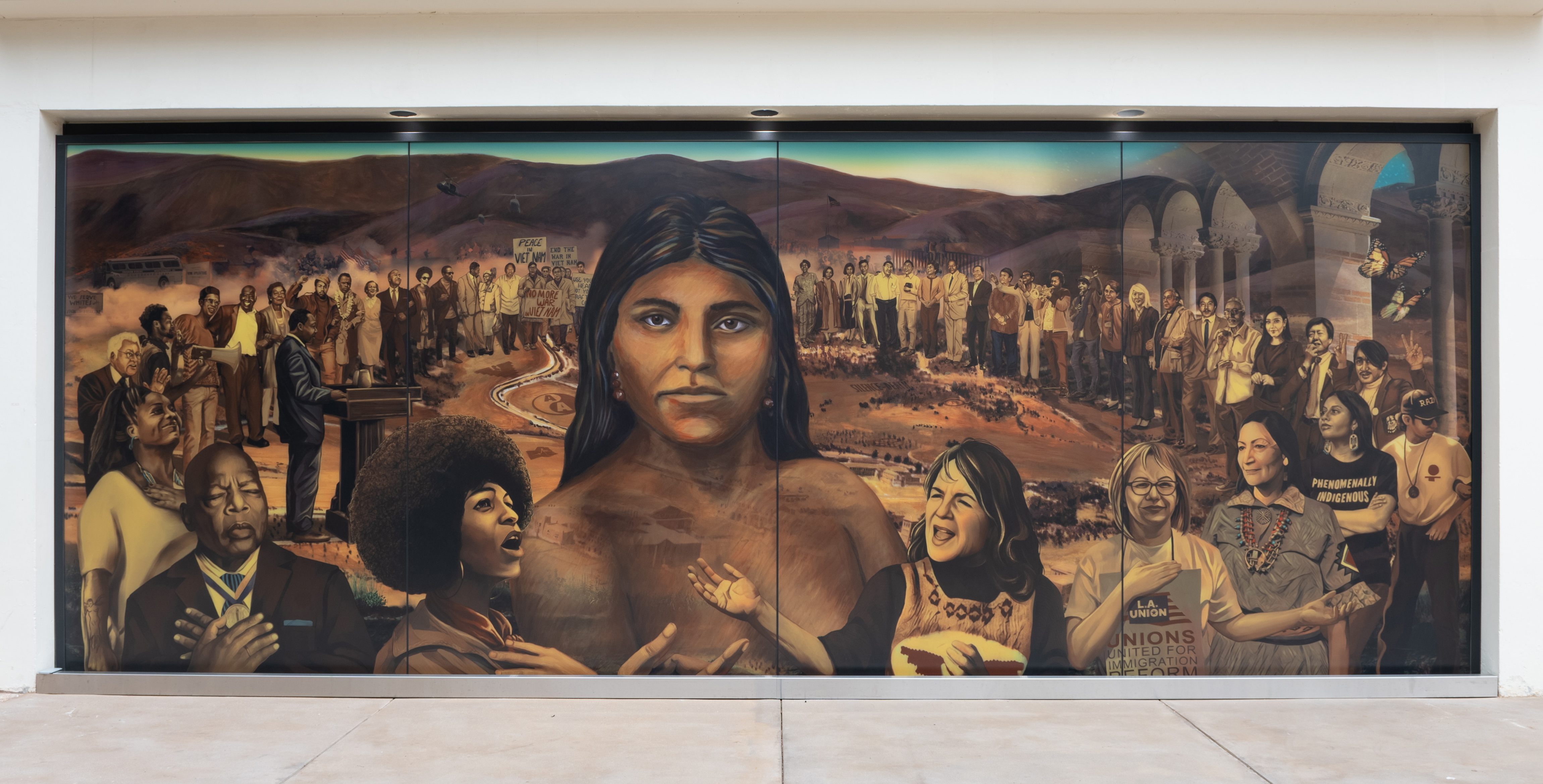
Her lifelong dedication to community, justice and activism is a powerful reminder of the impact of collective action, organizing and the belief that change is always possible.
As she said to the class of 2009 when receiving the UCLA Medal, “Let’s be empathic and come back to our communities and help ... Come back, come back, come back and give to your community. As we like to say, ‘Can we do it?’ We say, ‘Yes we can.’ But in Spanish, we say: ‘¡Sí, se puede!’”
She encouraged students to join in the chant, and together they filled Pauley Pavilion with “Si, se puede,” hope and gratitude.
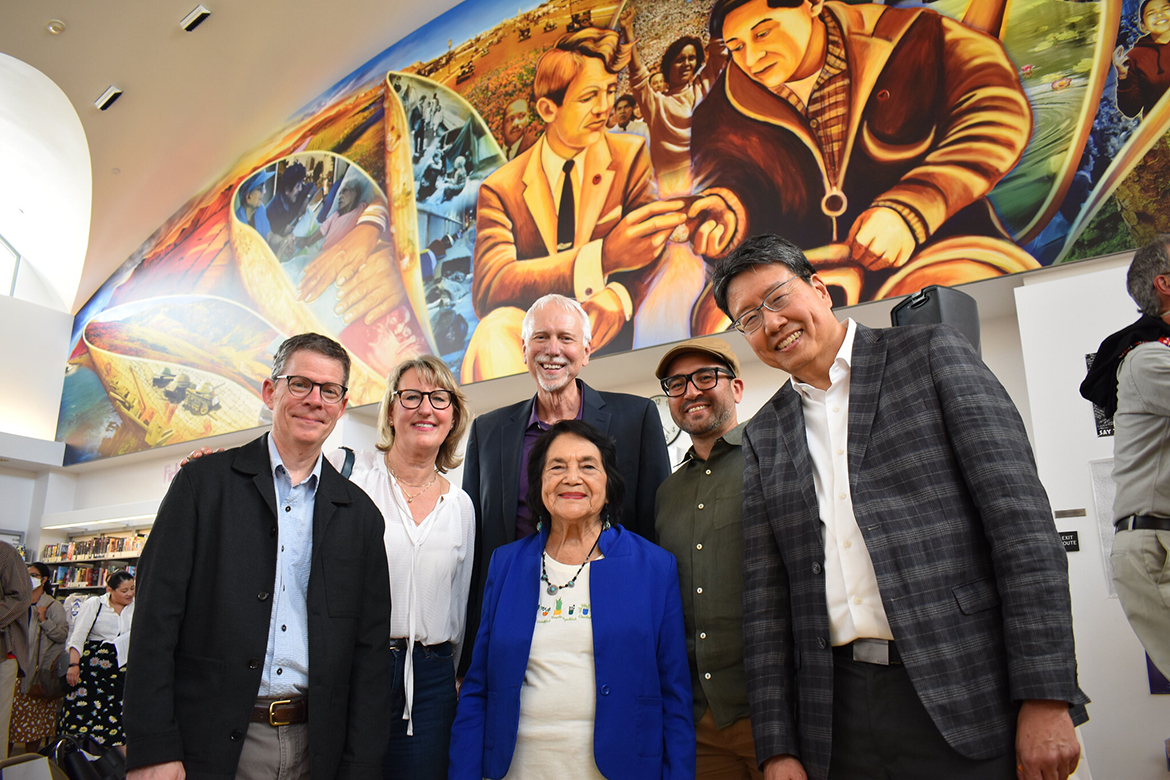
Remembering Dolores Huerta
UCLA Newsroom invited faculty and staff to share their memories of Huerta and reflect on the lessons from her life that they carry forward.
Chris Zepeda-Millán
Chair of the UCLA Department of Labor Studies; professor of public policy and Chicana/o & Central American studies
I think one of the inspiring things about Dolores is that even though she should rightly always be remembered for helping lead the farmworker movement and more recently getting out the vote to defend our democracy, she spent her life giving her voice to several other causes often out of the limelight, such as teacher and student movements. She could be at the White House one day and then a local organizing meeting the next. Because of her close relationship with our late Labor Center director Kent Wong, UCLA labor studies students benefited from her coming to campus often to speak with them. So this is a huge loss for the UCLA community, the country and workers around the world.
♦ ♦ ♦
Gaspar Rivera-Salgado
Project director at the UCLA Labor Center; director of the UCLA Center for Mexican Studies
It was actually Dolores Huerta, who was in charge of a lot of the strategic organizing decisions that built the UFW, who coined the famous slogan “Si se puede” (yes we can). She was talking to supporters in Arizona because that state had passed a law prohibiting farmworkers from organizing into unions. They couldn’t even say the word “strike.” So, when she was organizing them, supporters were saying, “No se puede, aquí no se puede hacer nada" (No we can’t, you can’t do anything here). She challenged them by saying: "Si se puede." And that became such a powerful idea. And I think it reflects her contribution to the movement.
♦ ♦ ♦
Saba Waheed
Director of the UCLA Labor Center
In March 2025, I traveled with labor studies students to Delano to honor the 1965 farmworker march Dolores Huerta and others led, connecting that history to the struggles facing immigrant communities and workers today. Huerta’s legacy reminds us that the fighting for justice continues in new forms and that change happens when ordinary people stand up for each other. Despite facing all-around sexism, she turned those barriers into a commitment to raising women into leadership positions. I believe my leadership is possible because of her sacrifices and struggles. Huerta allowed us to dream the impossible, while providing us with a road map for community building and courage.
♦ ♦ ♦
Veronica Terriquez
Professor of Chicana/o and Central American studies and urban planning and director of the UCLA Chicano Studies Research Center
Dolores was one of the most widely recognized Latina labor and civil rights leaders in U.S. history. She fought for workers’ rights, immigrant rights, voting rights, educational justice, women’s equality — including the Equal Rights Amendment — and LGBTQ+ rights. Throughout her life, she connected these struggles through a broad vision of social justice and a steadfast commitment to empowering communities.
Dolores understood that social change requires more than inspiring words. It requires organizing, collective action and a commitment to bringing new generations into the struggle.
I will always remember Dolores, not only for the movements she helped build, but also for the way she encouraged younger generations to find their voices and recognize their power.
Read the full statement on the Chicano Studies Research center website.
♦ ♦ ♦
Carla Suhr
Continuing lecturer in Spanish linguistics; faculty lead of the UCLA Community-Engaged Learning Program
Dolores will forever be an icon in this country and a point of reference for me, not only as a person but also as an educator. She understood the importance of speaking Spanish to reach beyond the English-speaking community. She recognized that language and identity are deeply intertwined and that language can be essential to defending people's rights and bringing communities together in that fight. By speaking both English and Spanish, she made sure her message reached people across communities. ¡Sí se puede! As a Spanish linguist committed to sociolinguistic justice, I felt a deep connection to Dolores' understanding of how language can uplift marginalized communities and contribute to the praxis of social justice.
Today, through our Spanish community-engaged learning courses at UCLA, part of our Spanish and community and culture major, our students contribute an average of 9,000 hours of service and research each year in collaboration with more than 40 longstanding community partners working in social, legal and medical services, as well as the arts. Their work takes place in both English and Spanish. These courses reflect UCLA's commitment to serving our greater Los Angeles community, and I can confidently say that Dolores' legacy continues to inspire and fuel this work.
♦ ♦ ♦
Robert Chao Romero
Professor and chair of the UCLA Department of Chicana/o and Central American Studies
Dolores Huerta is the "madrina," or godmother, of both the Chicana/o civil rights movement and the field of Chicana/o studies. In my own research, she taught me about the deep intersection between religion and the farmworkers' struggle, which continues to the present day.
♦ ♦ ♦
Victor Narro
Project director at the UCLA Labor Center
Dolores Huerta's advocacy cannot be understated. Her steadfast leadership inspired stronger protections not just for California farmworkers, but Latina women everywhere. Today, in light of all the attacks against labor and immigrant rights efforts, we can always fall back on what Dolores Huerta taught us: If we continue to organize in solidarity with one another, we will weather the storm and come out on the other side stronger than ever.
♦ ♦ ♦
UCLA Latino Policy and Politics Institute
Her leadership raised the standard of living for farmworkers across California and redefined what it meant to be a woman in power. At a time when women, especially Chicanas, were expected to remain on the sidelines, Huerta was on the front lines of protests and at the head of bargaining tables. Her courage in the face of violence, sexism and racism showed workers, immigrants and women that their voices matter.
Huerta’s dedication to creating lasting change can be seen in state capitols, where Latinas now hold a record number of seats, and in classrooms where her story inspires generations of future leaders.
Her legacy touches every part of LPPI’s work. We remember her by the rallying cry she coined – "Sí, se puede" – which reminds us that a world where workers can support their families with dignity, and people understand the power of their own voice, is always worth fighting for.
Read the statement on the Latino Policy and Politics website.