The technique, called a "non-malleable commitment," is the electronic equivalent of a lockbox and requires only two rounds of one-way communication from the sender to the recipient.
UCLA researchers note that the next decade shows great promise for things like improving food safety, fighting infections, storing energy and supplying clean energy.
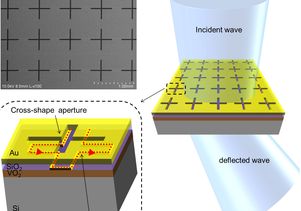
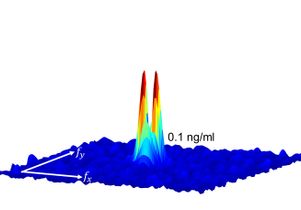
UCLA electrical engineers led a research team that has developed a new artificial composite material for the control of higher-frequency electromagnetic waves.
A UCLA study used 3D chromosome-mapping technology to advance understanding of disorder’s cause. The work provides important new information about how schizophrenia originates and could lead to better treatments.
The M.F.A. holder worked on Pokémon GO and will be part of FuturizeX, sharing his thoughts on the future of augmented reality and his experiences as a game designer.
U.S. Secretary of Energy Ernest Moniz spoke with UCLA leaders and researchers in engineering and physics this morning and toured two laboratories on campus that receive support from the U.S. Department of Energy.
In recognition of National Cyber Security Awareness Month in October, UCLA and UC are offering a variety of resources to help students, faculty and staff better understand cyber risk and stay safer and more secure online.
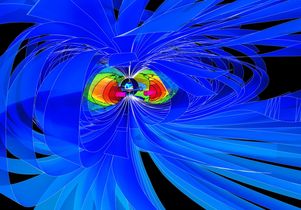
New findings by a UCLA-led team of researchers answer a question about our space environment and will help scientists protect telecommunication and navigation satellites.
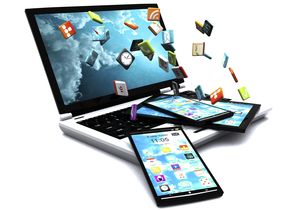
Teams of UCLA students, staff and faculty who have created clever, first-of-their-kind software and applications that use the latest technologies to help solve problems unveiled the result of thousands of hours of hard work Thursday at a campus conference.
Blake Krikorian, who played on UCLA's water polo team for four years between 1986 and 1989, died Wednesday, Aug. 3 while surfing in the San Francisco area.
In addition to uncovering interesting insights about the auto industry, the UCLA study offers a new lens through which researchers could analyze cultural and technological change.
The project asked UCLA students to use their skills to build an app that uses voice and speech recognition to analyze and improve the dynamics of group interactions.
More than 1,000 high school and college students from across the United States descended last weekend on UCLA’s Pauley Pavilion to plug into LA Hacks, a collaborative computer programming event organized by two UCLA student groups and sponsored by LA 2024.
UCLA Engineering grad student Gary Li won $1K in the system-wide contest with an exciting, accessible, 3-minute speech about his research on how plasma thrusters could replace conventional rockets for space travel.
UCLA campus planners are using a digital tool developed by the now-defunct Urban Simulation Team to do bird’s-eye and ground-level simulations to help architects fit buildings into available spaces.
UCLA students can now compete for a chance to assist UCLA Chancellor Gene Block with developing his idea into a mobile application that will use voice and speech recognition to analyze and improve the dynamics of group interactions.
UCLA Chancellor Gene Block and UCLA psychologist Patricia Greenfield were part of a panel discussing the downside of the digital revolution at a Zócalo/UCLA event at the Museum of Contemporary Art.
The new building material called CO2NCRETE would be made from carbon captured from power plant smokestacks potentially eliminating a huge source of greenhouse gas emissions.