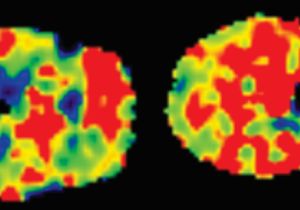
Method combines the chemotherapy drug decitabine with adoptive cell transfer, in which a patient’s own immune cells are reprogrammed to target brain cancer.
Men who buy sex have less empathy for women in prostitution than men who don’t buy sex, and they are more likely to report having committed rape and other acts of sexual aggression.
Nearly 1 in 5 older adults in California live in an economic no-man’s land, unable to afford basic needs, according to a study by the UCLA Center of Health Policy Research.
The method may help lead to much smaller but more powerful linear electron-positron colliders — machines that could be used to understand the properties of nature’s fundamental building blocks.
The UCLA Center for Health Policy Research released the California Health Interview Survey for both 2013 and 2014, which contain data about a wide range of health care topics from surveys of more than 20,000 participants each year.
A planet 100 light-years away that resembles a young Jupiter has been discovered by an international team of astronomers that includes six UCLA scientists.
The money will fund a new collaboration among primary care clinics, community-based organizations and educational institutions throughout Riverside County.
Fuel cells and hydrogen batteries are already important sources of green energy, but further advances will require scientists and engineers to better understand how the technologies work.
UCLA Engineering has joined with a Korean youth organization to establish the program, which will focus on addressing malaria and other global health challenges.
Children and adolescents who receive integrated mental health and medical treatment are 66 percent more likely to have a good outcome than those who receive more traditional primary care.
Regardless of where they are from, people judge acts like lying, theft and assault to be wrong — but less wrong if those acts happened far away or long ago.
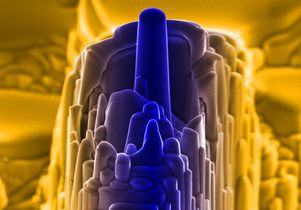
The new ceramics hold promise for use in miniature mechanical components and flexible-yet-strong foils for use in solar sails, which are used to propel spacecraft, among many other applications.
UCLA researchers found that a subset of ovarian cancer cells that don’t produce the CA125 protein biomarker, used to test for ovarian cancer, have an enhanced ability to repair their DNA and resist programmed cell death.