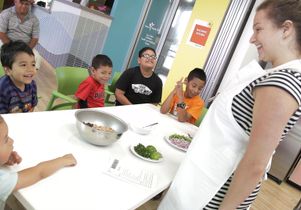
The UCLA Parent Project by Center X helps parents understand what’s going on in the classroom and how best to support new learning strategies to help their children succeed.
Volunteers from UCLA will go to 48 sites across Los Angeles County to work on projects at schools, parks, shelters, senior centers, veterans sites and neighborhood centers.
The UCLA Asian American Studies Center has launched the Suyama Project to gather and make available online evidence of resistance among Japanese Americans forcibly removed from their homes during World War II.
UCLA has launched the newest version of its highly successful Optimists brand campaign. Themed “Momentum,” the new ads represent the fourth generation of the Optimists marketing effort.
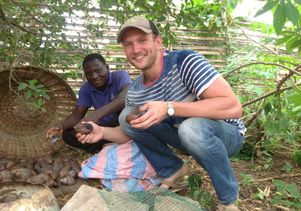
Thanks to UCLA student Grant Guess, schoolchildren with developmental and intellectual disabilities in West Africa are reaping the benefits of working on sustainable farm projects that he has developed for them.
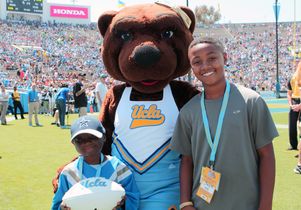
For his courage dealing with sickle cell anemia, 9-year-old Luc Bodden was designated the fourth “Kid Captain” by Mattel Children’s Hospital UCLA and the football team.
At a "Thinking L.A." event co-hosted by UCLA and Zócalo, four panelists discussed the importance and difficulty of implementing desalination plants, water-recycling facilities and other tools to help California make better use of its water resources.
UCLA Engineering has joined with a Korean youth organization to establish the program, which will focus on addressing malaria and other global health challenges.
UCLA Health has been providing all the staff, materials and supplies to run the Special Olympics Polyclinic since July 24 to offer free medical care to any athlete or delegate who becomes injured.
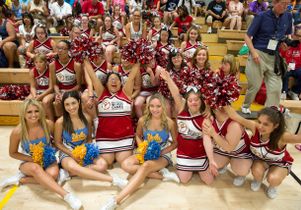
For the first time in Special Olympics World Games history, cheers are ringing out from the sidelines as 225 cheerleaders from around the country converge to be part of Cheer for LA2015.
The UCLA Volunteer Center, which is coordinating Team UCLA’s efforts campuswide, estimates that nearly 1,000 Bruin students, faculty, staff, alumni and supporters are lending their time and talents to make the games a rousing success.
The UCLA Center for World Health and the LA5 Rotary Club brought together a panel of experts to talk about the failing health of the Earth and what mega-cities can do about it before an audience of 200 business peoplein downtown Los Angeles.
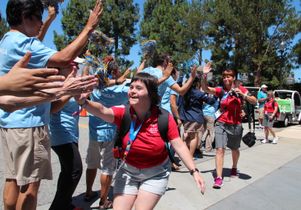
Caley Versfelt, a Special Olympics World Games global messenger, has gained a lot of self-confidence and important skills through Special Olympics and several UCLA programs geared toward people with intellectual and developmental disabilities.
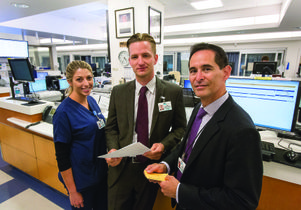
More than 100 UCLA Health employees will be staffing two clinics to ensure the health and well-being of spectators, Olympians, their coaches and chaperones.
History professor Brenda Stevenson writes that 150 years after emancipation in the United States, there are still 20 to 30 million people enslaved around the world.
Dismissing unrest in America’s cities as aimless violence overlooks the roots of people’s anger, according to the panelists at a UCLA-Zócalo event examining the history of urban resistance.